Archaeospore
noun (n.)
Definition
In red algae, an archaeospore is the contents of an ordinary vegetative cell which, released without prior mitosis, functions as a spore.
Archaeospores are characteristic of the paraphyletic group Bangiophyceae. These archaeospores are in fact monospores.
Archaeospores and rimoportulae:

Differential interference contrast micrographs showing size-diminution series of Thalassiosira baltica (Bacillariophyta) and associated archaeospores. At bottom left, focus on an archaeospore showing three rimoportulae (arrows).
Explanations
For example, Bangia atropurpurea reaches maximum filament length in April, with the greatest diameter and highest archaeospore production observed in May. As a rule, freshwater B. atropurpurea reproduces asexually by releasing archaeospores (= monospores) at the tip of the filament or through vegetative propagation by perennial basal cells.
⭐ A rimoportula is a structure passing through the valve of certain diatoms. On the inner face of the valve, the opening of the rimoportula may be shaped like a pair of lips. It is a form of labiate process.
Synonyms, antonyms
Spanish translation: arqueospora
1 synonym (similar meaning) for "archaeospore":
0 antonyms (opposite meaning).
Related words and expressions to ARCHAEOSPORE are directly connected by general or specific meaning.
The word ARCHAEOSPORE is listed on page 1 of words starting with A in the dictionary glossary.
Related to "archaeospore"
aplanospore

An aplanospore is a non-swimming spore (as opposed to a planospore or a zoospore). Such spores lack flagella but may possess features of swimming cells such...
autospore

An autospore is each of the non-motile spores (aplanospores) produced by division and differentiation of the contents of a coccoid unicellular organism.
auxospore
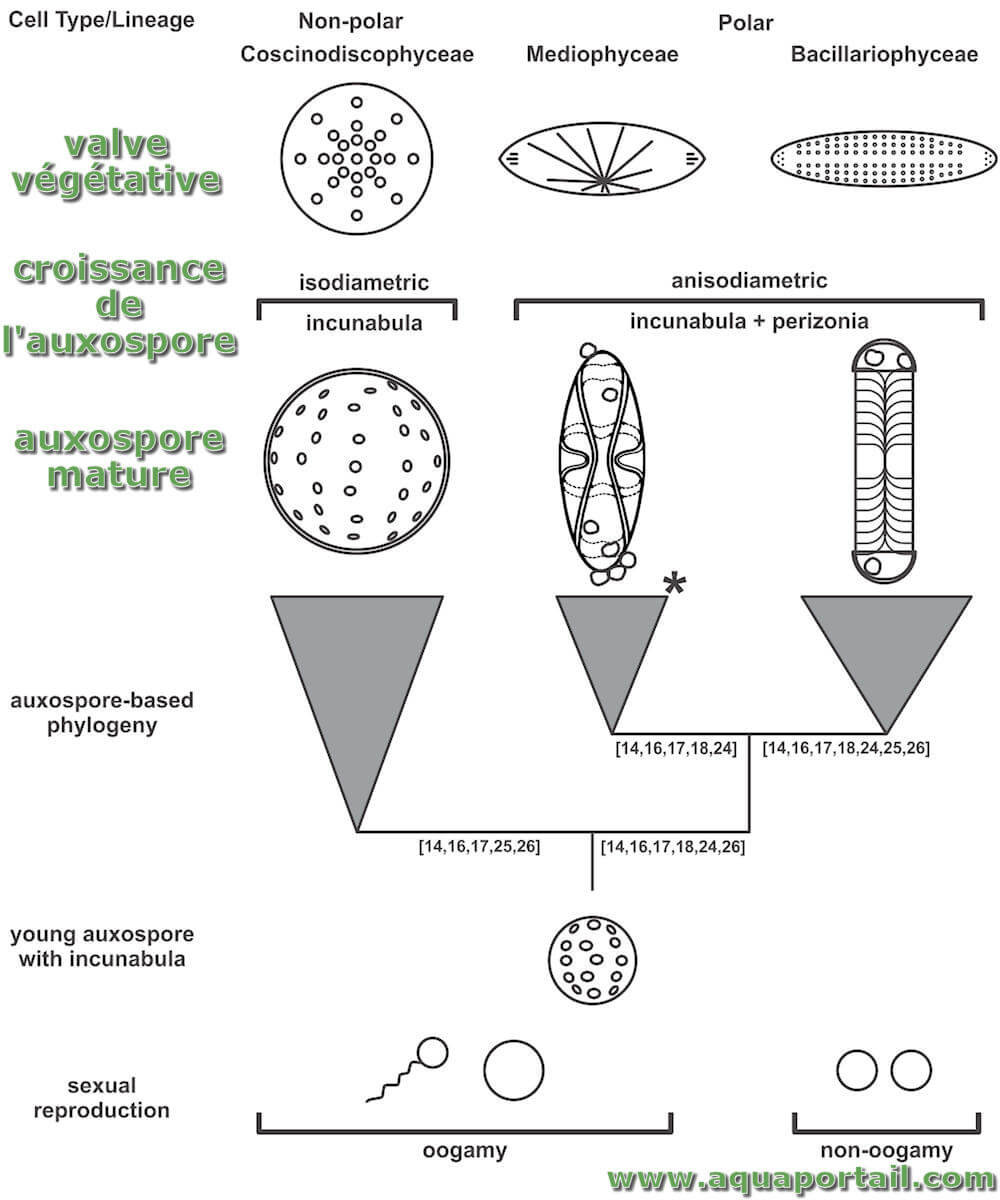
An auxospore is a reproductive cell in diatoms generally resulting from the union of two smaller cells or their contents and associated with the rejuvenation...
chlamydospore

A chlamydospore is a thick-walled resting spore produced by several groups of fungi, including ascomycetes, basidiomycetes, and various species...
