Archean
proper noun
Definition
The Archean is the part of the Precambrian period, prior to the Cambrian, spanning from 2.5 to 4.0 Ga (following the Hadean, which began at 4.56 Ga). It is one of the oldest periods of geological time. In the geologic time scale, it is the second geological division of the Precambrian.
View of the Archean period:

In the middle of the Archean, Earth was like an "alien world", with environmental conditions vastly different from today's. Yet life was present on Earth during that era.
Explanations
During this period, Earth's crust evolved, so plate tectonics (plate movement) and an internal Earth structure similar to what we know today must have existed, though differentiated by excessive heat.
Tectonic activity is estimated to have been greater due to the higher rate of lithosphere production, which is why greater activity at mid-ocean ridges and a higher number of them would be expected, along with greater activity in subduction zones and a smaller number of plates.
During this period, the atmosphere apparently lacked free oxygen. Temperatures appear to have been close to modern levels, even 500 million years after Earth's formation, with liquid water present, as evidenced by certain highly deformed gneisses produced by the metamorphism of sedimentary protoliths.
Astronomers believe the Sun was about one-third less bright than today, which may have contributed to lower global temperatures.
At that time, Earth is thought to have had the greatest volume of greenhouse gases at any point in its history. By the end of the Archean, 2,500 million years ago, plate tectonic activity may have been similar to that of modern Earth. Well-preserved sedimentary basins and evidence of volcanic arcs, intracontinental rifts, continent-continent collisions, and widespread orogenic events suggest the assembly and breakup of one or more supercontinents.
Liquid water was common, and the existence of deep ocean basins is known from the presence of banded iron formations, chemical sedimentation, and layers of cherts and basalts.
Stromatolites occur throughout the Archean, being particularly common near the end of the eon. Stromatolites are important fossils that began forming 3,500 million years ago, reaching peak abundance 1,250 million years ago.
Subsequently, their abundance and diversity declined, though they continue to form in certain locations. However, it should be noted that the earliest stromatolites with a confirmed microbial origin date to 2,724 million years ago.
Life was probably present throughout the Archean, though likely restricted to prokaryotic organisms.
About 3,500 million years ago, during the Paleoarchean era, bacteria began photosynthesis, initially anoxygenic, so it did not release oxygen. Today, green sulfur and non-sulfur bacteria, as well as purple bacteria, carry out this type of photosynthesis.
It was not until about 2,800 million years ago, during the Neoarchean era, that the first organisms capable of oxygenic photosynthesis (such as cyanobacteria) began releasing molecular oxygen into the environment.
Synonyms, antonyms
Spanish translation: Arcaico
0 synonyms (similar meaning) for "archean".
0 antonyms (opposite meaning).
Related words and expressions to ARCHEAN are directly connected by general or specific meaning.
The word ARCHEAN is listed on page 1 of words starting with A in the dictionary glossary.
Related to "Archean"
archegonium
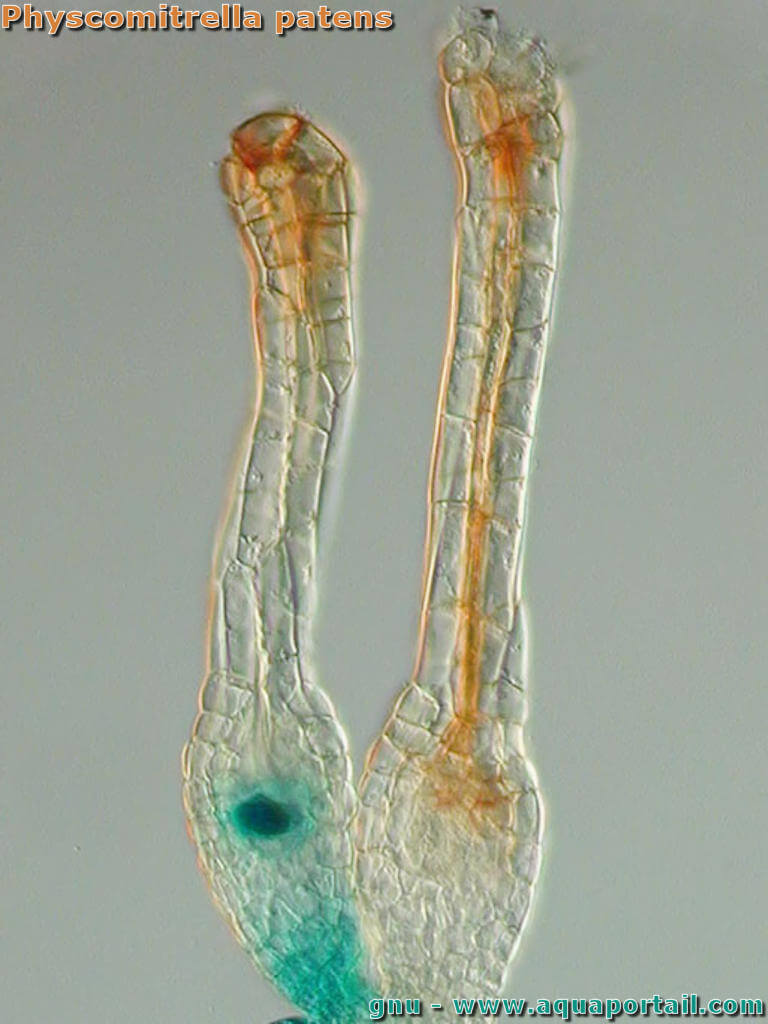
An archegonium is the bottle-shaped female reproductive apparatus, comprising an egg cell (oosphere) enclosed in a sheath and communicating with the outside...
abiotic

In biology and ecology, abiotic refers to what is not biotic, that is, not part of living beings.
aboral

Aboral refers to what is situated away from or opposite the mouth in zoology, and especially in marine biology.
absence

Absence refers to non-presence at an expected location, or the complete non-existence of something.
