Arginine
noun (n.)
Definition
Arginine is an amino acid whose natural substance counteracts hypertension, stimulates immunity, and fights tumors. It is one of the 20 most common natural amino acids. Arginine nitrate has a silvery appearance (amino-guanidino-valeric acid). With the symbol arg, R, arginine is thus a basic amino acid forming a constituent of proteins in living organisms.Arginine is a small amino acid for macrophage metabolism, yet a giant regulator in mammalian pathophysiology.
Arginine converted into citrulline:
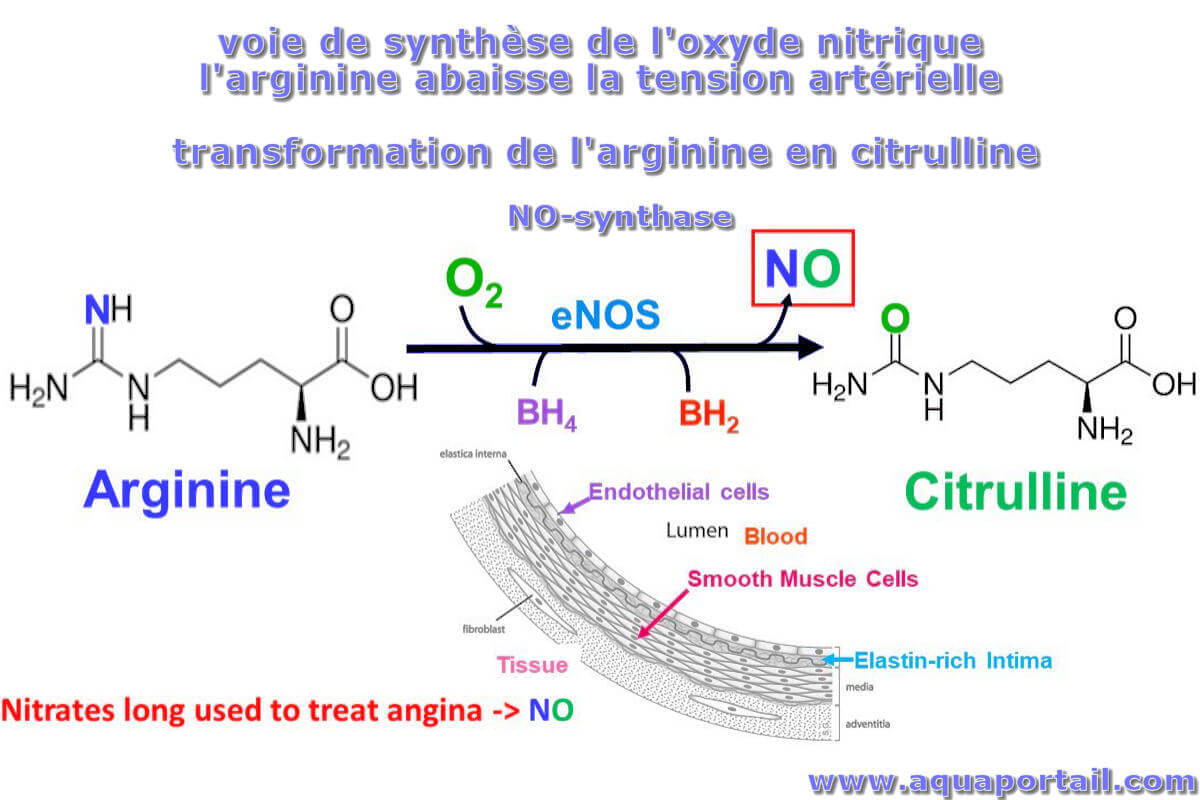
Nitric oxide is produced by a group of enzymes called nitric oxide synthases (NO synthases). These enzymes convert arginine into citrulline, producing nitric oxide in the process. Oxygen and NADPH are required cofactors.
Explanations
During ureogenesis, it is hydrolyzed into urea and ornithine by an arginase. It is the precursor of nitric oxide and creatine. The corresponding codons are: AGA, AGG, CGA, CGC, CGG, CGU. An arginase, in hepatocytes, is a urea cycle enzyme that catalyzes the hydrolysis of arginine into urea and ornithine.
Arginine stands at the center of the M1/M2 macrophage dichotomy. The classification of M1/M2 macrophages can be condensed into two opposing pathways for metabolizing a single amino acid: the preference of macrophages to metabolize arginine via nitric oxide synthase (NOS) into NO and citrulline, or via arginase into ornithine and urea, defines them as M1 (NOS) or M2 (arginase) macrophages. NOS or arginase are enzymes catalyzing a "reaction", but here we use "pathway" to indicate that they belong to multi-enzyme pathways producing other physiologically important products.
✅ Mammalian arginine metabolism is complex both at the whole-organism level and at the level of individual cell types, and the term argenomics is adopted here. This term was proposed by Sidney M. Morris Jr for the regulation of gene expression via arginine availability, and in an even broader sense for the entire fascinating complexity of arginine-driven cellular regulation.
Before focusing on macrophage arginine metabolism and its defining role in the M1/M2 dichotomy, let us first review some historical facts concerning arginine in mammalian physiology.
The story began nearly 130 years ago: arginine was first isolated in 1886 and identified as a component of animal proteins in 1895. The role of arginine in metabolic physiology was first demonstrated in 1932, when Krebs and Henseleit discovered the urea cycle. In 1981, Windmueller and Spaeth reported that the small intestine is the main source of citrulline for arginine synthesis by the kidneys, now termed the intestinal-renal axis for whole-body arginine synthesis. In 1987, arginine was shown to be the precursor of macrophage citrulline and nitrite synthesis, and arginine-derived NO was identified as the elusive endothelium-derived relaxing factor (EDRF). Shortly thereafter, NO was classified as a physiologically active intermediate of the arginine-to-nitrite (and nitrate) pathway in macrophages and endothelial cells. The discovery of the fundamental role of arginine-derived NO in human cardiovascular physiology LED to the award of the 1998 Nobel Prize to Robert F. Furchgott, Louis J. Ignarro, and Ferid Murad.
⭐ The importance of arginine has grown even further since then: it is now clear that immune-cell arginine metabolism is fundamentally implicated in cancer, inflammation, infections, fibrotic diseases, pregnancy, and immune regulation in general. A tremendous responsibility for a small molecule!
Synonyms, antonyms
Spanish translation: arginina
1 synonym (similar meaning) for "arginine":
- amino-guanidino-valeric acid
0 antonyms (opposite meaning).
Related words and expressions to ARGININE are directly connected by general or specific meaning.
The word ARGININE is listed on page 1 of words starting with A in the dictionary glossary.
Related to "arginine"
abiotic

In biology and ecology, abiotic refers to what is not biotic, that is, not part of living beings.
aboral

Aboral refers to what is situated away from or opposite the mouth in zoology, and especially in marine biology.
absence

Absence refers to non-presence at an expected location, or the complete non-existence of something.
acetyltransferase
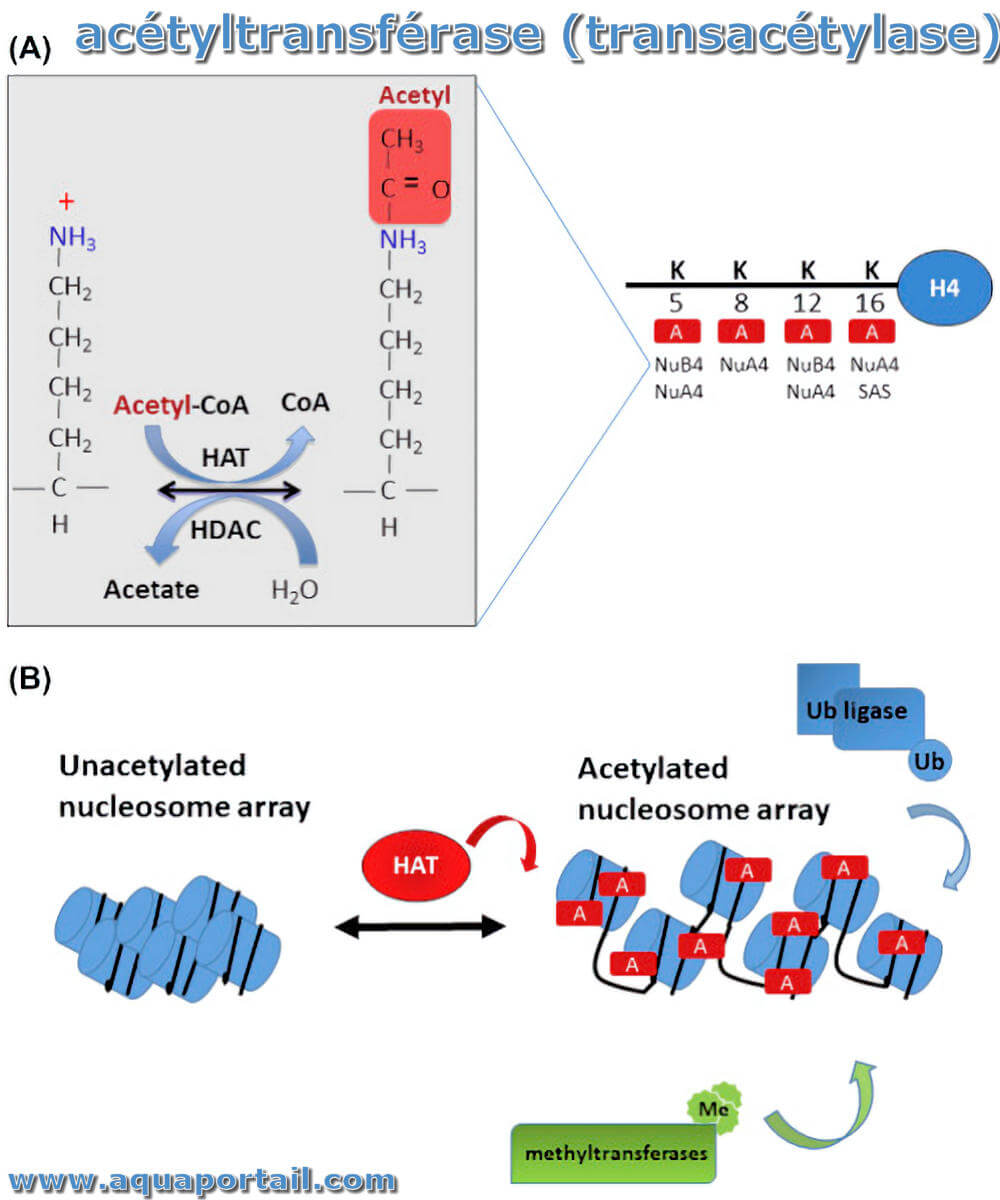
An acetyltransferase is an enzyme that transfers an acetyl group from acetyl-CoA to lysine amino acids.
