Continent
noun (n.)
Definition
A continent is one of the 7 main continuous landmasses of the world: Africa, North America, South America, Antarctica, Asia, Europe, and Oceania (Australia). There are no official criteria for defining continents.
While the position of landmasses on continental crust can be used to determine continents, geopolitical factors also affect their delimitation.
A map with the 7 continents:

World map showing the 7 continents of Earth, using the most popular classification system. The exact number of continents is actually somewhat controversial. Defining continents is as much a political matter as a geological one, leading to multiple continental models.
Explanations
Continents are the largest building blocks that people use to describe the shape of the world. A continent is defined as a large, unbroken landmass completely surrounded by water, although in some cases continents are (or were partly) connected by land bridges.
Political considerations have often taken precedence over geographic facts when it came to naming continents. Geographically, Europe, including the British Isles, is a large western peninsula of the Asian continent; and many geographers, referring to Europe and Asia, speak of the Eurasian continent. For this reason, there are many different competing models of continents.
What is a continent?
In simple terms, a continent is defined as a large, continuous landmass that creates a specific region. These regions may encompass several countries with certain cultural traits or simply contain a portion of continental crust.
For example, the South American continent comprises 12 individual countries, whereas the Middle East is not a continent in its own right (instead spanning Turkey, Egypt, and Western Asia, making it a prominent region across three continents).
As such, not all landmasses are listed among the world's continents. Even more interestingly, due to continental drift and shifting tectonic plates, a given continent may lie in a slightly different part of the world over thousands of years!
Number = 4, 5, 6, or 7?
While the principle of 7 continents is widely accepted, the list of continents is sometimes reduced to 5: Africa, America, Antarctica, Eurasia, and Oceania (Australia and the Pacific Islands).
In paleogeography, there was once a single supercontinent, Pangaea, which later broke into 2 continents: Laurasia and Gondwana.
There are seven continents in the world: Asia, Africa, North America, South America, Antarctica, Europe, and Australia, ranked by size. Europe and Asia are sometimes considered a single continent, Eurasia. However, depending on where you live, you may have learned that there are five (America and Eurasia), six (Eurasia combined, or excluding Antarctica), or even four continents (excluding Antarctica from the 5).
In the United States and other English-speaking countries, it is generally taught that there are seven continents on Earth. Yet the world map is not so straightforward.
Depending on the country in question, it may not fall into the regional or continental model you expect, with common misconceptions such as Southeast Asia, Japan, or Mexico. Earth's surface is not as easily divisible as a simple list of continents might lead us to believe!
In geology and geography
Geologists and geographers would say that a continent is a large landmass surrounded by water. This includes both the land area and the continental shelf extending beyond it. A continent is generally distinguished from a large island by plate tectonics, as most continents sit on a single major continental plate.
Japan, for example, is not a continent despite its size. However, because most of it lies on the Asian plate, it is considered part of Asia rather than being grouped with oceanic nations on the same plate as the Philippines or the Pacific, and the same applies to Greenland. This seems a reasonable standard for what defines a continent. Yet there are two problems with this approach.
The first is that subcontinents exist, large landmasses on their own tectonic plates that are attached to larger continents. India is a subcontinent, as are the Arabian Peninsula and the Isthmus of Panama (and other parts of Central America). The movement of these subcontinents is responsible for numerous mountain ranges and other geographic features. For example, India's movement toward China created the Himalayas.
The second is that many people do not really want to use this model. By this standard, Europe does not exist. There is no geological basis for Europe's existence, and many specialists regard it as part of Eurasia. And yet most people on Earth insist that the Ural Mountains delimit Europe and Asia as separate continents.
This becomes even stranger when the question of Russia arises. Russia as a single country still spans two continents. By tradition, there is European Russia and Asian Russia. If we went by tectonic plates, there would be Eurasian Russia and North American Russia, because the North American plate crosses the Pacific Ocean at the Bering strait.
In much of Latin America, conversely, it is common to group the Americas together even though they lie on different plates, owing to a perceived continuity across the New World.
Plastic continent
Sometimes a 7th or 8th continent is mentioned, the plastic continent. In reality, even though a very large proportion of ocean plastics concentrates in the Pacific Ocean, it does not form a continent but a gyre.
The gyres of the plastic continent:
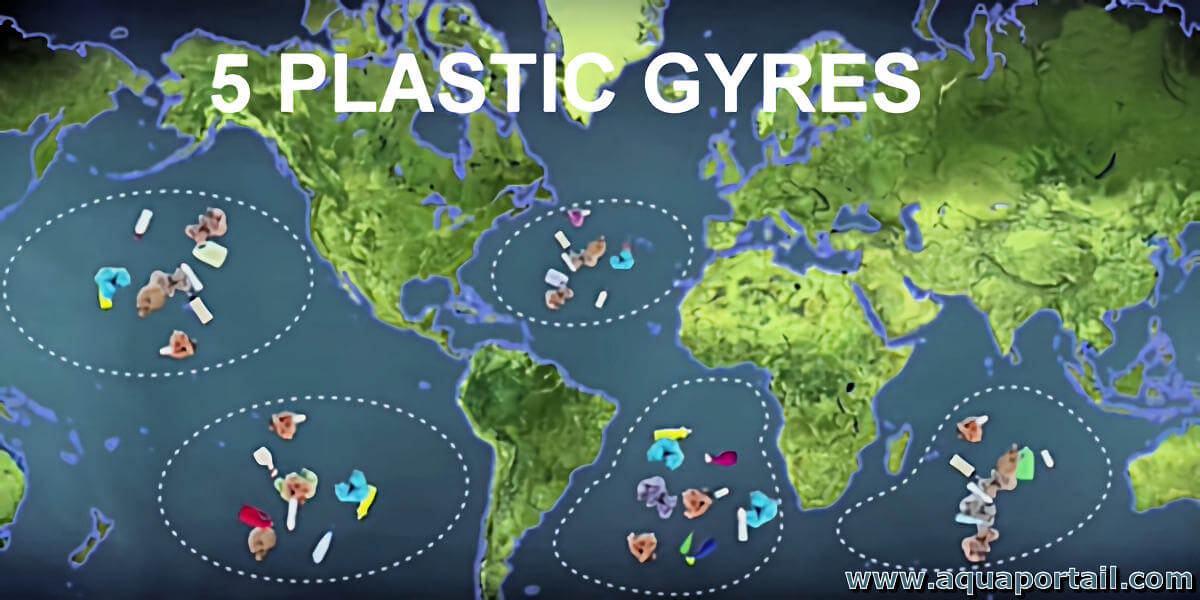
The North Pacific Garbage Patch (gyre) is an accumulation of anthropogenic debris in the North Pacific Ocean. It is located between 135–155° west longitude and 35–42° north latitude. On this pseudo-continent, there is an accumulation of plastic and other waste carried by the waters of the North Pacific Current system.
Synonyms, antonyms
Spanish translation: continente
2 synonyms (similar meaning) for "continent":
0 antonyms (opposite meaning).
Related words and expressions to CONTINENT are directly connected by general or specific meaning.
The word CONTINENT is listed on page 1 of words starting with C in the dictionary glossary.
Related to "continent"
cactus

A cactus is a thick, fleshy plant that grows in many hot, dry regions of the world. Cacti do not have leaves, and many are covered with spines.
caecilian

A caecilian (gymnophione) is a limbless, burrowing, worm-like amphibian whose legs are vestigial or absent.
cancer

Cancer is a disease in which certain cells of the body grow uncontrollably and spread to other parts of the body.
capsule

A hard capsule (gelcap) is a small, hollow, hard-shelled capsule made of two interlocking halves containing a medication, nutraceutical, or dietary...
Simple summary
A continent is a vast continuous expanse of land, generally separated from others by oceans and distinguished by geographic and cultural features. It usually encompasses several countries; among the most commonly recognized continents are Africa, Antarctica, Asia, Europe, North America, Australia, and South America. These landmasses hold major significance not only because of their size, but also for the role they play in dividing Earth's surface and as spaces harboring diverse ecosystems and human societies.
