Strait
noun (n.)
Definition
A strait is a narrow channel-like sea passage connecting two seas or two other large bodies of water and separating two landmasses. The best-known examples are the Strait of Gibraltar, the Strait of Hormuz, and the Strait of Magellan.
The Strait of Hormuz in Western Asia:

The Strait of Hormuz is a corridor between the Persian gulf and the Gulf of Oman. It is renowned for its depth and lack of major maritime obstacles. Its greatest depths lie near the Musandam Peninsula (Sultanate of Oman, north of the United Arab Emirates). Its depth gradually decreases as one approaches the coast of Iran.
Explanations
A strait is a narrow channel connecting two larger bodies of water. It often originates through a breach in an isthmus, which is a strip of land separating two distinct bodies of water.
Although similar in concept to a canal (a passage cut across an isthmus, or narrow strip of land), a strait is formed naturally. Due to their strategic location, straits often serve as vital shipping lanes, enabling vessels to navigate efficiently between different bodies of water.
✅ The Strait of Malacca is the longest strait in the world, featuring a narrow funnel-shaped waterway 800 km (497 mi) long. It connects the South China Sea and the Andaman Sea.
The Strait of Gibraltar is the only passage between the Mediterranean Sea and the Atlantic Ocean, situated between Spain and Morocco.
The Bosphorus Strait separates Europe and Asia, forming a sea passage connecting the Sea of Marmara to the Black Sea.
The Strait of Hormuz connects the Persian Gulf to a part of the Arabian Sea called the Gulf of Oman.
The Strait of Magellan, in southern Chile in South America, is a natural passage between the mainland and the islands of Tierra del Fuego, allowing passage between the Atlantic and Pacific oceans.
The Bering Strait separates the Chukchi Peninsula (northeastern tip of Russia) from the Seward Peninsula in Alaska (United States). It connects the Arctic Ocean to the Bering Sea while separating Asia and North America at their closest point.
Straits generally form through one of two natural processes. First, a large volume of water may overflow across low-lying areas of an isthmus, gradually eroding it and thus carving a channel. Second, tectonic plate movements can cause deformations of the Earth's crust, fracturing portions of land and giving rise to straits.
Synonyms, antonyms
Spanish translation: estrecho
3 synonyms (similar meaning) for "strait":
- channel
- corridor
- sea passage
1 antonym (opposite meaning):
Related words and expressions to STRAIT are directly connected by general or specific meaning.
The word STRAIT is listed on page 1 of words starting with S in the dictionary glossary.
Related to "strait"
ancestral trait
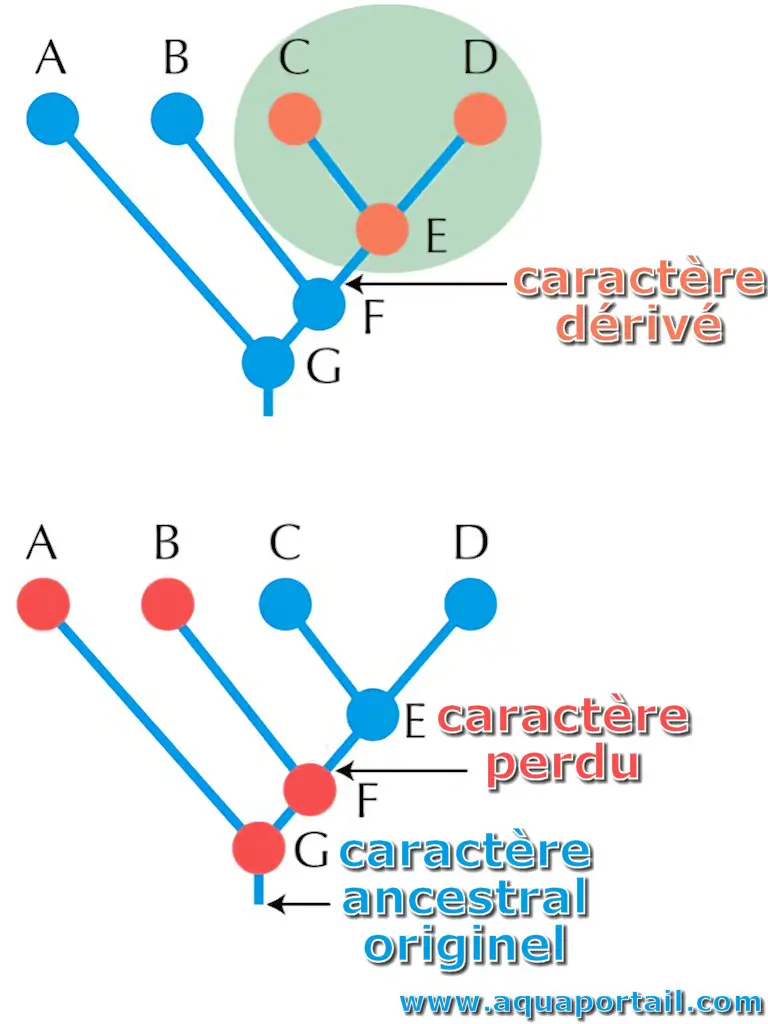
An ancestral character (ancestral trait) of a lineage or taxon refers to a feature inherited from the common ancestor of a clade or group that has undergone...
inherited trait

An inherited trait is one of the phenotypic traits of an organism transmitted from one generation to the next, in a framework synonymous with the principle...
saccharide

A saccharide is a carbohydrate, a biomolecule composed of carbon, hydrogen, and oxygen atoms, usually with a hydrogen-to-oxygen atomic ratio of 2 :1.
sagittocyst

A sagittocyst is a capsule containing a spindle-shaped needle produced by epidermal cells of certain flatworms (acoels).
Simple summary
A strait refers to a narrow sea passage connecting two larger bodies of water. Often, this geographic formation is characterized by its narrowness and restricted width, creating a natural corridor for maritime navigation between seas or oceans.
