Cornea
noun (n.)
Definition
The cornea is a transparent tissue forming the outermost refractive lens covering the front of the eye, at the very anterior pole of the eyeball. It serves two primary purposes: protecting the eye and focusing incoming light into the eye. It possesses greater optical focusing power than many camera lenses. The second focusing lens of the eye, located behind the cornea, iris, and pupil, is the crystalline lens.
Details of the cornea of an eye:

The cornea is the transparent front surface of the eye that allows light to enter the eyeball. The cornea has five tissue layers: the corneal epithelium, Bowman's membrane, the corneal stroma, Descemet's membrane, and the corneal endothelium.
Explanations
The cornea is a thin, highly specialized tissue that meets the challenge of serving as an interface between the external environment and the interior of the body while maintaining tissue clarity at a level that enables sharp visual acuity.
The cornea acts as a clear, transparent window at the front of the eye. It is one of the few transparent tissues in the human body (alongside the crystalline lens and vitreous humor), measuring approximately 0.52 mm (0.020 in) thick at the center and 0.65 mm (0.026 in) at the periphery, with an average horizontal diameter of about 12 mm (0.47 in). The cornea provides roughly 75% of the refractive power of the human eye, focusing transmitted light onto the retina.
In addition to photoprotection through substantial absorption of UV radiation, the cornea acts as a tough, elastic physical barrier shielding internal ocular structures from external physical, chemical, or microbial insults. Moreover, the cornea withstands fluctuations in intraocular pressure (IOP) and maintains ocular curvature.
Transparency is obviously essential to vision, and it is the cornea's intricate multilayered structure that allows it to perform its functions. If the cornea is affected by disease or external injury, it loses its transparency, leading to partial or total blindness.
Unlike most tissues in the body, the cornea contains no blood vessels to nourish itself or defend against infection. Instead, the cornea receives nutrients and oxygen from tears and from the aqueous humor filling the anterior chamber behind it. The cornea must remain avascular and transparent to refract light properly, as the presence of even the tiniest blood vessels would interfere with this process.
For clear vision, all layers of the cornea must remain free of any cloudy or opaque areas. Although clear and seemingly delicate, the cornea is densely innervated by sensory nerve fibers, making it one of the most sensitive tissues in the body.
Functions
The cornea has two primary functions:
- protecting the intraocular contents of the eye from injury and infection;
- serving as the primary optical element—refracting and focusing light.
The elasticity and thickness of the cornea enable it to withstand intraocular pressure (IOP) within the eye. The cornea accounts for roughly one-sixth of the outer tunic of the eye and joins the sclera at the limbus, imparting a slightly oval contour to the anterior corneal surface.
Corneal anatomical structures
The cornea is a highly organized arrangement of corneal cells and proteins organized into five distinct layers:
- corneal epithelium: the outermost layer of the cornea. Its cells provide a smooth surface to keep the cornea moist and clear. These cells are continuously shed and replaced by stem cells located in the limbus; an imbalance in this process renders the eye chronically dry and irritated, causing discomfort and visual deterioration;
- Bowman's layer (membrane): a dense acellular layer of collagen fibers separating the epithelium from the stroma;
- corneal stroma: the thickest layer of the cornea (about 90% of its thickness). It provides structural toughness, and the precise lattice arrangement of collagen fibrils gives rise to corneal transparency;
- Descemet's membrane: a dense basement membrane separating the stroma from the endothelium;
- corneal endothelium: the innermost layer. Cells here regulate the fluid content of the cornea; damaged or diseased endothelial cells cause corneal swelling (edema), disrupting transparency and impairing vision.
Physiological regulation for peak performance
The cornea comprises three primary regions: five to seven layers of epithelium on the anterior surface, a stroma (the main structural component bounded by two limiting membranes), and a single monolayer of endothelial cells on the posterior face of Descemet's membrane.
The anterior regions of the cornea obtain O2 directly from the tear film across the anterior corneal surface. Other nutrients, such as glucose, amino acids, and vitamins, are derived primarily from the aqueous humor. Growth factors are both endogenous and supplied by the aqueous humor via the posterior corneal surface and by tears.
Limbal blood vessels also play a minor role in supplying peripheral nutrients. CO2 is eliminated across the anterior surface, whereas the metabolic waste product lactate is cleared mainly by diffusion through the stroma and endothelium into the aqueous humor. Regulating lactate concentration is critical because excess lactate can induce stromal edema, leading to cloudiness.
Corneal transparency depends largely on maintaining the architecture of cells and surrounding proteoglycans and collagen fibrils. Furthermore, the cornea must tightly regulate the diffusion of water and ions into the stroma; a normal cornea contains roughly 78% H2O by weight.
The epithelium prevents swelling by inhibiting the diffusion of water and ions from tears through tight junctions. The endothelium employs both a tight-junction barrier function and a metabolic pump (Na+/K+-ATPase) located in the basolateral membrane to prevent stromal swelling.
The stroma, composed of heavily negatively charged proteoglycans, tends to draw in water and must therefore be kept relatively dehydrated. When excess water enters the stroma, glycosaminoglycans absorb it.
The result is an increase in corneal thickness (edema), disruption of collagen fibril alignment, and ultimately light scattering across the cornea. These factors are critical to transparency because edema alters corneal refractive power, which is determined by both the refractive index and the radius of curvature of the cornea.
The refractive index of a normal cornea is 1.376, and its anterior central radius of curvature averages 7.7 mm (0.30 in). The shorter the radius of curvature, the steeper the cornea and the greater its refractive power. Clinically, the term "diopters" (corneal power) is used rather than corneal radius in millimeters. Roughly 75% of the eye's dioptric power arises from the interface between ambient air and the cornea.
Another vital aspect of vision is glare control. A healthy cornea absorbs ultraviolet radiation (notably UVB at 280–300 nm), protecting the posterior segment of the eye. Glare occurs when bright light is scattered within the eye, causing discomfort and reduced contrast sensitivity.
Consequently, opacities can lower visual acuity not only by distorting the geometric image, but also by scattering light within the globe, reducing the ability to resolve images on the retina.
This loss of contrast also occurs when a person has cataracts, where images remain visible in dim light but bright light causes debilitating glare. Light scattering also arises when the stroma is injured or when inflammation lies within or near the visual axis.
Because natural UV-absorbing corneal tissue is absent in synthetic corneas, selecting appropriate materials or UV blockers is an important consideration in designing an artificial cornea.
Corneal pathologies
The cornea sits directly in front of the iris and pupil. The sclera is the tough, white outer wall of the eye, and the conjunctiva is the thin mucous membrane covering the anterior sclera and inner eyelids. The eyelids protect these superficial ocular structures and keep them moist with each blink.
Several disorders can affect these ocular structures, including infections, degenerations, dystrophies, and trauma. There are inherited corneal diseases as well as acquired degenerative conditions.
The most common corneal conditions and disorders include:
- corneal abrasions;
- corneal dystrophies;
- corneal ulcers;
- keratoconjunctivitis;
- keratoconus;
- bullous keratopathy;
- pterygium;
- recurrent corneal erosions.
Treatments for these conditions may involve topical drops or ointments, oral medications, or surgical intervention.
To function as a primary optical element, the cornea must remain transparent so that a crisp image forms on the retina. Any corneal opacity resulting from disease or trauma scatters light and degrades image quality.
To restore or enhance vision, synthetic corneas and other devices or refractive procedures that alter corneal curvature have been evaluated. Although the cornea appears simple on the surface, developing synthetic replacements has proven challenging.
For instance, the cornea is avascular and must remain so; its thickness is regulated by cellular pumps and junctions. If endothelial barrier integrity is lost, the cornea becomes edematous.
Additionally, the corneal matrix can be damaged by inflammatory mediators or enzymes from tears and/or aqueous humor. These challenges are compounded by the fact that the cornea is one of the most densely innervated tissues in the body, and wound healing is impaired in the absence of innervation.
When disease or trauma renders the cornea opaque, it loses its ability to refract light properly. This impairment can be treated surgically via "penetrating keratoplasty" (corneal transplantation), in which the diseased cornea is replaced with a donor cornea. When repeated corneal grafts fail, synthetic corneas (keratoprostheses) may be sutured in place to restore functional vision.
Corneal engineering
The cornea is a prime candidate for tissue engineering; however, biological constraints restricting alterations in corneal shape or curvature, or the placement of a prosthesis, make the tissue very challenging to engineer.
Procedures that reshape corneal curvature to improve vision are in high demand, though some earlier techniques caused major structural alterations and tissue damage. Close attention to corneal biology is essential for such interventions to succeed.
Meanwhile, the need for synthetic corneas remains genuine, and efforts to develop an effective keratoprosthesis have advanced considerably in recent years, with several designs undergoing clinical evaluation.
Replacing a human cornea requires an interdisciplinary approach in which materials scientists aim to design biomaterials that are accepted and ultimately integrated by ocular tissues. There is a major need for synthetic corneas in developing regions where donor grafts are unavailable due to medical, logistical, or cultural barriers.
See also eyespots.
Corneal cell
A corneal cell is a constituent cell of the eye's cornea. The corneal epithelium is the outermost layer of the cornea, composed of a single layer of basal cells and 4 to 5 layers of non-keratinized stratified squamous epithelial cells held together by tight junctions to form an effective barrier against fluid loss and pathogen entry.
The corneal endothelium is a monolayer of endothelial cells lining the posterior cornea in a characteristic hexagonal honeycomb mosaic. Human corneal endothelial cells (HCEnCs) are primarily responsible for regulating stromal hydration, which is intrinsically linked to tissue transparency.
The cornea is composed of cellular and acellular components. Cellular components include epithelial cells, keratocytes, and endothelial cells, while the acellular extracellular matrix comprises collagen and glycosaminoglycans. Epithelial cells derive from surface ectoderm.
In insects, lens-secreting cells are instead termed corneagenous cells. A corneagenous cell is a specialized epidermal cell that secretes the transparent cuticular cornea of ocelli and compound eyes.
Synonyms, antonyms
Spanish translation: córnea
0 synonyms (similar meaning) for "cornea".
0 antonyms (opposite meaning).
Related words and expressions to CORNEA are directly connected by general or specific meaning.
The word CORNEA is listed on page 1 of words starting with C in the dictionary glossary.
Related to "cornea"
cactus

A cactus is a thick, fleshy plant that grows in many hot, dry regions of the world. Cacti do not have leaves, and many are covered with spines.
caecilian

A caecilian (gymnophione) is a limbless, burrowing, worm-like amphibian whose legs are vestigial or absent.
cancer
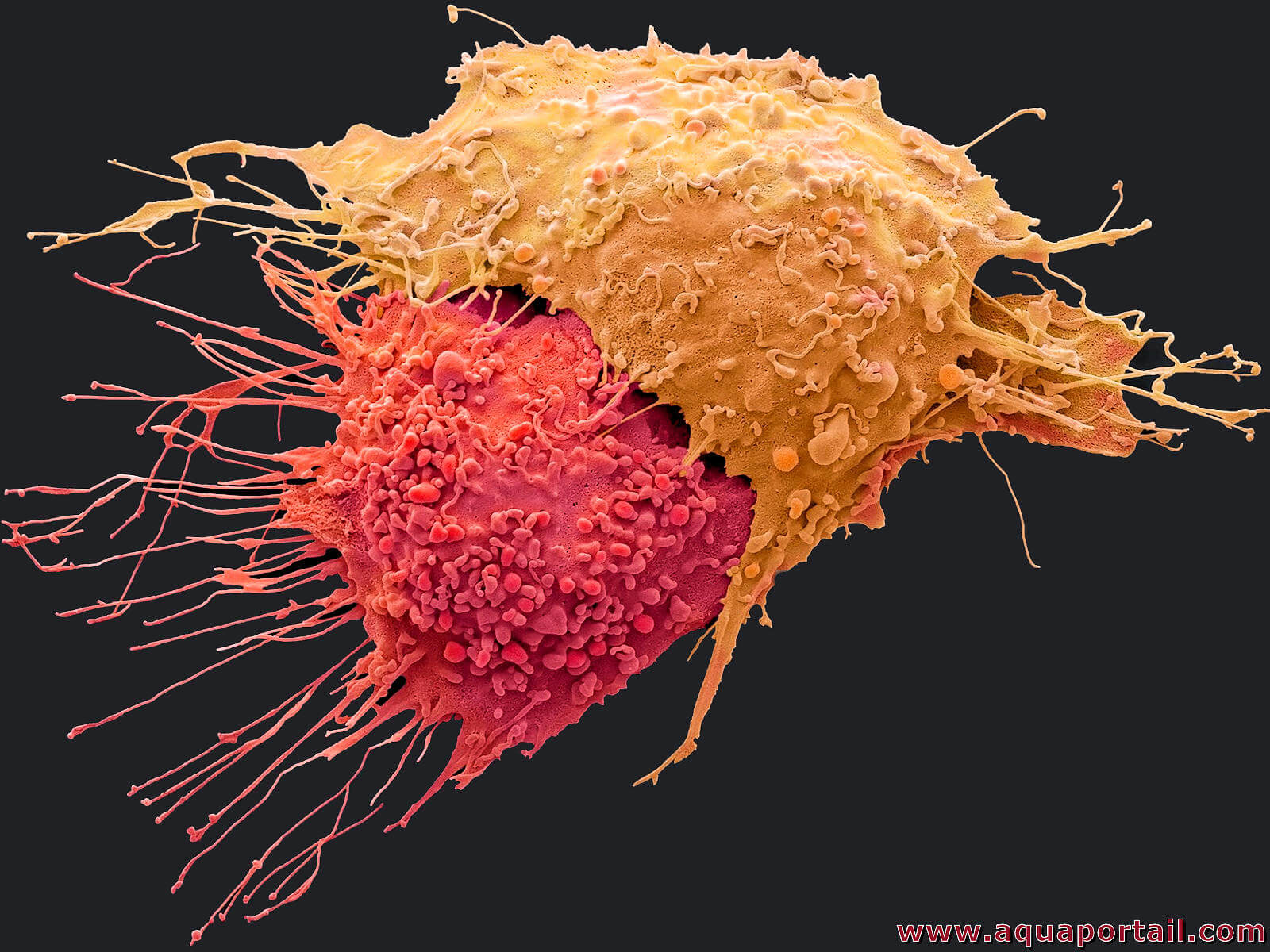
Cancer is a disease in which certain cells of the body grow uncontrollably and spread to other parts of the body.
capsule

A hard capsule (gelcap) is a small, hollow, hard-shelled capsule made of two interlocking halves containing a medication, nutraceutical, or dietary...
