Vitamins
plural noun (n.pl.)
Definition
Vitamins are chemical substances essential for the good health of an organism, but without caloric value. Most organisms cannot synthesize at least certain vitamins and must obtain them from their diet.A cocktail of vitamins :
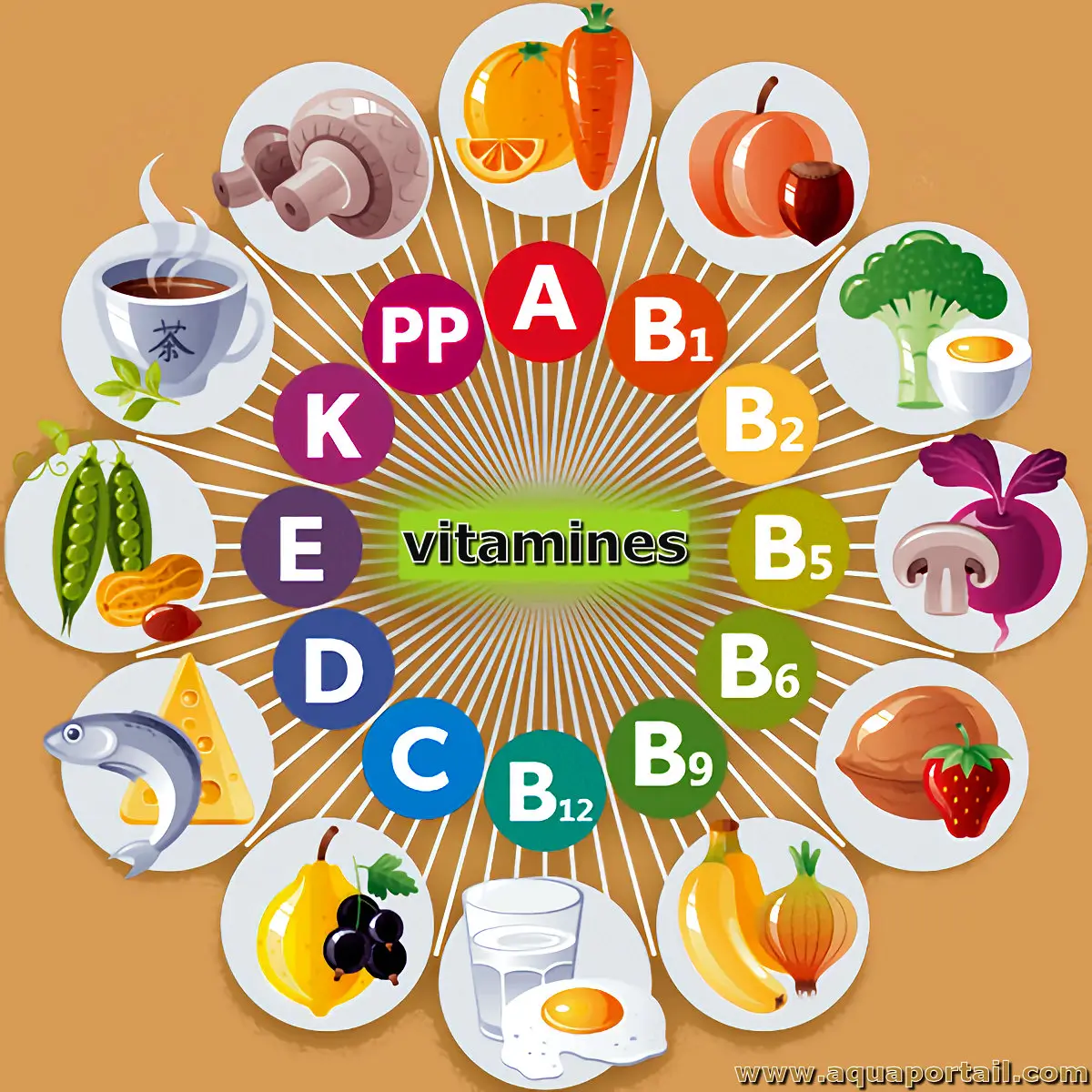
A vitamin blend can contain 12 essential vitamins (A, B1, B2, B5, B6, B9, B12, C, D, E, K, and PP). They are generally classified into two categories: water-soluble vitamins (such as vitamin C and B-group vitamins) and fat-soluble vitamins (such as vitamins A, D, E, and K).
Explanations
Vitamins govern the proper course of various physiological processes. Despite very thorough studies on the vitamin requirements of mammals, their exact roles are not yet fully elucidated. What is certain is that the required quantities are very small and that their action appears comparable to that of enzymes.
Above all, vitamins act as catalysts.
✅ To keep your body functioning properly and avoid deficiencies that increase your risk of serious illnesses, including heart disease, cancer, and osteoporosis, eat a balanced diet with a variety of foods containing all 13 essential vitamins.
Vitamins are distinguished by a capital letter (A, B, C, D, E, and K), optionally followed by a number when several vitamins exist within the same complex. Vitamins can be divided into two groups:
- fat-soluble vitamins (soluble in fats): A, D, E, and K.
- water-soluble vitamins (soluble in water): B and C.
See: vitamin A, vitamin B, vitamin C, vitamin D, vitamin E, vitamin K, biotin.
Vitamin P is actually called a flavonoid. The term "vitamin P" is used to refer to a group of bioflavonoids, which are natural compounds found in plants that possess antioxidant properties and offer several other health benefits.
⭐ With regard to fish, our knowledge remains limited. However, it is clear that vitamins are essential to them. Certain dietary experiments are conclusive: when fish are fed a diet completely lacking a specific vitamin, deficiency signs soon appear. The necessity of the missing vitamin can therefore be concluded. Conversely, an excess of vitamins can be harmful and cause various diseases.
Vitamin A (retinol)
Vitamin A plays an important role in cell growth and development, thereby contributing to the health of teeth, bones, mucous membranes, and soft tissues, including skin, hair, nails, gums, and glands. Adequate amounts can prevent night blindness and lung cancer.
Foods that provide it include: dark leafy greens, squash, sweet potatoes, mango, cantaloupe, grapefruit, fortified dairy products, egg yolk, fish, beef, and liver.
Vitamin B1 (thiamine)
Vitamin B1 is essential for maintaining a healthy metabolism, regulating nerve and heart functions, and converting carbohydrates into energy.
Foods that provide it include: legumes (beans), nuts, seeds, whole grains, fortified bread, nutritional yeast, powdered milk, egg, lean meat, and organ meats.
Vitamin B2 (riboflavin)
Vitamin B2 is necessary for energy metabolism, growth and red blood cell production, adrenal function, vision, and maintaining healthy skin.
Foods that provide it include: raw mushrooms, nutritional yeast, cereals, fortified cereals, plant milk, dairy products, and lean meats.
Vitamin B3 (niacin)
Vitamin B3 metabolizes energy, promotes normal growth, and helps maintain healthy skin and nerves. At high doses, niacin can also help lower bad cholesterol, also known as low-density lipoprotein (LDL).
Foods that provide it include: avocado, potato, legumes, nuts, fortified bread and cereals, nutritional yeast, milk, egg, fish, and lean meats.
Vitamin B5 (pantothenic acid)
Vitamin B5 helps metabolize food, normalizes blood sugar levels, and plays a role in producing hormones and good cholesterol, also known as high-density lipoprotein (HDL).
Foods that provide it include: cruciferous vegetables (such as broccoli, cauliflower, and Brussels sprouts), mushrooms, avocado, potato, legumes, whole grains, milk, egg, poultry, and organ meats.
Vitamin B6 (pyridoxine)
Vitamin B6 aids in red blood cell synthesis, maintains proper nervous and brain function, and promotes metabolism for energy release.
Foods that provide it include: leafy green vegetables, avocado, potato, banana, legumes, nuts, whole grains, cereals, nutritional yeast, fish, poultry, and meat.
Vitamin B7 (biotin)
Vitamin B7 helps maintain healthy protein and carbohydrate metabolism, regulates hormone and cholesterol production, and promotes healthy hair, skin, and nails.
Foods that provide it include: legumes, nuts, whole grains, cereals, yeast, milk, egg yolk, pork, organ meats, and even chocolate.
Vitamin B9 (folate/folic acid)
Vitamin B9 controls tissue growth and cellular function, produces DNA, RNA, and red blood cells, and synthesizes amino acids. Because low levels are linked to birth defects, folate is crucial for pregnant women.
Foods that provide it include: leafy green vegetables, broccoli, asparagus, beets, avocado, oranges, legumes, wheat germ, fortified flour and cereals, brewer's and nutritional yeast, and liver.
Vitamin B12 (cobalamin)
Vitamin B12 supports metabolism, helps form red blood cells, DNA, RNA, and myelin for nerve fibers, and maintains the central nervous system.
Foods that provide it include: nutritional yeast, fortified cereals, plant milk, dairy products, eggs, fish, poultry, meat, and organ meats.
Vitamin C (ascorbic acid)
Vitamin C strengthens blood vessel walls, promotes wound healing and iron absorption, helps prevent atherosclerosis, supports immunity, and acts as an antioxidant promoting healthy tissues, teeth, and gums.
Foods that provide it include: cruciferous vegetables, spinach, bell pepper, tomato, potato, citrus fruits, melons, and berries.
Vitamin D
Vitamin D facilitates calcium absorption, builds strong bones and teeth, and helps maintain proper blood levels of calcium and phosphorus.
Foods that provide it include: fortified dairy and plant-based dairy products, egg yolk, fatty fish, and fish oil, or spending 10 to 15 minutes in the sun three times a week.
Interestingly, when we consume cholesterol-rich foods and expose ourselves to sunlight, cholesterol is metabolized into vitamin D.
Vitamin E (tocopherol)
Vitamin E protects fatty acids, maintains muscles and red blood cells, and serves as an antioxidant.
Foods that provide it include: dark green vegetables, avocado, papaya, mango, nuts, seeds, wheat germ, fortified cereals, vegetable oil, and egg.
Vitamin K
Vitamin K is necessary for proper blood clotting.
Foods that provide it include: leafy green and cruciferous vegetables, cereals, eggs, fish, beef, and liver.
Synonyms, antonyms
Spanish translation: vitaminas
1 synonym (similar meaning) for "vitamins":
0 antonyms (opposite meaning).
Related words and expressions to VITAMINS are directly connected by general or specific meaning.
The word VITAMINS is listed on page 1 of words starting with V in the dictionary glossary.
Related to "vitamins"
trace element

A trace element (micronutrient mineral) is a mineral required, even in tiny quantities, in the diet for the proper metabolic functioning of living organisms...
vacant

Vacant describes what is free, unoccupied, or available (referring to a place, property, job, or office).
vagile

An organism is vagile when it possesses the ability to move about across the substrate of its environment.
valley

In geology, a valley is a depression, an elongated low-lying area between higher landforms such as hills or mountains, often with a river flowing through it.
Simple summary
A vitamin is an essential organic compound that the body needs in small amounts for proper functioning, growth, and overall health. Because the body does not produce these compounds or produces them in insufficient amounts, they must be obtained through food or dietary supplements.
