Biotin
noun (n.)
Definition
Biotin is a nitrogen- and sulfur-containing vitamin (vitamin B7 / vitamin B8) that plays an important metabolic role as a thermostable coenzyme. It is soluble in water and alcohol and is involved in the metabolism of carbohydrates, lipids, amino acids, and purines.Structure of biotin:
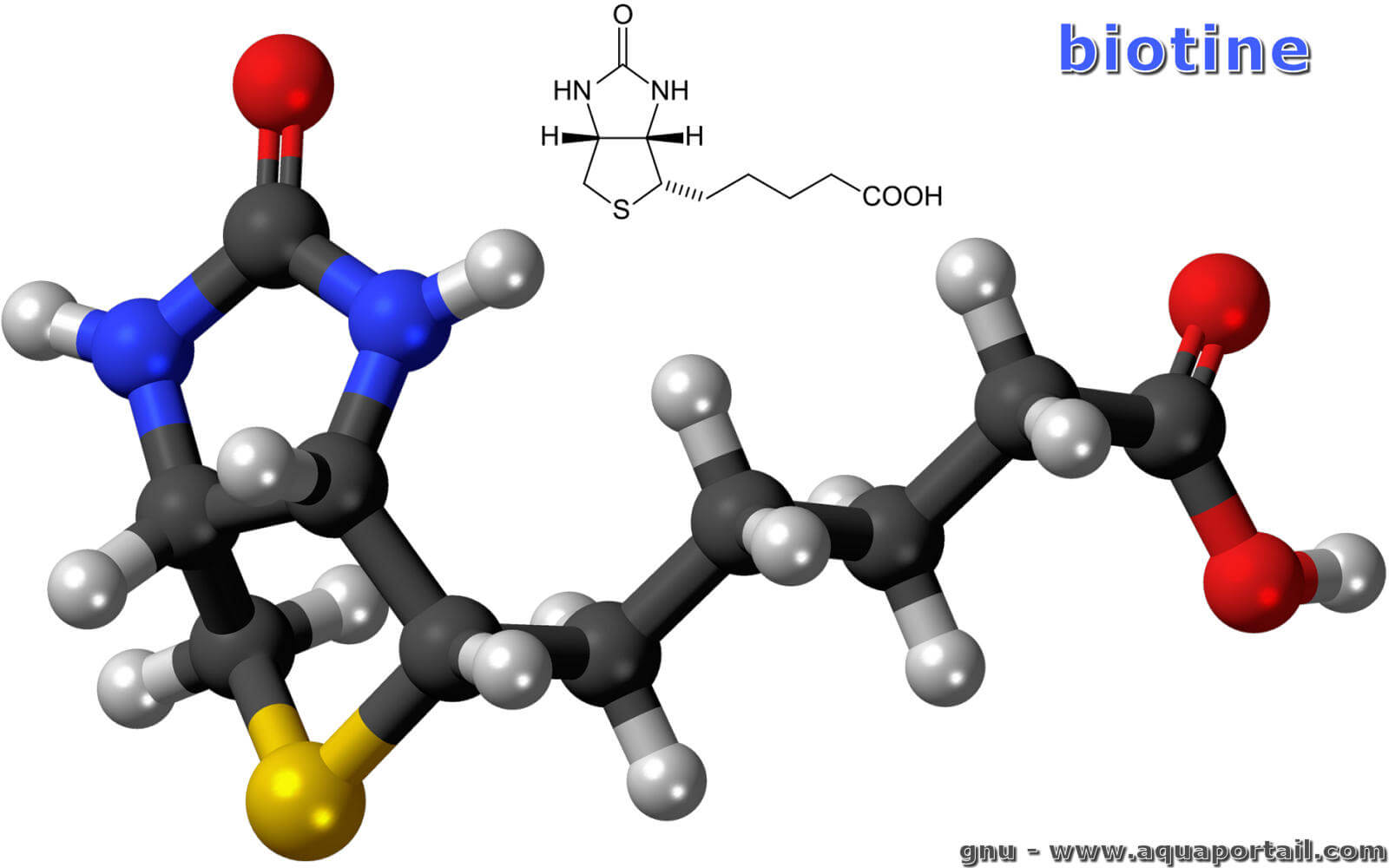
Biotin, with molecular formula C10H16N2O3S, is essential for the synthesis and breakdown of fats and the breakdown of certain amino acids. It is also called vitamin B7, vitamin H, or in France vitamin B8.
Explanations
Biotin is a water-soluble vitamin composed of a bicyclic sulfur-nitrogen ring bearing a five-carbon side chain. It is synthesized by bacteria in the digestive tract and is present, among other foods, in liver, egg yolk, legumes, and nuts. It acts as a CO2-carrying coenzyme for numerous carboxylation, decarboxylation, and deamination enzymes, particularly in the Krebs cycle and in the formation of purines and non-essential amino acids.
Raw egg white contains the protein avidin, which prevents the absorption of biotin in the intestine. It must therefore be consumed thoroughly cooked. Avidin is denatured by cooking and loses its function.
✅ A considerable amount of biotin is synthesized by intestinal bacteria and absorbed via the intestinal tract.
No definitive study on biotin requirements has been conducted due to a lack of knowledge regarding the bioavailability of this element in foods and microbial contribution, though a sufficient and safe intake of this vitamin is recognized to be 200 to 300 μg daily.
Chemical structure
Biotin consists of a ureido (imidazolidone) ring fused with a tetrahydrothiophene ring. A valeric acid substituent attaches to one of the carbon atoms of the tetrahydrothiophene core. There are three forms of biotin: free biotin, biocytin (ε-biotin-L-lysine), and two L- and D-sulfoxides of biotin.
Biological role
Biotin is an important cofactor for enzymes involved in catalyzing metabolic reactions essential to fatty acid synthesis, gluconeogenesis, and leucine metabolism.
Functions
Biotin is found in the cell bound to a specific lysine residue (an amino acid) forming biocytin; biocytin binds covalently to certain enzymes involved in the formation or utilization of carbon dioxide and thus acts as a coenzyme: it operates in the transfer (acceptor and donor) of carbon dioxide in numerous carboxylases and decarboxylases:
- Pyruvate carboxylase
- Acetyl-CoA carboxylase alpha and beta
- Propionyl-CoA carboxylase
- Methylcrotonyl-CoA carboxylase
- Geranoyl-CoA carboxylase
- Urea carboxylase
- Oxaloacetate decarboxylase
- Methylmalonyl-CoA decarboxylase
- Glutaconyl-CoA decarboxylase
- Methylmalonyl-CoA carboxytransferase.
All these enzymes are essential in cellular duplication processes. That is why M. Bateman observed that by depriving rats of biotin, they initially developed a cellular enzyme deficiency that first affected rapidly dividing or mitotic tissues (skin, hair, axonal sheath cells).
Biotin is used in cell growth, fatty acid production, and the metabolism of fats and amino acids. It plays a role in the citric acid or Krebs cycle, the process by which biochemical energy is generated during aerobic respiration. Biotin not only aids in various chemical and metabolic conversions, but also contributes to carbon dioxide transfer. Biotin also participates in maintaining normal blood glucose levels.
Organ meats, egg yolk, fish, dried peas, mushrooms, brewer's yeast, and nuts are high-biotin food sources. Biotin is stable during cooking, but is less stable in alkaline media. In the case of egg yolk, the change it undergoes when exposed to an alkali is different, as it takes on a deeper orange coloration than usual and a firm yet rough texture; this is because biotin is concentrated around the yolk and the transparent structure of the egg makes the change more clearly visible, unlike organ meats which do not dry out without major color change, because the biotin they contain is located in greater quantities inside.
Uses
Biotin relieves muscle pain, eczema, and dermatitis, and also helps combat depression and drowsiness. No definitive study on biotin requirements has been carried out due to a lack of knowledge about its availability in foods and its microbial supply, though an adequate and safe intake of this vitamin is recognized as 200 to 300 μg per day.
This vitamin is often recommended to strengthen nails and skin. Deficiency is extremely rare, as intestinal bacteria can produce it and account for up to 50% of daily requirements. The main sources of this vitamin are animal-derived foods (mainly organ meats), milk and dairy products, as well as yeast, supplemented by 50% from the intestinal microflora.
The attachment of biotin to various chemical sites, known as biotinylation, can be used as an important laboratory technique to study various processes, including protein localization, protein interactions, transcription, and DNA replication. Biotin itself is used to "biotinylate" histones, though it is not naturally found in DNA. Holocarboxylase synthetase is involved in biotin binding.
Biotin supplements are often recommended as natural products to counteract hair loss in children and adults. However, no study demonstrates benefits from biotin when the subject is not vitamin-deficient. Signs and symptoms of biotin deficiency include hair loss that becomes more severe when it involves loss of eyelashes and eyebrows. Some available shampoos contain biotin, though it is doubtful they exert a beneficial effect, as biotin is not absorbed through the skin.
⭐ People with type 2 diabetes frequently present with low biotin levels. Biotin may be involved in insulin synthesis and release; preliminary animal and human studies suggest that biotin could help improve blood sugar levels in patients with diabetes, particularly type 2.
Lack, insufficiency, and deficiency
Biotin may become deficient in individuals receiving total parenteral nutrition for several years. Symptoms cause deterioration of the metabolic functions described, eczema, dry and scaly dermatitis, pallor, nausea, vomiting, severe fatigue, and depression.
❓ What happens to biotin with egg white and avidin? Active avidin is found only in raw egg white because it is neutralized when cooked, unlike biotin which withstands high temperatures without alteration; thus, eating cooked eggs provides biotin without avidin, whereas when consumed raw, biotin is not assimilated because it is inactivated by avidin.
Other symptoms of biotin deficiency also include: colitis, atrophic glossitis, and mild anemia, all related to cells requiring rapid mitosis.
✅ Diets low in cholesterol and lipids are also low in biotin.
Biotin is widely distributed in foods, mainly in kidneys, liver, egg yolk, mushrooms, certain vegetables (cauliflower, potato) and fruits (banana, grapes, watermelon, avocado, and strawberries), peanuts, yeast, milk, almonds, walnuts, dried peas, fish, chicken, and royal jelly.
Biotin deficiency is relatively rare and can be treated with supplementation. Deficiency may be caused by excessive consumption of raw egg white, which contains high levels of avidin. This protein binds tightly to biotin, preventing its intestinal absorption. Avidin is inactivated by cooking while biotin remains active.
Biotin deficiency may be caused by a deficiency of the enzyme that metabolizes it (biotinidase) or by biotin metabolism disorders in alcoholics and individuals treated with anticonvulsants (which compete with biotin for biotinidase). When deficiency occurs, seborrheic dermatitis, conjunctivitis, loss of hair, eyebrows, and eyelashes, and even neurological symptoms such as depression, irritability, and seizures may be observed. There is a congenital disorder caused by a mutation affecting the type 2 biotin transporter; it is called biotin-responsive basal ganglia disease and causes severe encephalopathy that responds favorably to biotin therapy.
Overdose
The intestinal flora is capable of synthesizing a large amount of biotin. Fecal and urinary excretion, well above dietary intake, indicates the extent of synthesis by the microflora.
Biotin has no known cases of overdose because, being water-soluble, it is readily eliminated by the kidneys as free biotin or two inactive metabolites, bis-norbiotin and biotin sulfoxide. It is thought that intestinal bacteria may generate biotin or have the ability to recycle inactive metabolites back into free biotin (the latter hypothesis having limited scientific evidence).
Synonyms, antonyms
Spanish translation: biotina
3 synonyms (similar meaning) for "biotin":
- vitamin B7
- vitamin B8
- vitamin H
0 antonyms (opposite meaning).
Related words and expressions to BIOTIN are directly connected by general or specific meaning.
The word BIOTIN is listed on page 1 of words starting with B in the dictionary glossary.
Related to "biotin"
biotic

Biotic concerns living beings, is relative to life (biota), or allows the development of life.
bacterial artificial chromosome

A bacterial artificial chromosome (BAC) is a DNA construct, based on a functional fertility plasmid or F-factor, used for transformation and bacterial cloning...
bacteriochlorophyll

A bacteriochlorophyll (BChl) is a pigment of photosynthetic eubacteria other than cyanobacteria, yet containing chlorophyll and able to carry...
bacteriorhodopsin
Bacteriorhodopsin (or proteorhodopsin) is a pigment of extreme halophilic photosynthetic archaebacteria.
