Voltinism
noun (n.)
Definition
In arthropods, voltinism refers to the number of broods or generations of an organism in a single year. The term is most commonly applied to insects and is especially used in sericulture (silkworm farming). Temporal periodicity in an organism's developmental cycle is known as phenology.
Voltinism:
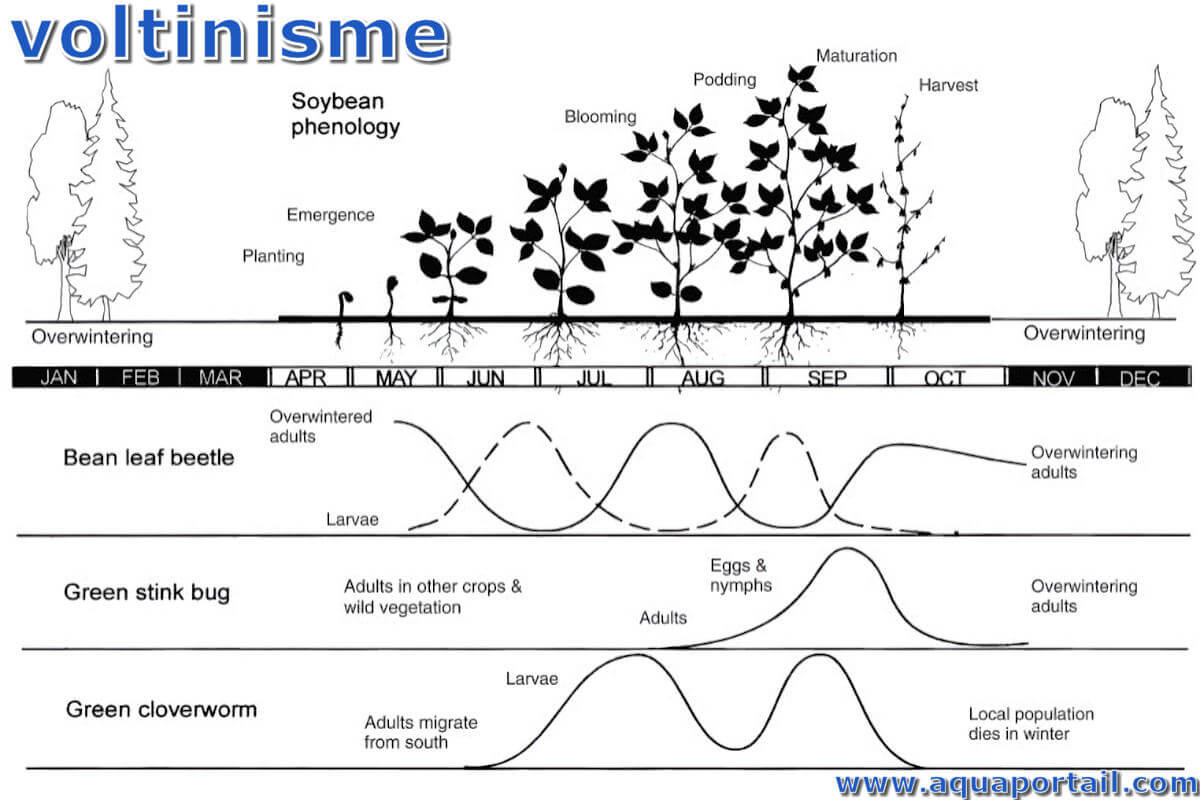
Voltinism helps correlate crop phenology with pest phenology. In this diagram, the relationship between soybean phenology in the U.S. Midwest and three of its most common insect pests: the bean leaf beetle Cerotoma trifurcata (Coleoptera: Chrysomelidae), the green stink bug Acrosternum hilare (Hemiptera: Pentatomidae), and the green cloverworm Hypena scabra (Lepidoptera: Noctuidae).
Explanations
Depending on generation duration, insect voltinism is classified as:
- Univoltine: for organisms having one brood or generation per year;
- Bivoltine: for organisms having two broods or generations per year;
- Multivoltine or Polyvoltine: for organisms having more than two broods or generations per year;
- Semivoltine: for organisms whose generation time spans more than one year.
In phenology, the life cycles of different insect species vary considerably, even though all insects pass through the basic developmental stages from egg to reproductive adult (or imago). Depending on life-cycle length, there is wide variation in the number of generations per year, a phenomenon termed voltinism.
A univoltine species produces one generation per year, whereas a multivoltine species can produce several generations per year.
The range of variation among insects is evident when considering that the periodical cicada Magicicada, for example, completes one generation every 17 years, whereas whiteflies or mosquitoes can complete a generation in roughly 21 days. Under temperate climatic conditions, generations are often discrete, whereas in warmer subtropical climates they frequently overlap. The relationship between crop phenology and the phenologies of its various pests is crucial in agricultural entomology.
Significance in mayfly life cycles
An extensive body of literature exists on mayfly life cycles, predominantly from temperate regions of Europe and North America. However, caution is required when interpreting mayfly life cycles, especially when only field observations are available, and particular care is needed when inferring egg development duration from field data.
Several authors have classified mayfly life cycles, mostly using a combination of voltinism, egg development duration, and nymphal growth rates as criteria. Multivoltine species typically have two or three generations in temperate zones—often a slow-growing overwintering generation and one or two fast-growing summer generations. Limited data from the tropics, where many species are non-seasonal, indicate that some species pass through roughly four and possibly up to six generations in a single year.
In temperate regions, the univoltine life cycle is the most widespread type. Authors have distinguished two main types of univoltine cycles: one in which overwintering occurs at the nymphal stage after a relatively short egg development period, and another in which hatching takes place in spring following a prolonged egg development period. Semivoltinism, with generation times of up to 3 years, is comparatively rare among mayflies.
Mayfly life cycles exhibit a clear latitudinal trend from the tropics to the Arctic. In the tropics, non-seasonal multivoltine cycles predominate, with seasonality becoming more pronounced in mountainous and continental regions; approaching the Arctic, univoltine cycles prevail.
Many mayflies exhibit life-cycle flexibility, whereas certain species (for example, the widespread Leptophlebia cupida) maintain a univoltine winter cycle across a broad range of latitudes and climates. Nevertheless, a number of common, widespread species display considerable life-cycle plasticity across their geographic range. This is perhaps best illustrated by many Baetidae, which can shift from multivoltine to univoltine depending on local climate, while North American Hexagenia exhibits similar flexibility.
Partial voltinism (semivoltinism)
The term partial voltinism is used to refer to two distinct (though not necessarily mutually exclusive) situations: an organism in which generations overlap in time and are therefore not completely reproductively isolated, or, more commonly, a population with mixed voltinism due to genetic variation (a hybrid zone between univoltine and bivoltine forms) and/or because environmental cues do not trigger bivoltinism in all individuals (or across all years).
The same species may be univoltine or bivoltine depending on geographic location and climate: an insect may be univoltine in the northern part of its range. Adults emerge in late spring, mate, and die shortly after laying eggs; their offspring grow to pupation, enter diapause in preparation for winter, and emerge as adults the following year, yielding a single generation per year. Further south, in a warmer climate, the same species may be bivoltine: offspring of spring-emerging adults develop directly into adults during summer and die after oviposition; their offspring in turn form a second generation that enters winter diapause and emerges as adults the following spring. This results in a short-lived summer breeding generation (about 2 months) alternating with a long-lived overwintering generation (about 10 months).
An insect is bivoltine when the species produces two generations per year. Within the biological framework of voltinism, an insect may thus be univoltine, bivoltine, semivoltine, or multivoltine, and an organism may exhibit multiple voltinism modes depending on its habitat.
Multivoltinism
Multivoltinism denotes the trait of a species that reproduces multiple times per year, as seen in many insects and small fish.
The coffee berry borer Hypothenemus hampei is a multivoltine species. Climate warming could significantly increase its number of generations per year, although temperatures rising above 30–32 °C (86–90 °F) may reduce population growth of H. hampei once they exceed its thermal optimum. Incorporating high-temperature thresholds and seasonality mechanisms into population models yields more accurate generation-time estimates, while accounting for the relationship between ambient air temperature and the beetle's habitat microclimate, which is influenced by factors such as direct solar radiation.
Synonyms, antonyms
Spanish translation: voltinismo
1 synonym (similar meaning) for "voltinism":
0 antonyms (opposite meaning).
Related words and expressions to VOLTINISM are directly connected by general or specific meaning.
The word VOLTINISM is listed on page 1 of words starting with V in the dictionary glossary.
Related to "voltinism"
vacant

Vacant describes what is free, unoccupied, or available (referring to a place, property, job, or office).
vagile
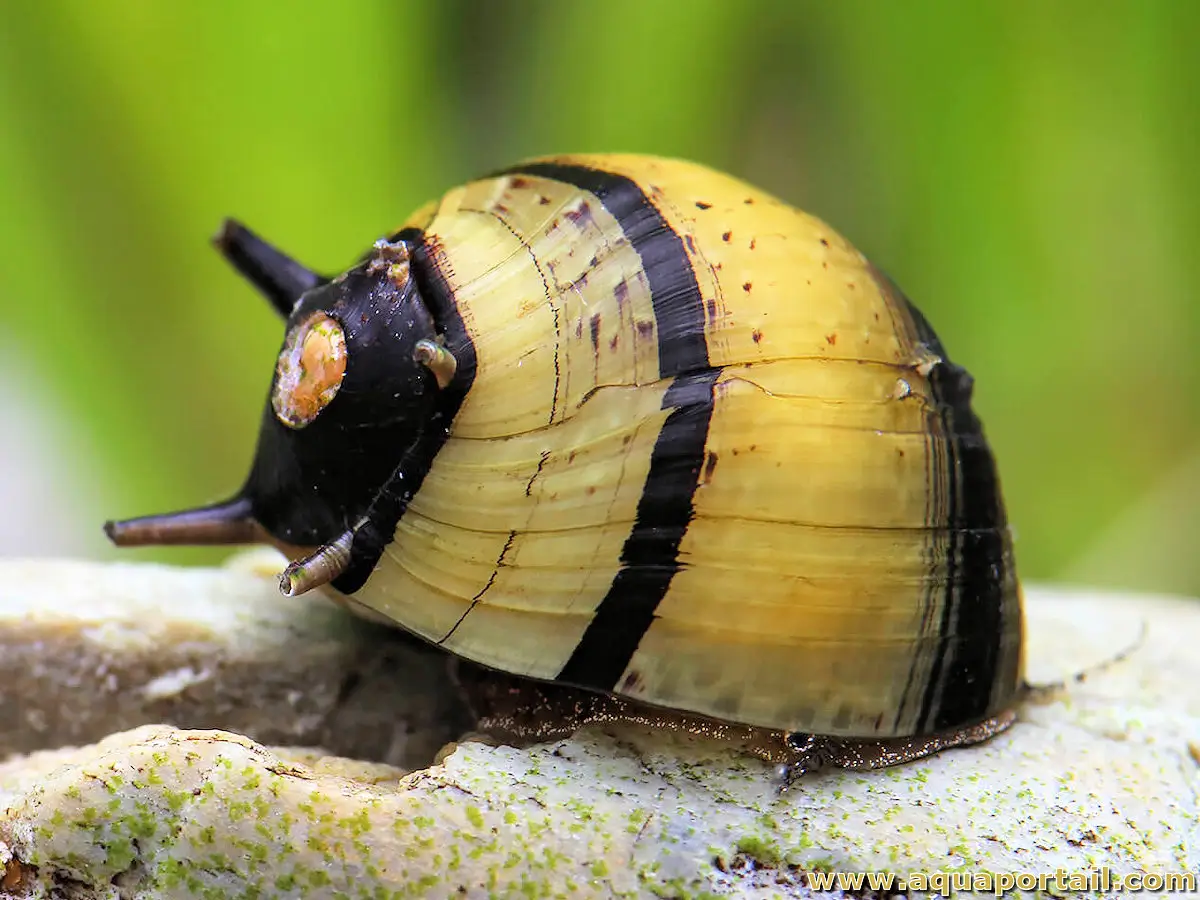
An organism is vagile when it possesses the ability to move about across the substrate of its environment.
valley

In geology, a valley is a depression, an elongated low-lying area between higher landforms such as hills or mountains, often with a river flowing through it.
vermicide
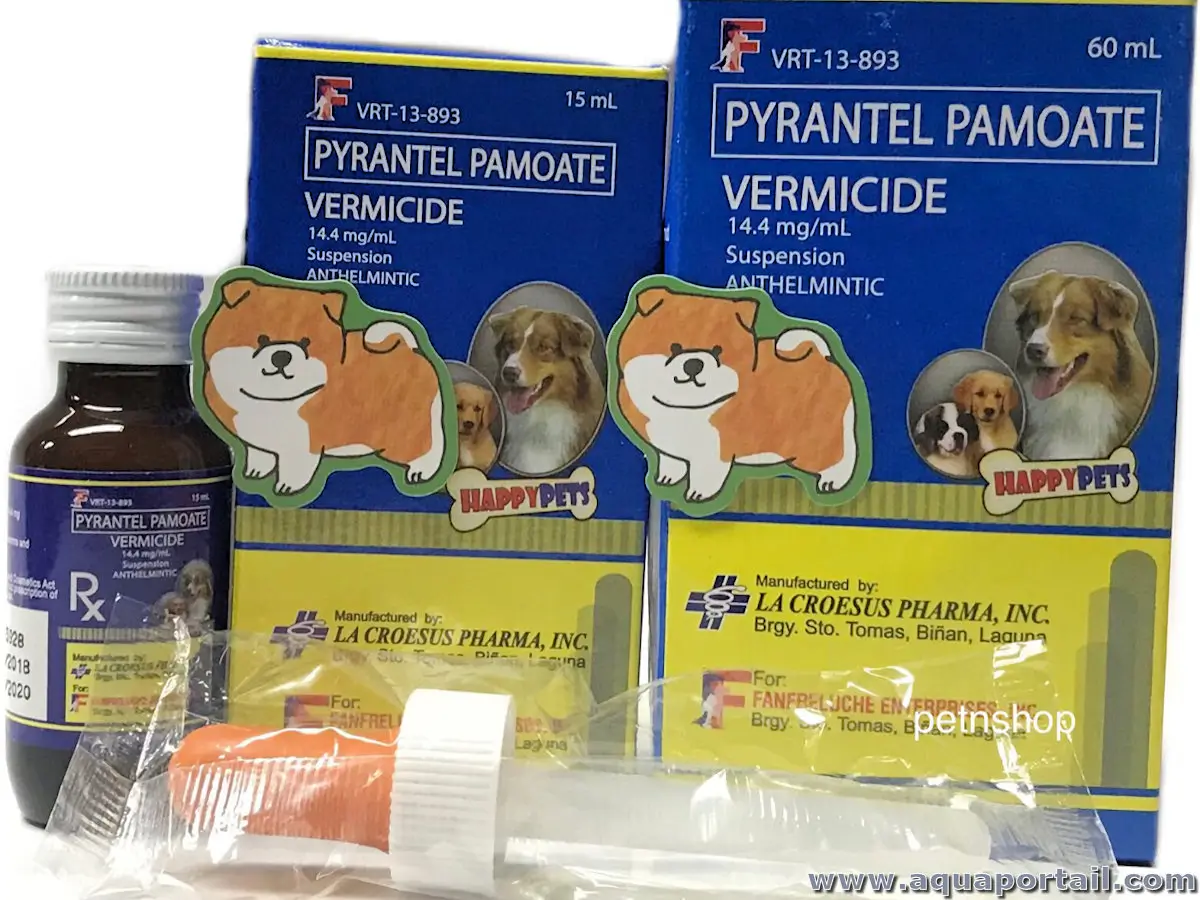
A vermicide is an antiparasitic drug (anthelmintic) that kills parasitic worms (helminths) in the body without causing significant harm to the host.
