Crystallization
noun (n.)
Definition
Crystallization, complemented by recrystallization, generally describes the (natural or artificial) formation of crystals, usually in highly organized inorganic solids. In physics, polymer crystallization is described within the framework of polymer physics as the ordering of molecules in polymers. In biology, protein crystallization is a technique required for protein X-ray crystallography.The crystallization of snowflakes:

Snowflakes are a very well-known example of crystallization, where subtle differences in crystal growth conditions result in different geometries of the crystals making up snow.
General overview
Crystallization is the (natural or artificial) process by which a solid forms, wherein atoms or molecules are highly organized into a structure known as a crystal. Some of the ways crystals form include precipitating from a solution, freezing, or more rarely depositing directly from a gas. The attributes of the resulting crystal depend largely on factors such as temperature, air pressure, and, in the case of liquid crystals, fluid evaporation time.
Crystallization takes place in two major stages. The first is nucleation, the appearance of a crystalline phase from a supercooled liquid or a supersaturated solvent. The second stage is known as crystal growth, which is the increase in particle size leading to a crystalline state. An important feature of this stage is that loose particles form layers on the crystal surface and lodge into open inconsistencies such as pores, cracks, etc.
Most minerals and organic molecules crystallize easily, and the resulting crystals are generally of good quality, meaning without visible defects. However, larger biochemical particles, such as proteins, are often difficult to crystallize. The ease with which molecules crystallize depends strongly on the strength of atomic forces (in the case of mineral substances), intermolecular forces (organic and biochemical substances), or intramolecular forces (biochemical substances).
Crystallization is also a chemical solid-liquid separation technique in which mass transfer of a solute from the liquid solution to a pure solid crystalline phase occurs. In chemical engineering, crystallization is carried out in a crystallizer. Crystallization is therefore related to precipitation, although the result is not amorphous or disordered, but a crystal.
Process (dynamic crystallization)
The crystallization process consists of two major events, nucleation and crystal growth, which are driven by thermodynamic as well as chemical properties. In crystallization, nucleation is the step where solute molecules or atoms dispersed in the solvent begin to gather into clusters, on the microscopic scale (elevated solute concentration in a small region), that become stable under the current operating conditions. These stable clusters constitute the nuclei. Therefore, clusters must reach a critical size to become stable nuclei. Such critical size is dictated by many different factors (temperature, supersaturation, etc.). It is at the nucleation stage that atoms or molecules arrange in a defined and periodic manner that defines the crystal structure (note that "crystal structure" is a special term referring to the relative arrangement of atoms or molecules, not the macroscopic properties of the crystal such as size and shape, although these are a consequence of the internal crystal structure).
Crystal growth is the subsequent size increase of nuclei that succeed in achieving the critical cluster size. Crystal growth is a dynamic process occurring at equilibrium where dissolved molecules or atoms precipitate out of solution and dissolve back into solution. Supersaturation is one of the driving forces of crystallization, as the solubility of a species is an equilibrium process quantified by Ksp. Depending on conditions, either nucleation or growth may predominate over the other, dictating crystal size.
Many compounds have the ability to crystallize with some having different crystal structures, a phenomenon called polymorphism. Each polymorph is in fact a different thermodynamic solid state, and crystal polymorphs of the same compound exhibit different physical properties, such as dissolution rate, shape (angles between facets and facet growth rates), melting point, etc., of major importance in the industrial manufacture of crystalline products. Furthermore, crystalline phases can sometimes be interconverted by various factors such as temperature.
In nature
There are many examples of natural processes that involve crystallization. Geological time-scale process examples include:
- natural (mineral) crystal formation (see also gemstones)
- stalactite/stalagmite, ring formation
Human time-scale process examples include:
- snow flake formation
- honey crystallization (nearly all types of honey crystallize)
Main crystallization processes
Some of the important factors influencing solubility are:
- concentration
- temperature
- polarity
- ionic strength
One may thus identify two main families of crystallization processes:
- cooling crystallization
- evaporative crystallization
This division is not clear-cut, since hybrid systems exist where cooling is performed through evaporation, thus obtaining a concentration of the solution at the same time.
A crystallization process often mentioned in chemical engineering is fractional crystallization. This is not a different process, rather a special application of one (or both) of the above.
Synonyms, antonyms
Spanish translation: cristalización
1 synonym (similar meaning) for "crystallization":
1 antonym (opposite meaning):
Related words and expressions to CRYSTALLIZATION are directly connected by general or specific meaning.
The word CRYSTALLIZATION is listed on page 1 of words starting with C in the dictionary glossary.
Related to "crystallization"
bio-purification
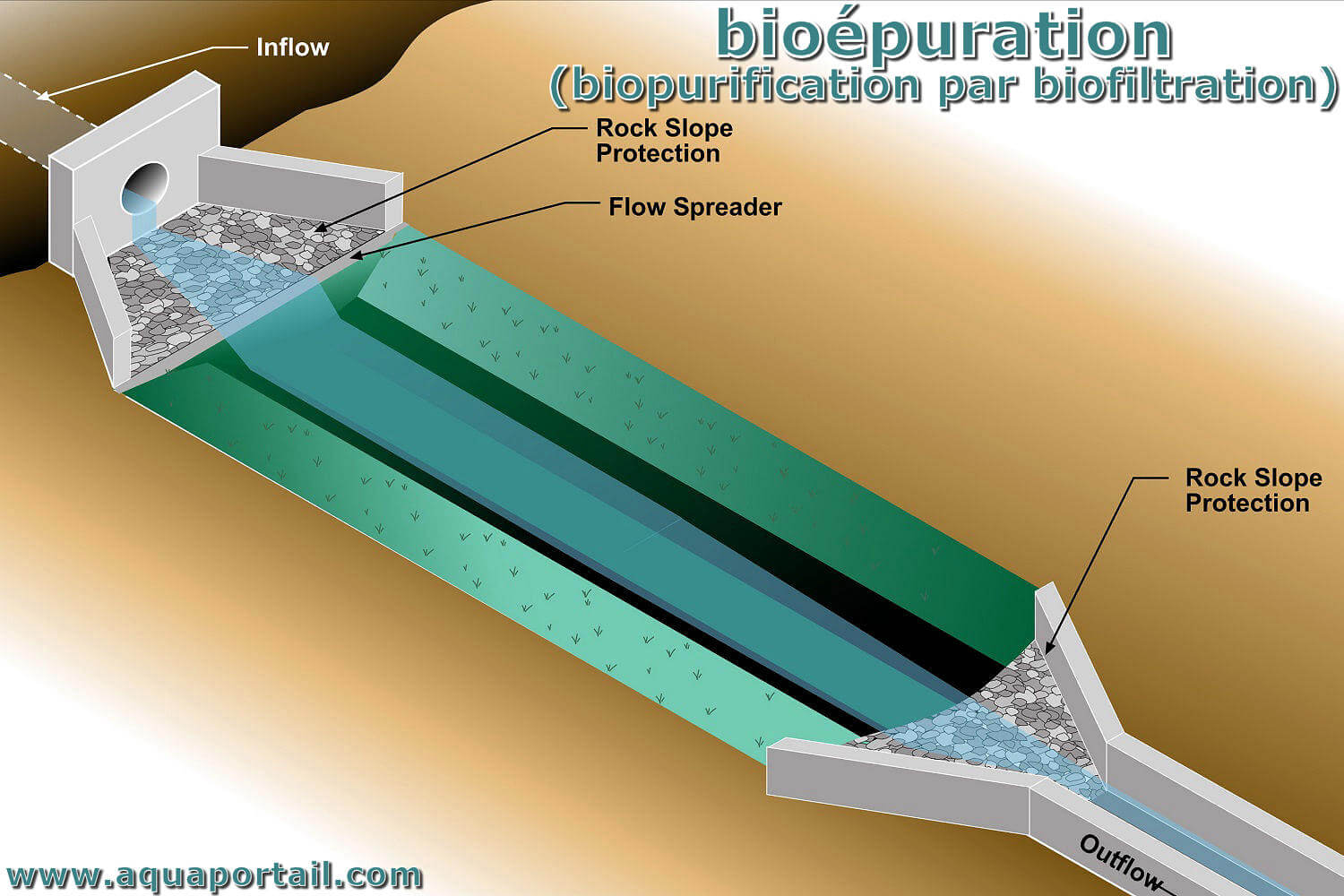
Bio-purification (biodepuration) refers to harnessing living organisms—such as plants, fungi, and symbiotic bacteria—to reduce pollution in an environment.
civilization

A civilization is generally defined as an advanced state of human society containing highly developed forms of government, culture, industry, and social...
cohabitation

Cohabitation is the simultaneous coexistence of several elements, similar or different, in the same place (habitat) over the same (extended) period.
concentration

Concentration (geographic) is the clustering of numerous elements around a central location.
Simple summary
Crystallization is a process by which solid crystals form. These crystals have an ordered, repeating structure formed from a homogeneous solution or directly from a gas phase under appropriate conditions.
