Nucleation
noun (n.)
Definition
In physics and chemistry, nucleation is the initial formation of a nucleus or seed of a new thermodynamic phase (such as a crystal, gas bubble, or liquid droplet) within a homogeneous medium or on a surface. In cell biology, nucleation refers to the initial assembly step of cytoskeletal polymers (such as microtubules) from protein subunits, mediated by the centrosome acting as a microtubule-organizing center.
Diagram of nucleation:
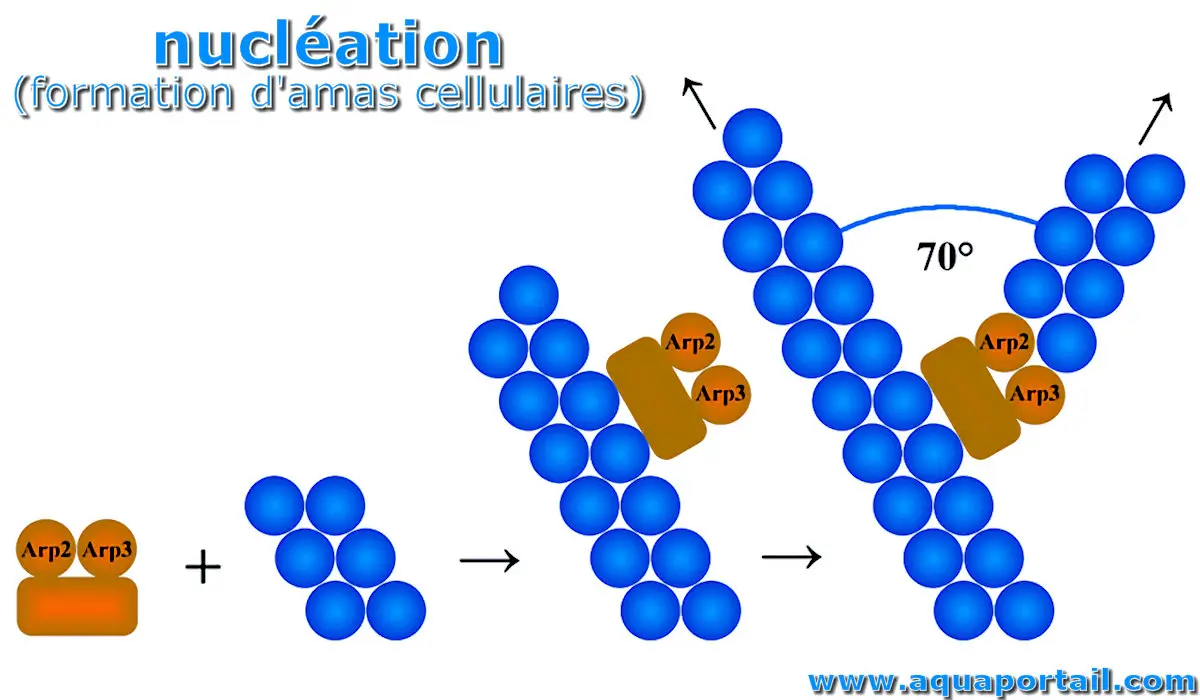
Mechanism of microtubule nucleation. The oligomeric structure of the small monomer complex suggests that nucleating activity is regulated by a conformational change in a specific component.
Explanations
Broadly, nucleation is an initiating clustering process forming tiny molecular aggregates (nuclei or seeds) that serve as templates for crystal growth, phase transitions, or macromolecular polymerization.
In chemistry
In chemistry and biochemistry, nucleation refers to the initial association of monomers into critical oligomers (nuclei), representing the rate-limiting step in supramolecular polymerization reactions such as amyloidogenesis and crystallization.
More generally, nucleation describes the initial emergence of crystalline matter from a supersaturated solution or supercooled melt, occurring via two pathways: primary nucleation (homogeneous or heterogeneous), which arises spontaneously in solution or on foreign surfaces, and secondary nucleation, induced by existing crystals of the same substance.
In crystallography and phase transitions
Nucleation occurs in all natural and engineered crystallization processes involving the formation of solid crystals from a homogeneous solution. Similarly, releasing pressure inside a carbonated beverage container triggers the nucleation of carbon dioxide bubbles.
Heterogeneous nucleation takes place primarily at pre-existing interfaces or surface irregularities, such as boiling chips, strings suspended in sugar syrup to grow rock candy, or microscopic surface pores on Mentos candies dropped into soda.
Bubble nucleation also occurs when pressure drops or when a liquid is heated to boiling. In this case, superheating of the liquid above its boiling point depends on the availability of nucleation sites on heated surfaces—minute cavities or crevices that trap gas-liquid interfaces, particularly on poorly wettable surfaces. Substantial liquid superheating can be achieved after thorough degassing of both the liquid and the heating surface, provided the surface is smooth and readily wetted by the liquid.
Controlled nucleation is widely applied in manufacturing ceramics, metal alloys, and polymers.
Characteristics in molecular biology
In molecular and cell biology, two key features of cytoskeletal polymer nucleation (such as microtubules or actin filaments) stand out.
First, if the free monomer concentration is sufficiently high, initial assembly can proceed rapidly even without a nucleating factor: for example, although cellular microtubule assembly typically requires nucleation by γ-tubulin ring complexes (γ-TuRCs), microtubules can assemble in vitro without nucleators simply by using purified tubulin at high concentrations.
Second, nucleation represents a kinetic barrier (lag phase), meaning that above a critical concentration and given sufficient time, assembly will eventually occur even in the absence of added nucleators. Thus, the requirement for a nucleator is kinetic rather than absolute, being bypassed either at unusually high monomer concentrations or over extended timeframes.
Mono- and binucleation (cell nucleus)
In cytology, related terms refer to the cell nucleus: mononucleation denotes the presence of a single cell nucleus, whereas binucleation arises from nuclear division (mitosis) without cytoplasmic division (cytokinesis), producing a binucleated cell.
Denucleation is the removal or loss of a cell nucleus (as in mature mammalian red blood cells); for surgical removal of the eye, see specifically enucleation.
Renucleation is the insertion of a nucleus into a previously enucleated cell.
Synonyms, antonyms
Spanish translation: nucleación
2 synonyms (similar meaning) for "nucleation":
- germination
- polymerization
0 antonyms (opposite meaning).
Related words and expressions to NUCLEATION are directly connected by general or specific meaning.
The word NUCLEATION is listed on page 1 of words starting with N in the dictionary glossary.
Related to "nucleation"
bio-purification
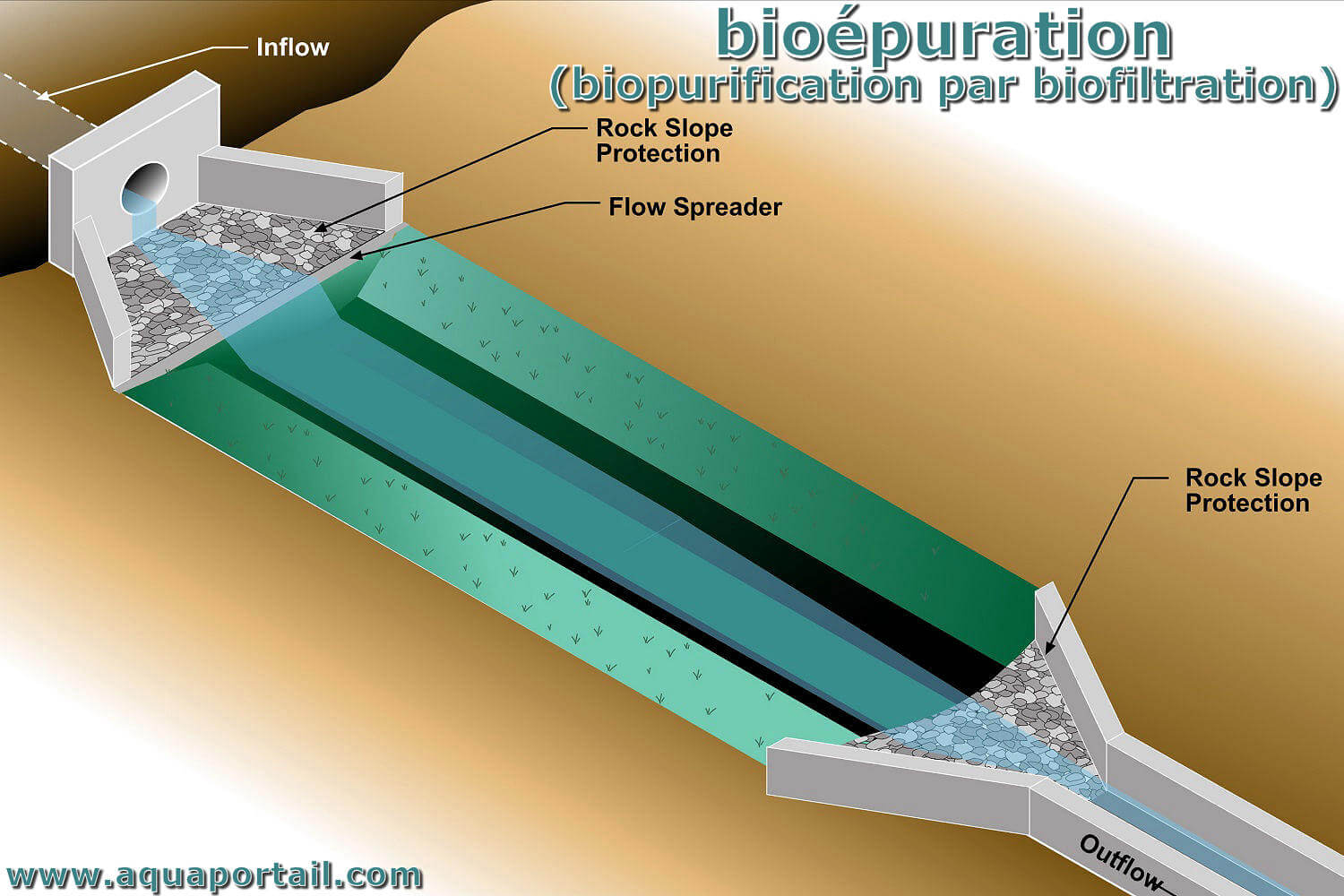
Bio-purification (biodepuration) refers to harnessing living organisms—such as plants, fungi, and symbiotic bacteria—to reduce pollution in an environment.
civilization

A civilization is generally defined as an advanced state of human society containing highly developed forms of government, culture, industry, and social...
cohabitation

Cohabitation is the simultaneous coexistence of several elements, similar or different, in the same place (habitat) over the same (extended) period.
concentration

Concentration (geographic) is the clustering of numerous elements around a central location.
