North Pole
noun phrase (n. phr.)
Definition
The geographic North Pole is the northernmost point on Earth and the center of the Northern Hemisphere. It lies in the middle of the Arctic Ocean, defining geodetic latitude 90° North as well as the direction of true north. Its geographic antipode is the South Pole, located in the middle of Antarctica.
The North Pole in the Arctic:

The geographic North Pole is not located on a continental landmass, although it is covered by a layer of shifting sea ice depending on seasonal temperatures. Thus, unlike its southern counterpart, the South Pole of Antarctica, it is a non-terrestrial point whereas the South Pole sits on a continental landmass.
Explanations
The North Magnetic Pole is the point on Earth where the planet's magnetic field points vertically downward (picture a magnetic dip needle). The geographic North Pole is referred to as True North to distinguish it from the North Magnetic Pole.
The North Magnetic Pole could not be claimed by any nation in any case, as it shifts position over time due to magnetic fluctuations in Earth's core, though it generally resides within the Arctic Circle not far from the geographic North Pole. The Arctic region is nevertheless the subject of vigorous territorial debate among the United States, Canada, Russia, Norway, and Denmark, which holds sovereignty over Greenland extending well into the Arctic Circle.
With no landmass to claim, the North Pole and the surrounding high seas do not belong to any country. The same holds true for its southern counterpart, the geographic South Pole.
The North Pole has an extremely cold climate. Summer temperatures average around 0 °C (32 °F), the freezing point of water. In winter (around Christmas), temperatures drop much lower, averaging around -40 °C (-40 °F). Animals inhabiting this region possess biological adaptations to this harsh environment, such as bears (the polar bear) and foxes (the Arctic fox).
The polar bear of the North Pole:
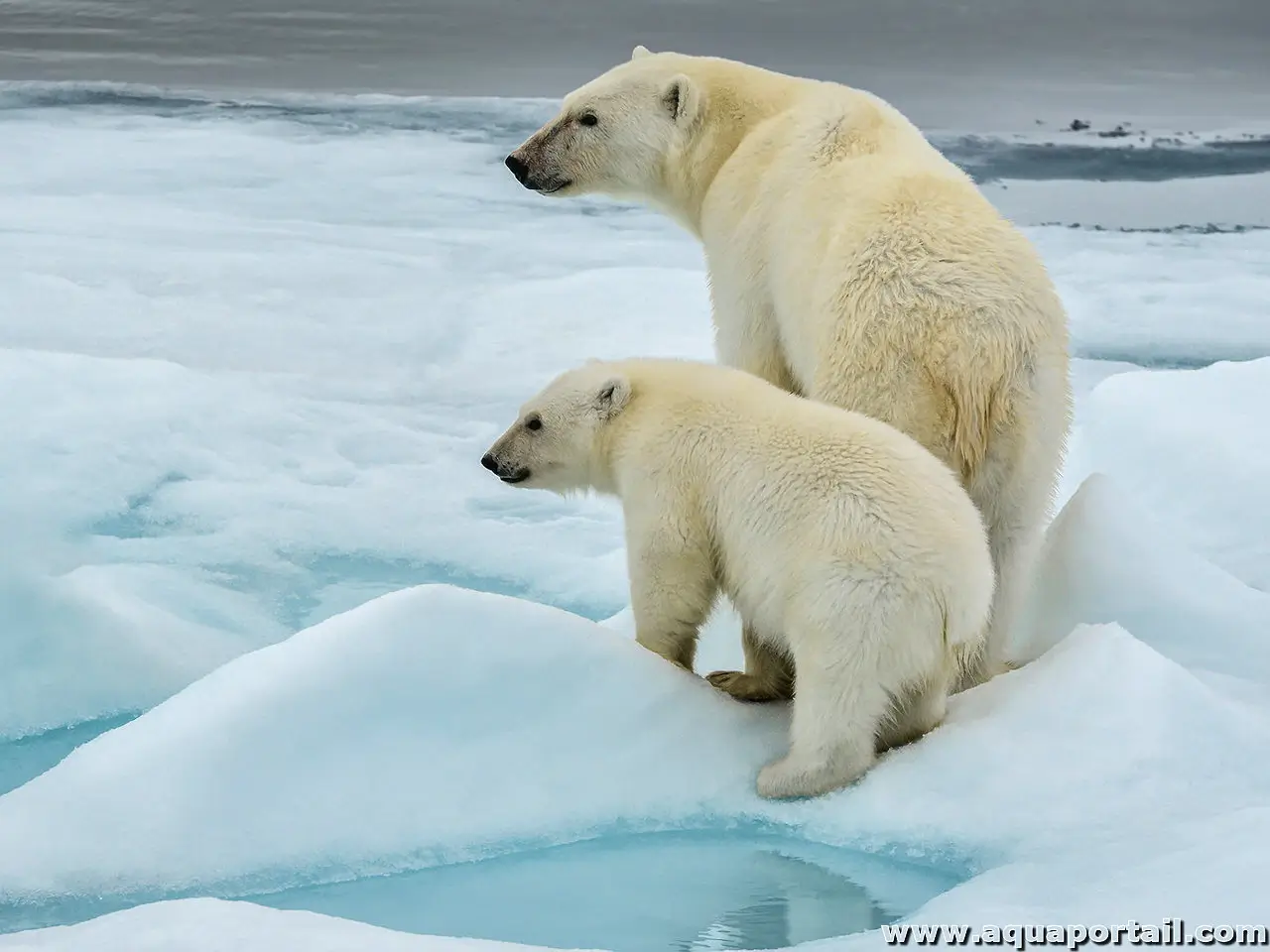
The sea-ice expanses around the North Pole host iconic wildlife such as the polar bear and the Arctic fox.
The North Pole is a place of extremes. Due to the tilt of Earth's axis as it orbits the Sun, sunlight is either continuous or entirely absent depending on the season. In summer, the Sun remains continuously above the horizon at the North Pole, resulting in 24 hours of daylight. In winter, the Sun remains permanently below the horizon, plunging the region into total darkness all day long. In fact, the North Pole experiences only one sunrise and one sunset per year, at the March vernal equinox and the September autumnal equinox, respectively.
The climate of the North Pole is also changing rapidly due to global warming. Record temperatures and melting sea ice have prompted scientists to raise concerns for the North Pole's ecosystem and wildlife, as well as sea-level rise that could eventually inundate coastal cities.
✅ The inhabited settlement closest to the North Pole, recognized as the northernmost administrative town on Earth, is Longyearbyen on Spitsbergen. Spitsbergen is the largest island of the Svalbard archipelago, located in the Greenland Sea north of Norway in the Arctic Ocean.
History
Rear Admiral Robert Edwin Peary (1856–1920) was an explorer who believed claiming the North Pole first was his destiny and remains widely known for that claim. Peary is best remembered for leading an April 1909 expedition that claimed to be the first to reach the geographic North Pole.
Map of the North Pole:
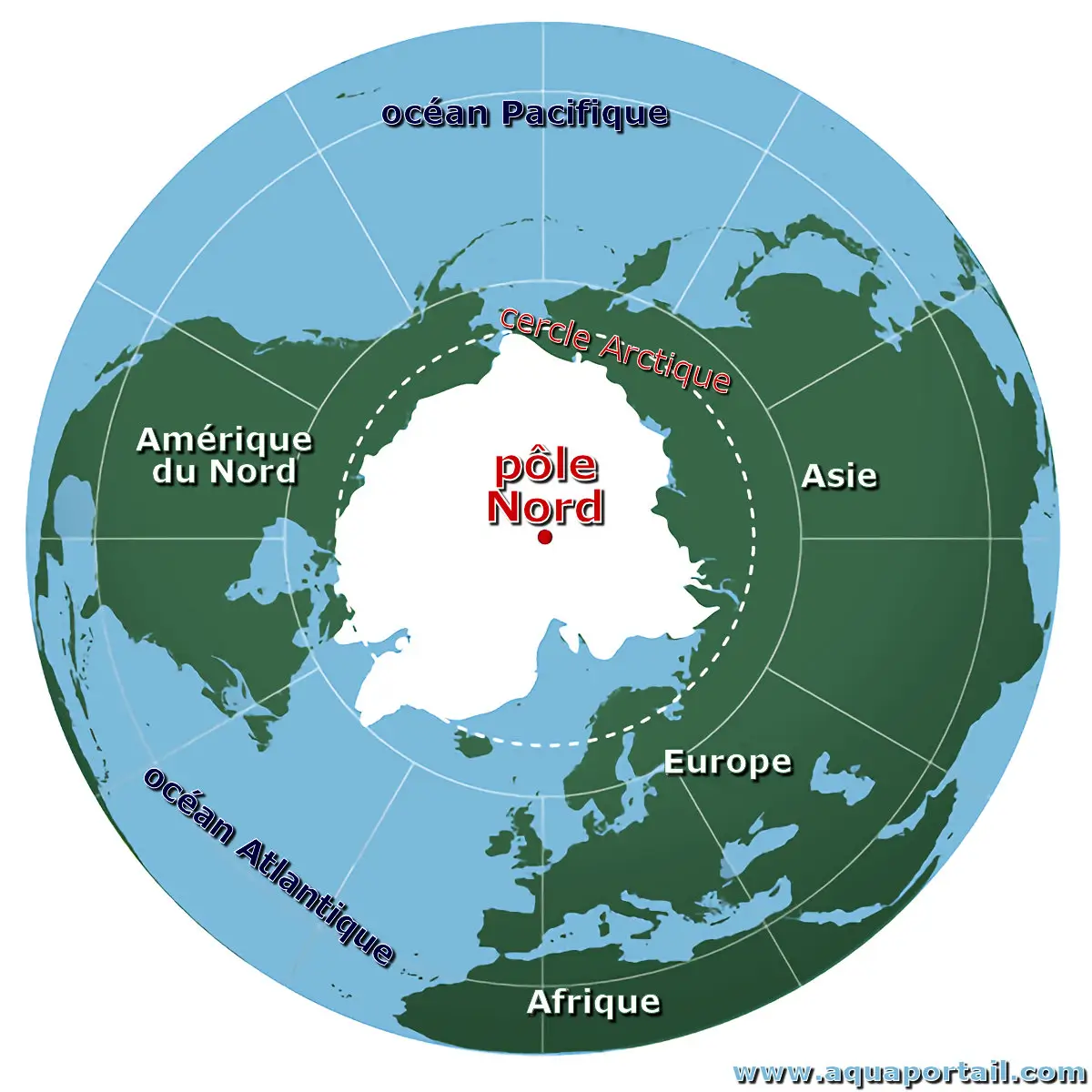
The North Pole, located inside the Arctic Circle, is surrounded by continental landmasses. The Arctic is an ocean encircled by continents, whereas Antarctica is a continent surrounded by oceans.
In fact, the first undisputed expedition to reach the North Pole was that of the airship Norge, which flew over the pole in 1926 with 16 men aboard, including expedition leader Roald Amundsen (1872–1928). Finally, the first verified overland expedition to reach the North Pole took place in 1968, LED by Ralph Plaisted (1927–2008), Walt Pederson, Gerry Pitzl, and Jean-Luc Bombardier using snowmobiles with air support.
Synonyms, antonyms
Spanish translation: Polo Norte
2 synonyms (similar meaning) for "north Pole":
1 antonym (opposite meaning):
Related words and expressions to NORTH POLE are directly connected by general or specific meaning.
The expression NORTH POLE is listed on page 1 of words starting with N in the dictionary glossary.
Related to "North Pole"
antipodes
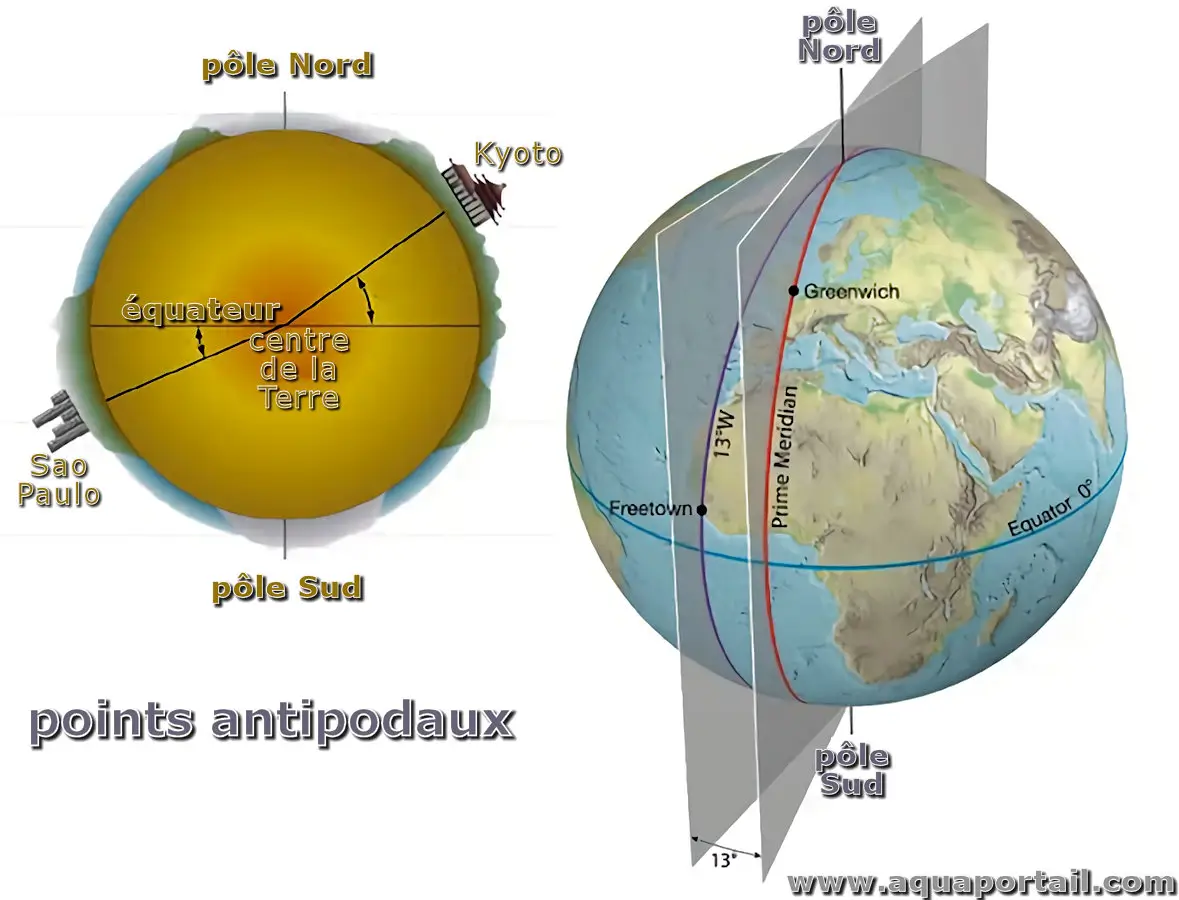
In geography, the antipodes represent the regions located on the exact opposite side of the Earth's globe relative to others.
Antarctica

Antarctica, at the geographical opposite of the Arctic, is the southernmost continent on Earth, surrounded by an ocean.
nanobacterium
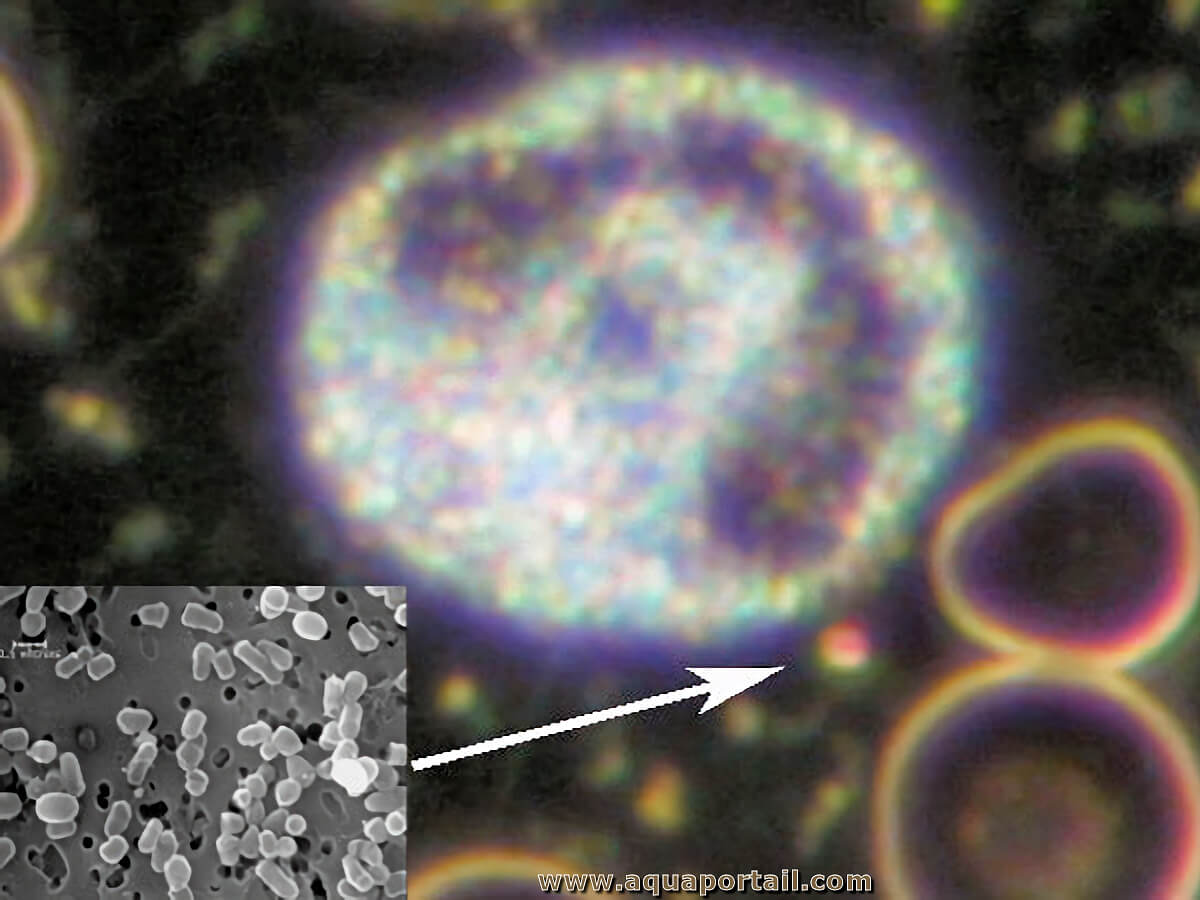
A nanobacterium is a submicron particle initially described as a hypothetical bacterial microorganism the size of a nanobe.
nanobe

A nanobe is a tiny filamentous structure initially proposed as a hypothetical nanometer-scale microbe discovered in certain rocks and sediments, closely...
