Cucurbit
noun (n.)
Definition
Cucurbits are creeping, sometimes climbing or decumbent plants. These plants belong to the order Cucurbitales. They are vegetable crops whose flowers are large, gamopetalous, and pentamerous with five stamens.
A cucurbit is an annual or perennial flowering plant that bears edible fruits, mostly pepos. Edible cucurbits are characterized by their prostrate stems and rounded, large, heavy fruits filled with water and edible flesh. Certain species are considered weeds.
Some cucurbit fruits:

Cucurbits include many edible fruits such as pumpkins, colocynths, cucumbers, gherkins, squashes, marrows, zucchinis, gourds, melons, watermelons, pattypan squashes, winter squashes, red kuri squashes... Cucurbits, particularly squashes and melons, are grown in vegetable gardens.
Explanations
Cucurbits have a largely worldwide distribution, though they occur primarily in tropical regions. Their economic importance includes major food crops such as Citrullus lanatus (watermelon), Cucumis melo (melons), Cucumis sativus (cucumber), Cucurbita pepo and others (squashes, pumpkins), as well as several other taxa; the dried fruits of several species are used as gourds, those of Luffa (loofah) are used as sponges, and certain taxa have medicinal or horticultural uses.
In cooking, a cucurbit is treated as a fruit or a vegetable depending on its culinary use. Certain species used in phytotherapy are recognized for having valuable medicinal properties. The seeds of some cucurbits also offer medicinal applications when oil is extracted from them, such as pumpkin seed oil.
See also (in anatomy) proglottid (cucurbitin).
Description
Cucurbits are distinguished by being mainly monoecious or dioecious vines with simple, palmately veined and/or lobed leaves, generally bearing tendrils, epiperigynous female flowers, usually parietal placentation and three carpels, and a berry, pepo, capsule, or samara fruit.
Cucurbits consist of monoecious or dioecious vines (rarely hermaphroditic, rarely arborescent), typically with one tendril per node. The leaves are simple, palmately veined and often palmately lobed, spirally arranged, and exstipulate. The inflorescence is axillary, variable in type, or consists of solitary flowers.
The flowers are generally unisexual, actinomorphic, with epiperigynous female flowers. The perianth is biseriate and dichlamydeous, with a hypanthium present. The calyx is aposepalous with 5 (3–6) imbricate sepals. The corolla is apopetalous or sympetalous with 5 (3–6) valvate petals. There are 3–5 stamens, alternipetalous, distinct or connate. The anthers dehisce longitudinally and are dithecal or monothecal. The gynoecium is syncarpous, with an inferior ovary, 3 (1–5) carpels, and 1 locule (rarely as many locules as carpels). There are 1–3 styles and 1–2 stigmas. Placentation is parietal, rarely axile; the ovules are anatropous, bitegmic, generally ∞ (rarely 1–a few).
extrafloral nectaries are often present. The fruit is a berry, pepo, capsule, or samara. The seeds are exalbuminous. Stem anatomy is generally bicyclic, with bicollateral vascular bundles.
Synonyms, antonyms
Spanish translation: cucurbitácea
6 synonyms (similar meaning) for "cucurbit":
- cucumber
- gourd
- pumpkin
- red kuri squash
- squash
- winter squash
0 antonyms (opposite meaning).
Related words and expressions to CUCURBIT are directly connected by general or specific meaning.
The word CUCURBIT is listed on page 1 of words starting with C in the dictionary glossary.
Related to "cucurbit"
sea cucumber
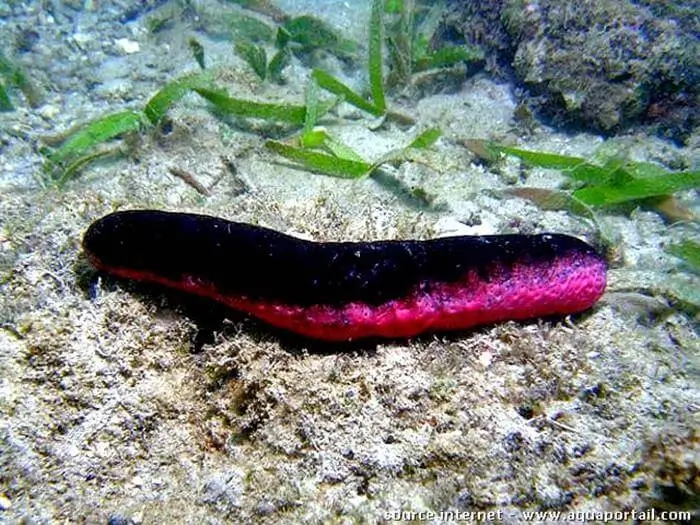
A sea cucumber is a soft-bodied, generally tube-shaped animal, called a holothurian, a close cousin of starfish.
cactus

A cactus is a thick, fleshy plant that grows in many hot, dry regions of the world. Cacti do not have leaves, and many are covered with spines.
caecilian

A caecilian (gymnophione) is a limbless, burrowing, worm-like amphibian whose legs are vestigial or absent.
cancer

Cancer is a disease in which certain cells of the body grow uncontrollably and spread to other parts of the body.
