Crab
noun (n.)
Definition
A crab is a decapod animal with a reduced abdomen folded underneath the cephalothorax, and a short, broad, generally flattened carapace. Short antennae and the anterior pair of limbs modified into claws serve for grasping and tactile sensing.
Crabs belong to the infraorders Brachyura or Anomura, primarily marine arthropod crustaceans. All crabs share one common trait: they are benthic, living on the bottom at the substrate level. They are studied in carcinology.
A small crab remarkable for its color:

Crabs, such as this vampire crab, are represented by various crustaceans of the order Decapoda.
Explanations
Compared to the typical anatomy of a crustacean, the crab exhibits reduction, with a small abdomen curled forward beneath the body. They move by walking, running (sideways movement), or swimming.
Many species living along the coastal fringe, for example in mangroves or on beaches, are euryhaline species.
General overview
Crabs are most often scavengers that are also capable of filtering food particles suspended in the water. Their claws allow them to grasp their food (and even crush it) and bring it to their mouth.
The order Decapoda is characterized by five pairs of legs. In addition to crabs, it includes large crustaceans such as lobsters, shrimp, and spiny lobsters, alongside the various forms known as crabs.
Crabs of the infraorder Brachyura are called true crabs (short-tailed); those of Anomura are differentiated into hermit crabs, squat lobsters, and king crabs (Lithodidae). There are very many species of crabs (more than 3,500 species of "true crabs", and 6,800 in total). They live in highly varied habitats:
In the marine environment, crabs are found from 0 to several hundred meters (0 to over 1,000 ft) in depth (depending on the species and stage of their life cycle). These benthic animals can be very small (about 5 mm or 0.2 in for the pea crab, a mussel parasite) or very large (more than one meter or 3.3 ft across, legs included, for the red king crab, or Alaskan king crab, or the Japanese spider crab).
The most common species along the coasts of France are the edible crab (cancer pagurus), the European spider crab (Maja squinado), the velvet swimming crab (Macropipus puber or Necora puber), the green crab or shore crab (Carcinus maenas and Carcinus aestuarii), and the warty crab (Eriphia spinifrons). The edible crab is also a crab, just like the well-known mithrax crab in marine aquariums. Spider crabs are popular in gastronomy.
✅ There are many other freshwater crabs, just as there are aquarium snails and freshwater snails.
⭐ Crabs that are ready to shed their test (carapace shell) and hide in order to undergo molting and exuviation undisturbed are called peeler crabs (soft-shell crabs). In this way, they are less exposed to attacks from their enemies and predators.
Anatomical description
The anatomy of a crab conforms to that of decapods, except for an abdomen (pleon) that has been transformed into a short tail flap folded beneath the head-thorax unit (cephalothorax) (the space between the two serves as a reproductive chamber for females).
The blue crab:
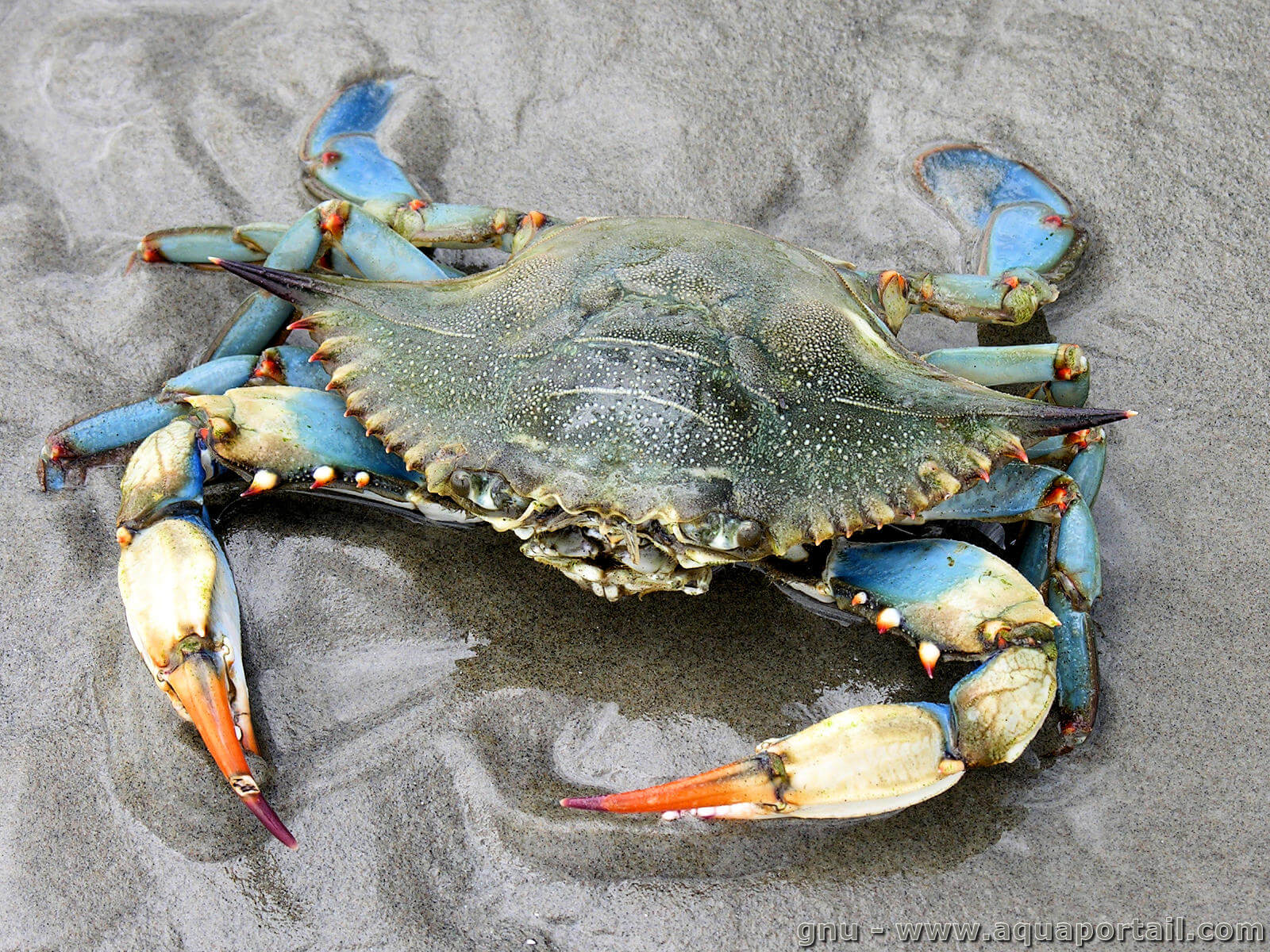
The brachyuran Callinectes sapidus is the blue crab. It displays the classic anatomy of most crab species.
The male copulatory organs (gonopods) of crabs are derived from biramous split limbs, which remain present as pleopods in females (used for brood care and capable of carrying hundreds of thousands of eggs). In males, the pleopods have regressed or disappeared completely. Only the first two pairs of pleopods are regularly retained as gonopods: the first pair is tubular, and the second is mainly thread-like and situated inside the tube of the first, presumably operating on a piston-pump principle. The first pair of walking legs on the trunk has been modified into large pincers, and the eyes are set on stalks.
Crabs can walk sideways with remarkable speed ("crab walk"). They have the ability to burrow rapidly.
Size records
The largest crab of all is the Japanese spider crab (Macrocheira kaempferi), found in the Pacific Ocean around Japan at depths of 300 meters (984 ft). These crabs have a carapace width of about 35 centimeters (13.8 in), but because of their enormous legs, their leg span can reach about four meters (13.1 ft) with a standing height of one and a half meters (4.9 ft).
The Tasmanian giant crab:

The Tasmanian giant crab Pseudocarcinus gigas can exceed 150 cm (59 in) in span, with a test (shell) reaching 50 cm (19.7 in)!
The smallest crabs belong to the family Pinnotheridae. They reach about one and a half centimeters (0.6 in) in length. The thumbnail crab (Thia scutellata, family Thiidae) is also a small species reaching a carapace length of up to 22 millimeters (0.87 in).
Males grow slightly larger on average than females.
A good food source
Certain crab species are considered a delicacy, particularly edible crabs, deep-sea crabs, and Japanese spider crabs. In human nutrition, they are classified as seafood and are frequently featured on seafood platters.
Synonyms, antonyms
French translation:
crabeSpanish translation: cangrejo
0 synonyms (similar meaning) for "crab".
0 antonyms (opposite meaning).
Related words and expressions to CRAB are directly connected by general or specific meaning.
The word CRAB is listed on page 1 of words starting with C in the dictionary glossary.
Related to "crab"
cactus

A cactus is a thick, fleshy plant that grows in many hot, dry regions of the world. Cacti do not have leaves, and many are covered with spines.
caecilian

A caecilian (gymnophione) is a limbless, burrowing, worm-like amphibian whose legs are vestigial or absent.
cancer
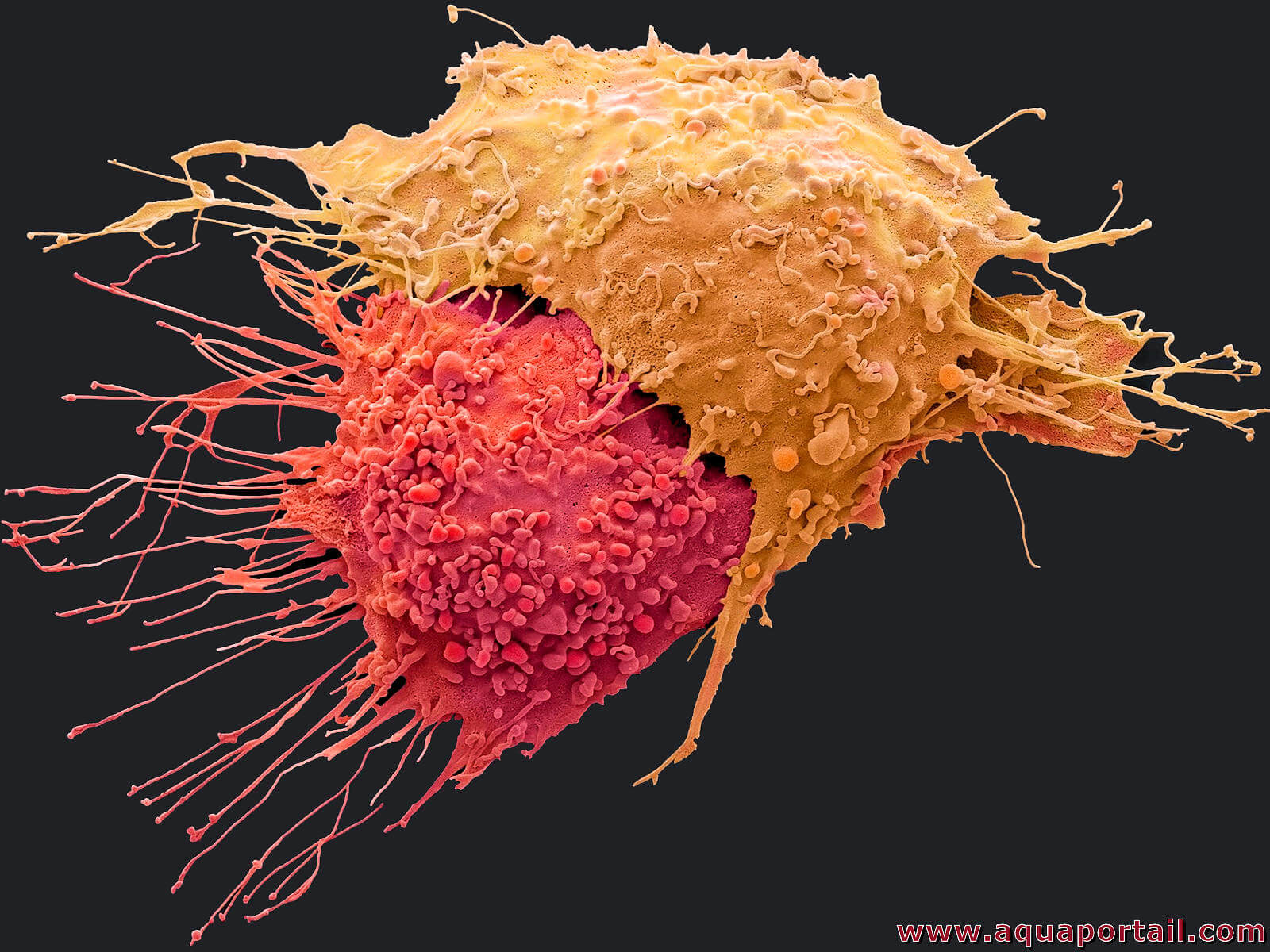
Cancer is a disease in which certain cells of the body grow uncontrollably and spread to other parts of the body.
capsule

A hard capsule (gelcap) is a small, hollow, hard-shelled capsule made of two interlocking halves containing a medication, nutraceutical, or dietary...
