Chloramine
noun (n.)
Definition
A chloramine is a chemical compound used in chloramination. Monochloramine has the chemical formula NH2Cl and is typically used in dilute aqueous solution as a disinfectant. The term chloramine also refers to a family of organic compounds with formulas R2NCl and RNCl2 (where R is an organic group), alongside inorganic dichloramine (NHCl2) and nitrogen trichloride (NCl3).
Swimming pool water containing chloramine:
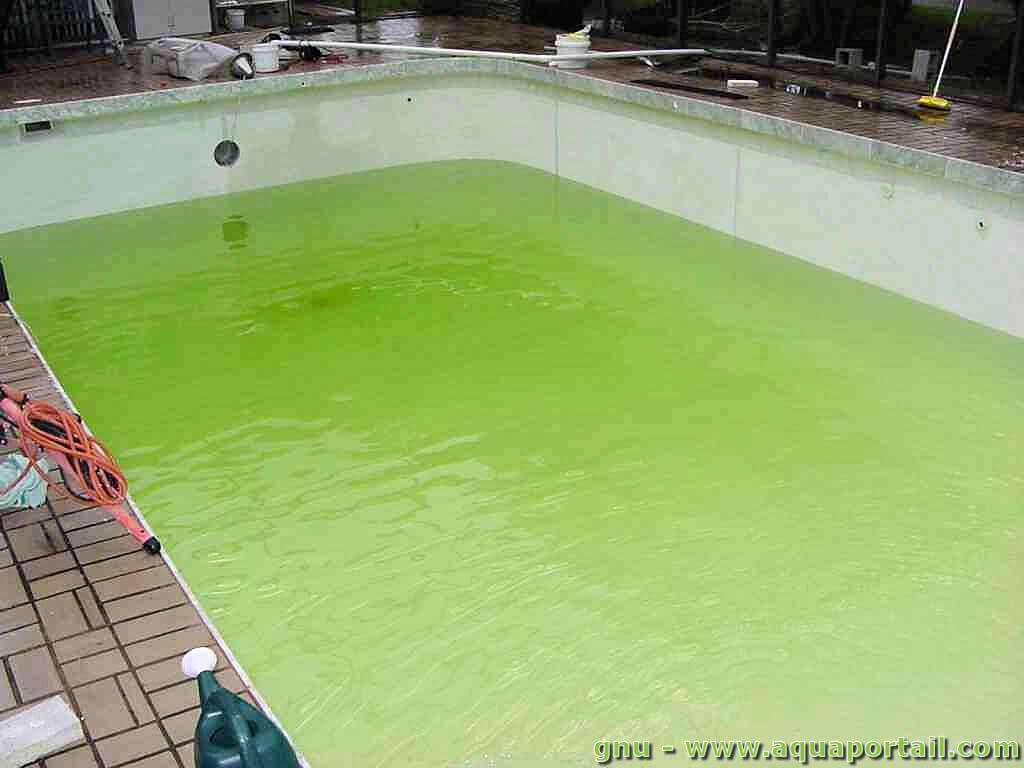
Treated with chloramine, the water (H2O) of this newly filled swimming pool shows a greenish tint. The color is less noticeable in small volumes, yet perceptible in a white 20-liter container or glass vessel upon close inspection.
Explanations
Pure monochloramine is an unstable, colorless liquid with a pungent odor, produced in solution by reacting sodium hypochlorite with ammonia. Any compound formed by replacing one or more hydrogen atoms in ammonia or an amine group with chlorine atoms is classified as a chloramine.
🚩 NH2Cl is toxic in high concentrations, and chloramine levels in public drinking water supplies are strictly regulated.
Synthesis and chemical reactions
Monochloramine is highly unstable in concentrated form and even more so as a pure liquid, decomposing violently above -40 °C (-40 °F). In dilute aqueous solution, however, NH2Cl is relatively stable, and this persistence forms the basis of its water-treatment applications.
Monochloramine is prepared by reacting ammonia with hypochlorous acid under mildly alkaline conditions: NH3 + HClO → NH2Cl + H2O.
The synthesis is performed in dilute solution, where HClO undergoes nucleophilic attack by NH3. At lower (more acidic) pH levels, further chlorination occurs, yielding dichloramine and nitrogen trichloride.
While aqueous syntheses are standard for practical use, they do not yield anhydrous pure NH2Cl; the pure compound can be prepared by reacting fluoramine with calcium chloride: NH2F + CaCl2 → NH2Cl + CaClF.
Uses
Chloramines serve as key intermediates in the traditional industrial synthesis of hydrazine (Raschig process).
Monochloramine oxidizes sulfhydryl groups and disulfide bonds similarly to HClO, though with roughly 0.4% of the immediate biocidal potency of hypochlorous acid, compensated by longer residual stability.
A variety of organic chloramines are known and useful in organic synthesis, including N-chloromorpholine ClN(CH2CH2)2O, N-chloropiperidine, and N-chloroquinuclidinium chloride.
Chloramine in water treatment
Through chloramination, monochloramine is widely used at low concentrations as a secondary disinfectant in municipal water distribution systems as an alternative to free-chlorine chlorination.
Free chlorine is replaced by monochloramine, which is far more persistent and does not dissipate in water before reaching distant consumers. NH2Cl also has a much lower tendency than free chlorine to convert natural organic matter into regulated chlorocarbons such as chloroform and carbon tetrachloride, which are classified as probable carcinogens; furthermore, chloraminated water lacks the sharp odor of free chlorine, improving taste.
Overall, however, chloramine use can increase the formation of certain unregulated nitrogenous and iodinated disinfection byproducts.
Chloramine in tap water imparts a slight greenish tint to water viewed in bulk compared with the intrinsic blue hue of pure water—visible when filling a white polyethylene bucket with chloraminated tap water alongside distilled water.
Chloramine can be removed from water by breakpoint chlorination (10 ppm or more of free chlorine, such as sodium hypochlorite) while maintaining pH around 7; hypochlorous acid oxidizes the ammonia moiety into nitrogen gas, and residual free chlorine can subsequently be dissipated by sunlight exposure or activated carbon filtration.
Risks
Switching from free chlorine to chloramine in public water supplies without proper corrosion control can increase lead leaching from older plumbing, raising blood lead levels and health risks.
Evidence also indicates that chronic exposure to volatile chloramines (especially trichloramine in indoor pools) contributes to respiratory issues such as asthma in children and competitive swimmers. Like chlorine dioxide, ozone, and UV irradiation, chloramination requires careful monitoring of disinfection byproducts.
While reducing regulated trihalomethanes such as chloroform, alternative disinfectants can increase less-regulated cytotoxic and genotoxic byproducts (such as nitrosamines like NDMA).
🚩 aquarium keepers must remove chloramine from tap water because it is highly toxic to fish and aquatic invertebrates. Whereas aging or aerating water for a couple of days removes free chlorine gas, the more stable chloramine persists and must be neutralized using a commercial aquarium water conditioner.
Many zoo animals—especially aquatic species and amphibians—are sensitive to chloramine, which must be removed from their water supplies.
Chloramine must also be removed from water used in kidney dialysis machines (via activated carbon beds) because it enters the bloodstream across the dialysis membrane and causes hemolytic anemia; when ingested orally, however, chloramine is rapidly neutralized in the digestive tract.
In brewing, reducing agents such as sodium metabisulfite or potassium metabisulfite are used to remove chloramine from brewing liquor, as unlike free chlorine it cannot be boiled off; potassium metabisulfite is preferred to avoid residual sodium off-flavors.
Chloramine can also be neutralized in bathwater and birthing tubs by adding roughly 1,000 mg of vitamin C (ascorbic acid) per 75 liters (20 gal) of water.
✅ In swimming pools, chloramines (combined chlorine) form when free chlorine reacts with nitrogenous organic matter introduced by swimmers (sweat, urine, cosmetics). Compared with free chlorine, chloramines are less effective disinfectants and far more irritating to swimmers' eyes and airways; complaints of eye irritation from "too much chlorine" in a pool usually reflect elevated chloramine levels, which basic home test kits measuring only total chlorine may fail to distinguish.
Synonyms, antonyms
Spanish translation: cloramina
3 synonyms (similar meaning) for "chloramine":
- dichloramine
- monochloramine
- NH2Cl
0 antonyms (opposite meaning).
Related words and expressions to CHLORAMINE are directly connected by general or specific meaning.
The word CHLORAMINE is listed on page 1 of words starting with C in the dictionary glossary.
Related to "chloramine"
amine

An amine is generally a functional group (amino group) whose nitrogen atom possesses a lone pair of electrons.
chlorobiont

A chlorobiont (Chlorobionta) is a green photosynthetic plant organism. The chlorobionts as a whole encompass terrestrial green plants (Embryophyta) as well...
cactus

A cactus is a thick, fleshy plant that grows in many hot, dry regions of the world. Cacti do not have leaves, and many are covered with spines.
caecilian

A caecilian (gymnophione) is a limbless, burrowing, worm-like amphibian whose legs are vestigial or absent.
