Spore
noun (n.)
Definition
A spore is a haploid reproductive cell that gives rise to a new individual without sexual fusion in organisms with alternation of generations. Tiny in size, spores are highly adapted for dispersal and capable of surviving for very long periods.
Illustration of spore formation:

Spore production takes place via a sporangium in this illustration. In lower plants (mosses, ferns), the spore gives rise to a new gametophyte that will bear the reproductive organs. In higher plants (flowering plants), a male spore and a female spore unite to give rise to a new individual and ensure dispersal of the species.
Explanations
A spore is a reproductive unit capable of giving rise (sporulation) to a new individual without the involvement of another reproductive cell in lower plants and certain protists (sporozoans). In plants, the new individual is called a gametophyte.
Spores occur in numerous organisms such as fungi, yeasts (molds), algae, ferns, liverworts, other plants, and protozoa. Spores may be motile (planospores or zoospores) or non-motile (aplanospores).
Spore types are highly specialized, and numerous varieties exist. For example, fungal spores include zygospores, basidiospores, conidiospores, and ascospores. In Ascomycetes, spores are enclosed within a sac-like structure called an ascus.
A spore is a small round or oval body formed in bacteria due to cytoplasmic dehydration under unfavorable conditions. Bacterial spores include endospores, exospores, and myxospores. Spores produced by higher plants are microspores and megaspores.
In protozoa and bacteria, a spore is rounded and highly resistant, adopted by these organisms to survive adverse environmental conditions (high temperature, humidity, etc.). In Myxozoans, spores produce amoeboid germs that infect and parasitize their hosts.
A rare yet serious disease can affect humans: anthrax. Anthrax is caused by the bacterium Bacillus anthracis, which is capable of sporulation.
Synonyms, antonyms
French translation:
sporeSpanish translation: espora
7 synonyms (similar meaning) for "spore":
- dinospore
- germ
- granule
- meiospore
- mitospore
- reproductive corpuscle
- sporocyte
0 antonyms (opposite meaning).
Related words and expressions to SPORE are directly connected by general or specific meaning.
The word SPORE is listed on page 1 of words starting with S in the dictionary glossary.
Related to "spore"
aplanospore

An aplanospore is a non-swimming spore (as opposed to a planospore or a zoospore). Such spores lack flagella but may possess features of swimming cells such...
archaeospore

In red algae, an archaeospore is the contents of an ordinary vegetative cell which, released without prior mitosis, functions as a spore.
autospore

An autospore is each of the non-motile spores (aplanospores) produced by division and differentiation of the contents of a coccoid unicellular organism.
auxospore
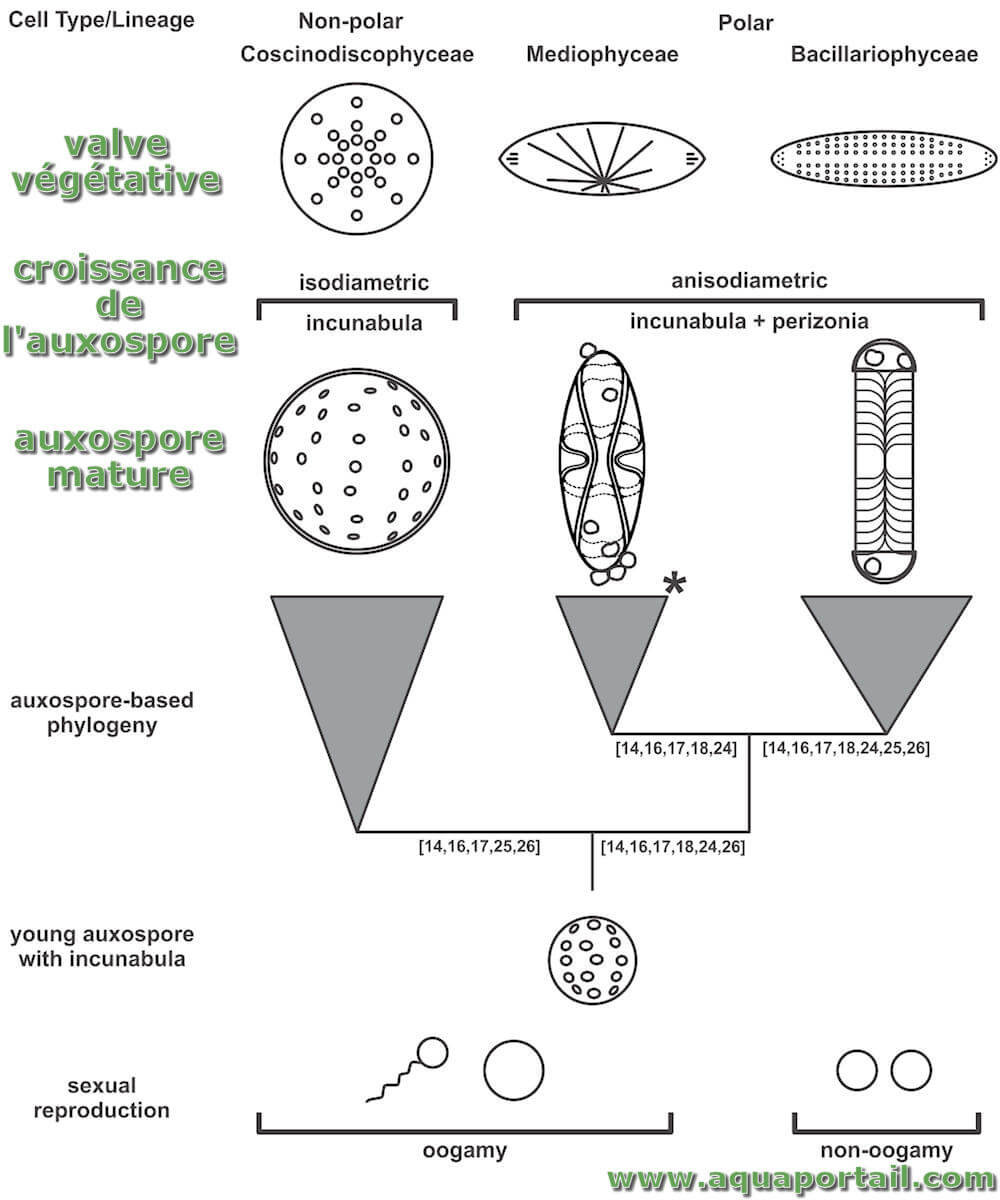
An auxospore is a reproductive cell in diatoms generally resulting from the union of two smaller cells or their contents and associated with the rejuvenation...
Simple summary
A spore is a reproductive structure produced by certain organisms, such as fungi, plants, algae, and certain protists. It is typically a unicellular unit capable of developing into a new individual without fertilization. Spores are often adapted for survival under extreme conditions: they withstand extreme temperatures, desiccation, and other environmental stresses.
