Dispersal
noun (n.)
Definition
Dispersal is the process by which individuals leave the immediate environment of their parents to settle in an area more or less distant from them. Dispersal is the action or process of distributing things or people over a wide area.Seed dispersal modes:

Seed dispersal in the environment occurs via wind (anemochory), water (hydrochory), animals (zoochory), or even seed ejection modes by the plants themselves (ballochory). Many other models of plant dispersal exist.
Explanations
Dispersal is important for any species, whether free-living or parasitic, because a population restricted to a small area risks disappearing if conditions become unfavorable and because dispersal reduces inbreeding and loss of evolutionary adaptability. For parasites, a third point is important: dispersal can reduce the risks of superinfection of hosts.
Three aspects of dispersal are important: dispersal over short distances away from an individual host, dispersal in space and range expansion over greater distances, and dispersal in time. Trematode larvae illustrate that all three aspects of dispersal can be triggered by the same stage.
Larvae (cercariae) are often forcefully ejected into the respiratory currents of the snails in which they developed, causing their dispersal away from the host. They swim actively and keep themselves afloat by means of their tail and can thus be dispersed over long distances by water currents.
In many species, special tail flotation devices prolong flotation duration. Adult flukes produce eggs and host snail larvae are produced over long periods, months, or even many years, resulting in dispersal in time.
Spatial distribution
The term dispersal refers to the small-scale spatial distribution pattern of organisms, and migration is in some cases equivalent to dispersal, although it generally refers to a particular type of movement (directional and synchronized).
The term immigration is dispersal from the perspective of the receiving locality regardless of source, the arrival of new individuals into an area previously unoccupied by that species.
It should be emphasized that dispersal in itself does not deal with events that occur after the end of a movement, and the expression effective dispersal should be used for dispersal events followed by successful establishment.
Likewise, the term colonization should be used for immigration incidents followed by the establishment of a viable population.
Dispersal barrier
Species-specific physical and biological restrictions that a propagule must overcome to succeed in colonization. A dispersal barrier generally refers specifically to "a branch of historical biogeography that attempts to account for present distributions on the assumption that they result from differences in the dispersal capacities of individual lineages."
More generally, it is the study of relationships between dispersal and the geographic distribution of organisms. It is this latter definition that is retained for this article.
Dispersal pathway
A dispersal pathway is the particular set of physical and biological conditions that allow organisms to cross dispersal barriers.
A disseminule is the unit of dispersal, with any part or life-cycle stage of an organism that is used for dispersal. See also dispersalism and dispersability.
In botany, a propagule is a unit of propagation and colonization; a disseminule, or a group of disseminules, that has full potential to establish a new population.
The spatiotemporal process in which successive colonization events increase the geographic range size of a species. The terms invasion, migration (as used in botanical literature), and spatial range expansion are roughly synonymous with range expansion.
Invasion, in particular, is often used to describe colonization well outside the natural range of species.
Dispersalism
Dispersalism is an evolutionary theory according to which speciation would be a consequence of the isolation of a few individuals from their original population after they have crossed a geographic barrier. There is dispersal of populations.
Dispersalism is a biogeographical approach based on the idea of organisms dispersed from their origin to other places. The movement of disseminules away from their source, either from their birthplace or from their breeding site. Because of the variety of disciplines involved in the study of organism movements, the term is often misused and confused with a plethora of movement terms.
Synonyms, antonyms
Spanish translation: dispersión
4 synonyms (similar meaning) for "dispersal":
- migration
- propagation
- pulverization
- spraying
0 antonyms (opposite meaning).
Related words and expressions to DISPERSAL are directly connected by general or specific meaning.
The word DISPERSAL is listed on page 1 of words starting with D in the dictionary glossary.
Related to "dispersal"
tidal range
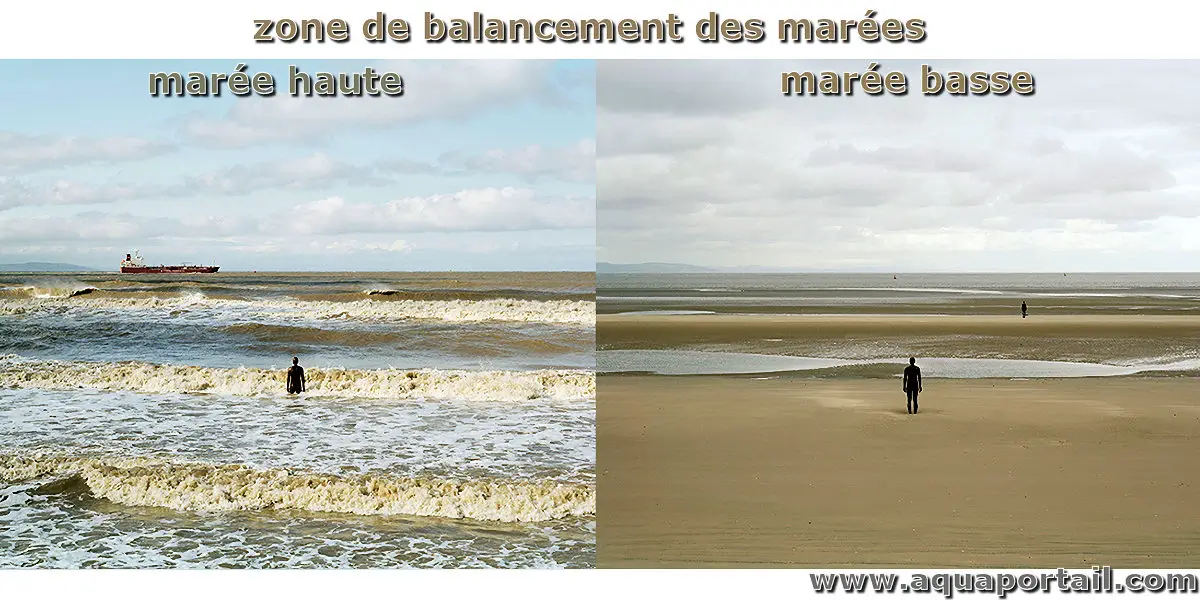
The intertidal zone (tidal range zone) is the portion of the tidal coastline undergoing alternating emersions and submersions following the tides.
dale

A dale is a small valley or glen that does not (or no longer) contains a watercourse. The concave hollowed space of a dale is not large enough to build...
daphnia
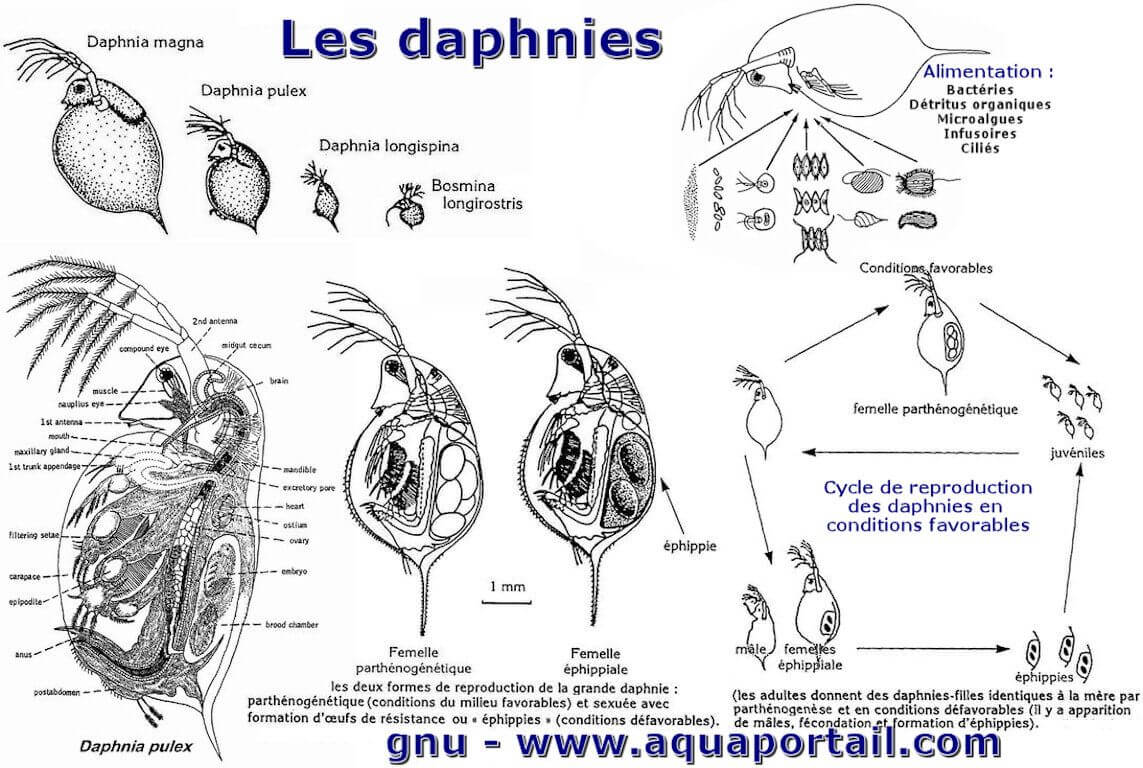
Daphnia is a planktonic branchiopod crustacean of the family Daphniidae, forming a dominant portion of freshwater plankton.
dawn

Dawn marks the transition between night and day, when the sky brightens and morning breaks in the East.
