Diplont
noun (n.)
Definition
A biological organism is a diplont when it is diploid, as opposed to a haplont. Every diplont experiences a phase essentially having 2n chromosomes. See also diplobiont and the diplohaplontic cycle.
The haplont, diplont, and haplodiplont life cycles:

Animals, for example, belong to the diplonts.
Explanations
The diplontic life cycle (meiosis, gamete) is a biological cycle in which individuals of a species are represented solely by organisms with a diploid karyotype. It is typical of all animals, though it also occurs in certain algae and certain yeasts such as Saccharomyces ludwigii and Saccharomyces cerevisiae.
In the diplontic cycle, sexual reproduction involves the fusion of two gamete cytoplasms (plasmogamy) and two nuclei (karyogamy). In sexually differentiated forms, gametes are morphologically and functionally distinct (spermatozoa and ova), produced either by the same individual (hermaphrodites) or by individuals of opposite sexes, differentiated into males and females.
What is diplontic belongs to the developmental cycle of an organism comprising only a diploid phase, originating from a diplont. Close to diplophasic, the two must be distinguished carefully. A diplontic alga, or other lower plant, has a life cycle in which the main form, except for the gametes, is diploid. A diplont is an organism having somatic cells with the diploid number of chromosomes.
"Diplont" designates all organisms whose somatic cells always contain a double (diploid) set of chromosomes—that is, all cells except germ cells, from which haploid gametes invariably form. Diplonts contrast with haplonts, whose cells possess a single set of chromosomes.
Third, there are haplodiplonts, in which diploid and haploid generations alternate.
In diplonts, only germ cells specialized for the germline undergo meiosis, in which the chromosome set is divided among cells so that each haploid daughter cell receives one homologous partner from each chromosome pair.
Following a further cell division, four gametes form (via spermatogenesis in males and oogenesis in females). When brought into contact with a partner's gamete, these haploid cells fuse into a diploid zygote, from which the new diploid organism develops.
All multicellular animals (metazoans, Metazoa) are diplonts. By contrast, all higher plants (seed plants, ferns, and mosses) are diplohaplonts. In seed plants, the haploid generation (gametophyte) is represented by the few-celled pollen grain and by the embryo sac within the ovule.
In diplonts, mitotic divisions occur only in diploid cells. Gametes (produced via meiosis) represent the sole occurrence of the haploid phase. However, the diploid zygote formed after fertilization can divide by mitosis, resulting in either a multicellular diploid organism or numerous individual diploid cells.
Synonyms, antonyms
Spanish translation: diplonte
2 synonyms (similar meaning) for "diplont":
1 antonym (opposite meaning):
Related words and expressions to DIPLONT are directly connected by general or specific meaning.
The word DIPLONT is listed on page 1 of words starting with D in the dictionary glossary.
Related to "diplont"
diplobiontic
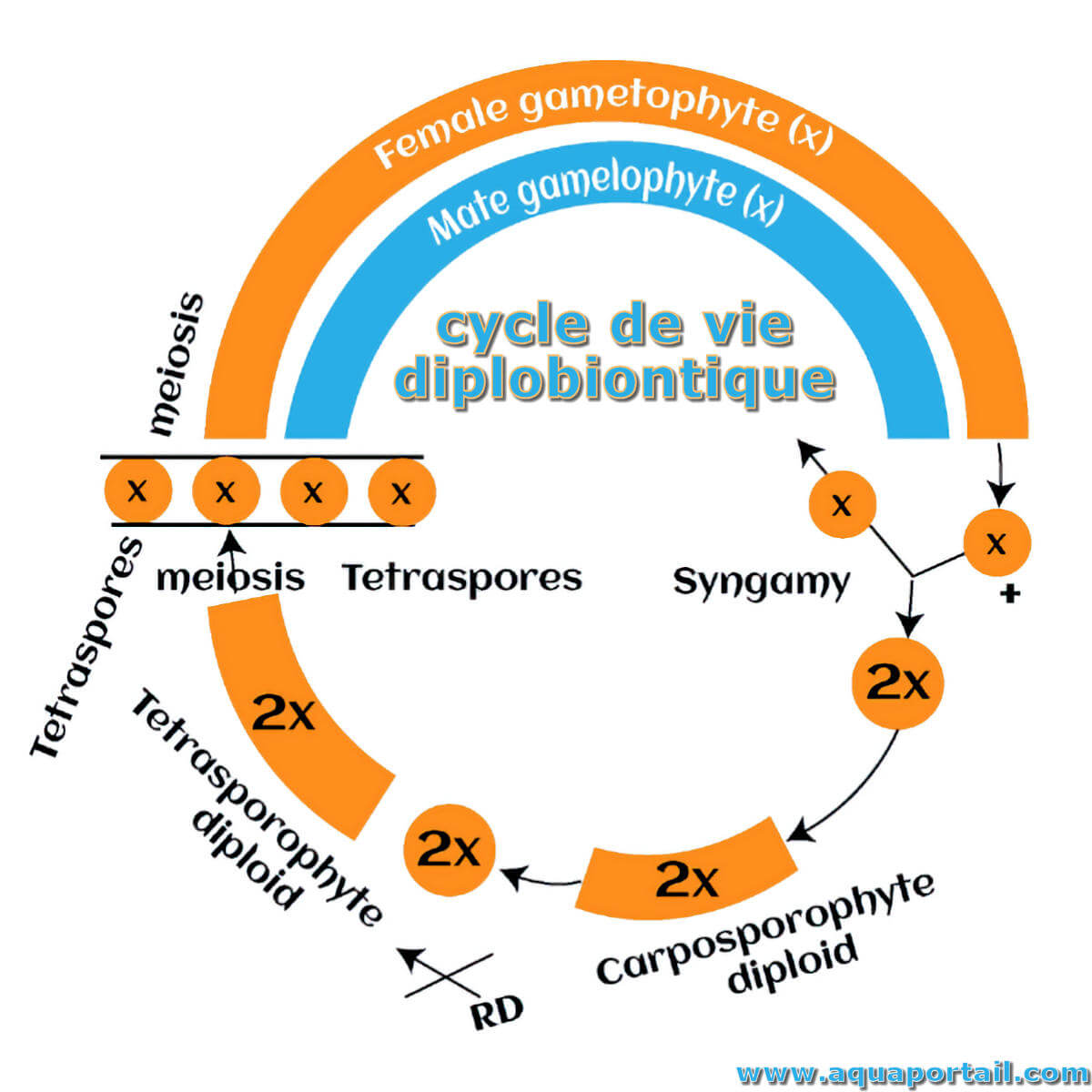
An organism is diplobiontic when it is represented by two types of individuals in nature, as opposed to haplobiontic.
diploid
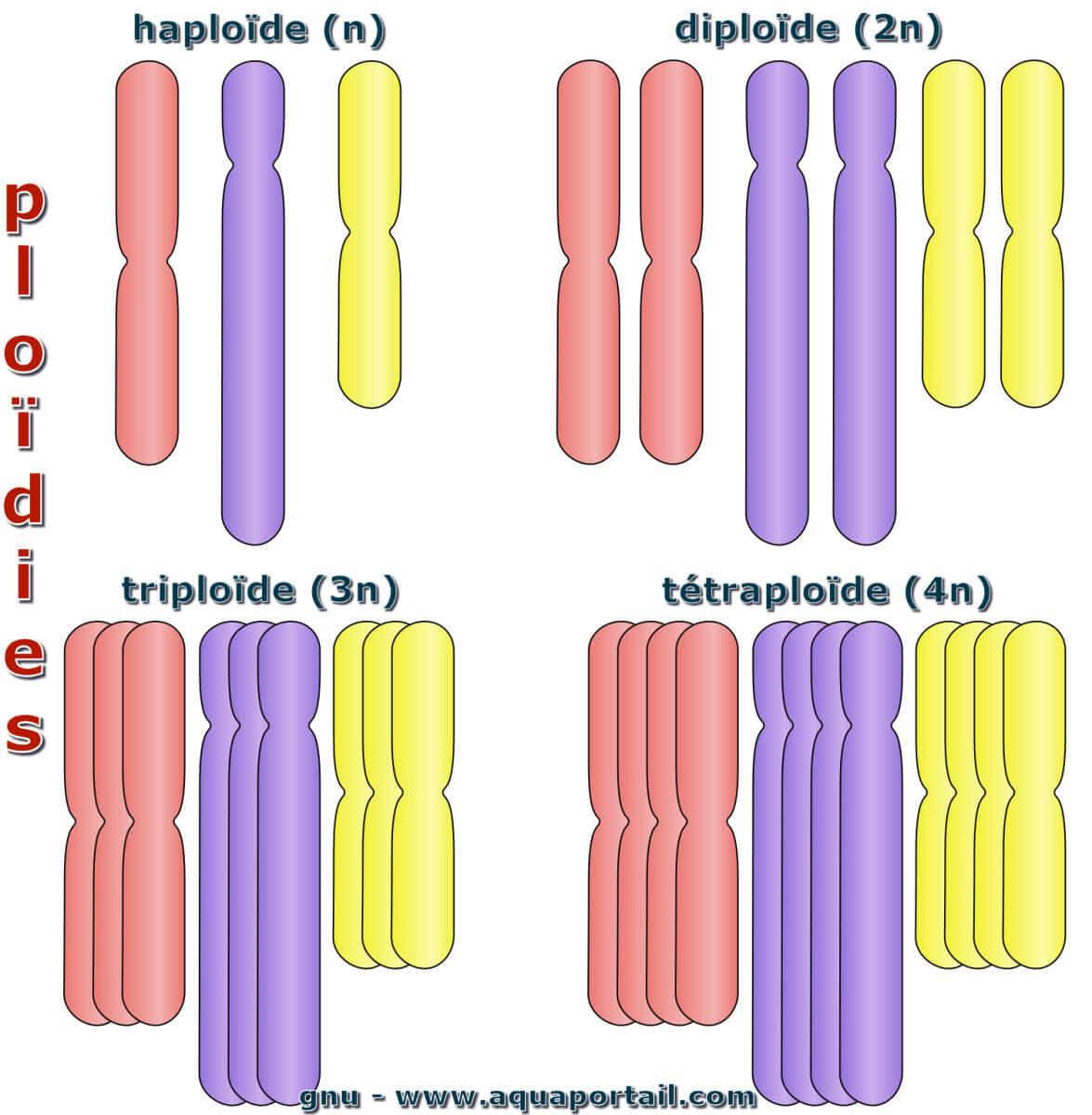
A diploid cell comes from an organism or tissue whose cells possess two sets of chromosomes, denoted 2n, as opposed to haploid with 1n chromosomes...
diplophasic
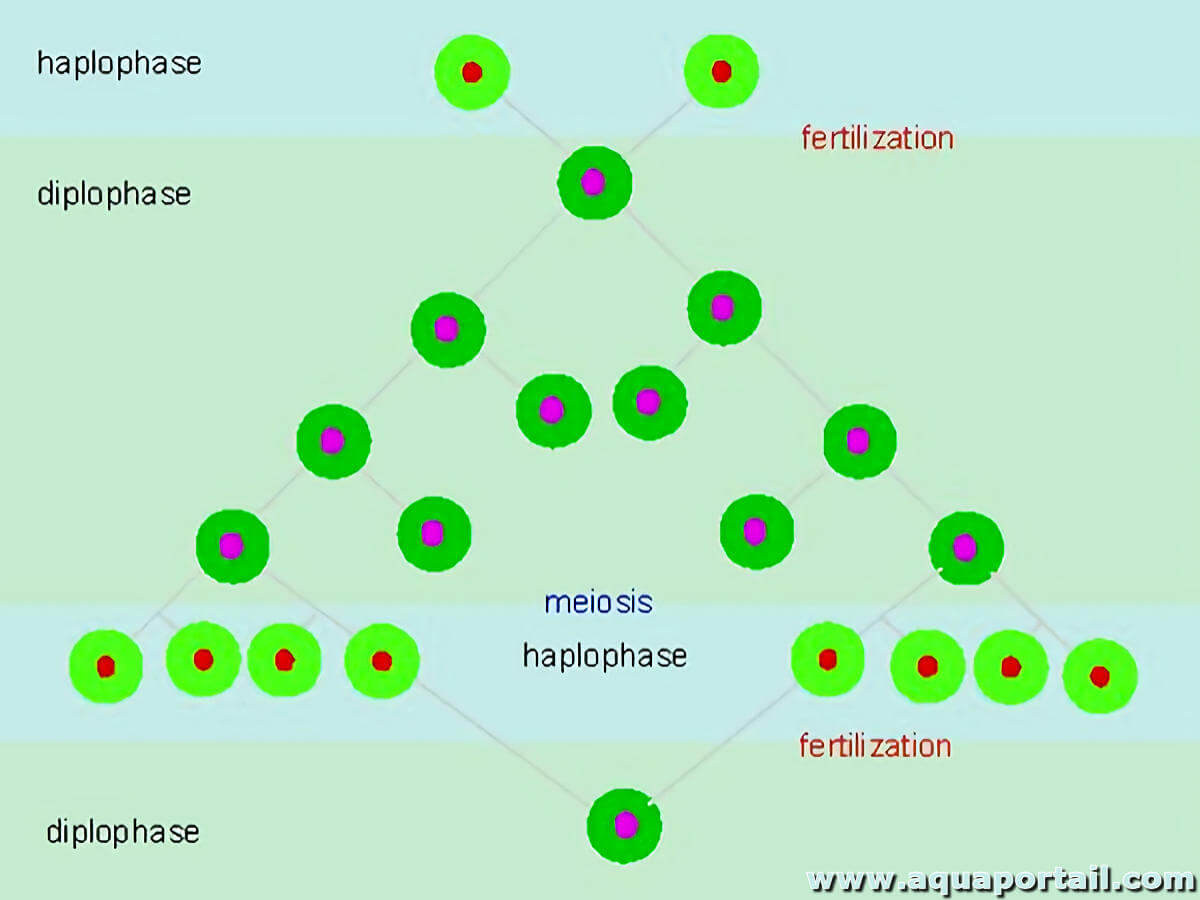
In sexual reproduction, a diplophasic cycle is diplontic among sexual life cycles involving alternating haploid (n) and diploid (2n) stages—that is, a shift...
dale

A dale is a small valley or glen that does not (or no longer) contains a watercourse. The concave hollowed space of a dale is not large enough to build...
