Dawn
noun (n.)
Definition
Dawn marks the transition between night and day, when the sky brightens and morning breaks in the East.Scientifically, dawn is defined by the position of the Sun relative to the horizon, measured by its elevation angle.
Dawn phases according to the Sun's path:

Dawn generally refers to daybreak and is often associated with the glow of early morning light, when the Sun is below the horizon yet its rays illuminate the sky. It can also refer to sunrise, that is, the moment when the upper edge of the Sun becomes visible and the first direct rays of sunlight appear.
Explanations
Like twilight, dawn is divided into three phases:
- astronomical dawn: the center of the Sun is 18 degrees below the horizon;
- nautical dawn: the center of the Sun is 12 degrees below the horizon;
- civil dawn or daybreak: the center of the Sun is 6 degrees below the horizon.
Astronomical dawn occurs when the Sun reaches an altitude of -18° below the horizon, marking the end of full night and the beginning of dawn. At this stage, faint scattering of sunlight begins to illuminate the upper atmosphere, although it is still generally indistinguishable from night, especially in light-polluted areas. For astronomers, this transition can obscure the faintest celestial objects.
Nautical dawn begins when the Sun is 12° below the horizon. Reflected sunlight allows the horizon to become faintly visible, helping sailors navigate by the stars. This phase ends at civil dawn.
Civil dawn, commonly called daybreak, begins when the Sun is 6° below the horizon. The sky brightens considerably, and its orange and yellow hues become evident in clear weather. Only the brightest stars and planets remain visible. Even in overcast weather, light is generally sufficient for outdoor activities without artificial lighting. It ends when the upper edge of the Sun touches the horizon: this is true sunrise.
Dawn at the start of the day:

Dawn begins with the first light of day when looking toward the East.
Synonyms, antonyms
Spanish translation: alba
2 synonyms (similar meaning) for "dawn":
1 antonym (opposite meaning):
Related words and expressions to DAWN are directly connected by general or specific meaning.
The word DAWN is listed on page 1 of words starting with D in the dictionary glossary.
Related to "dawn"
dale

A dale is a small valley or glen that does not (or no longer) contains a watercourse. The concave hollowed space of a dale is not large enough to build...
daphnia
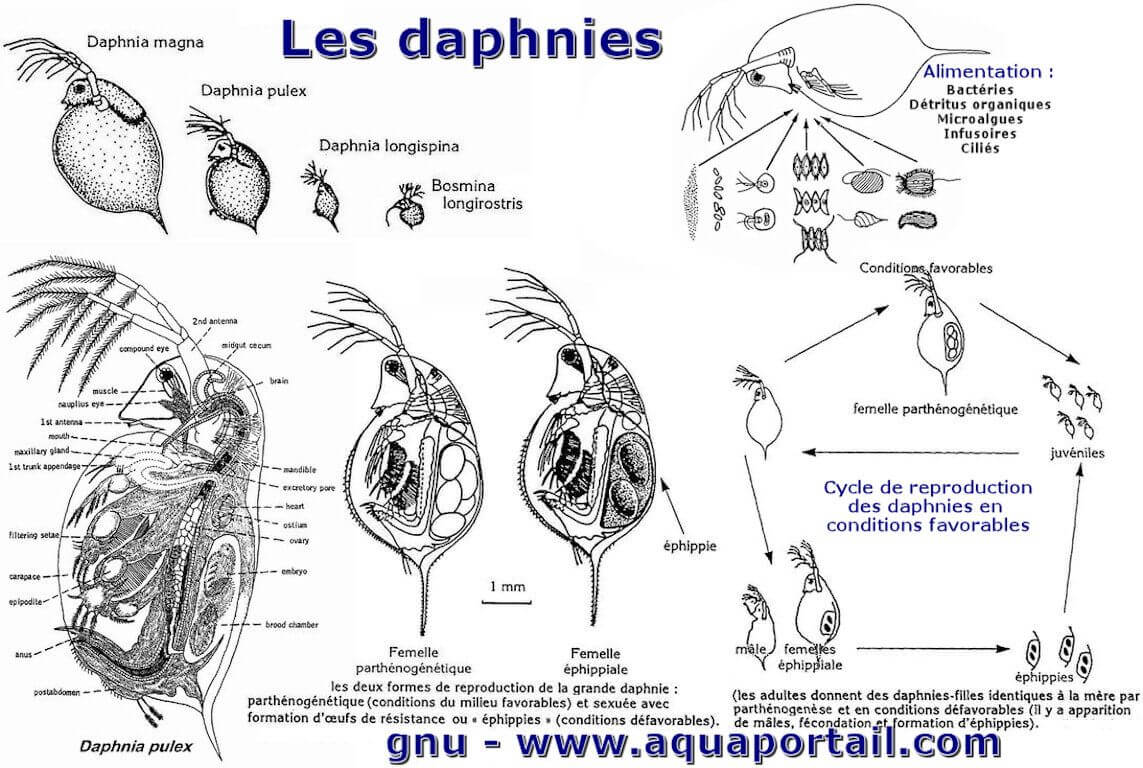
Daphnia is a planktonic branchiopod crustacean of the family Daphniidae, forming a dominant portion of freshwater plankton.
deltoid

Generally, what is deltoid is triangular, having a shape that evokes the uppercase Greek letter delta Δ, delta-shaped.
dendroid

A dendroid organism (or diagram) resembles the appearance of a dendrite, or a tree, with multiple branches and divisions.
Simple summary
Dawn begins as soon as the Sun rises slowly from the East at the horizon, with light transitioning from dark night to day in a gentle transformation marked by the appearance of the first rays of light. Shades of pink and orange herald the arrival of a new day.
