Zygospore
noun (n.)
Definition
A zygospore is a hypnozygote resting spore of green algae in the class Zygnematophyceae. More generally, a zygospore designates a spore of zygomycetes. Zygospores invariably form within the conjugation tube. They are essential for species identification.
Formation and types of zygospores:
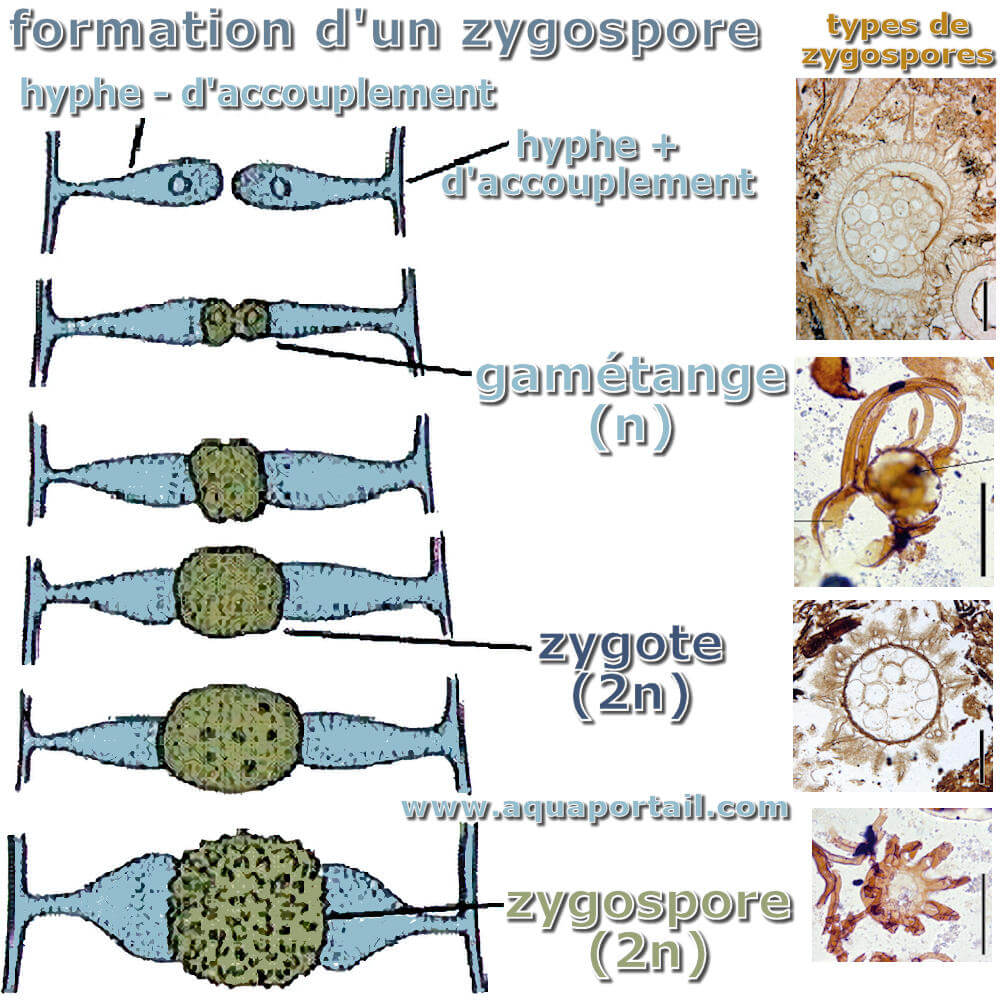
Formation process of a zygospore (left) and several types (models) of zygospores (right).
Explanations
A zygospore is a diploid reproductive stage in the life cycle of many fungi and protists. Zygospores are created by the nuclear fusion of haploid cells. In fungi, zygospores are formed inside the zygosporangium after the fusion of specialized budding structures, from identical mycelia (homothallism, homothallic fungi) or different mating types (heterothallism, heterothallic fungi), and may be chlamydospores. In many eukaryotic algae, including numerous species of chlorophytes, zygospores are formed by the fusion of unicellular gametes.
A zygospore remains dormant while awaiting environmental cues, such as light, moisture, heat, or chemical substances secreted by plants. When the environment becomes favorable, the zygospore germinates, meiosis begins, and haploid vegetative cells are released.
In fungi, a sporangium is produced at the tip of a sporangiophore that disperses the spores. A fungus that forms zygospores is called a zygomycete, indicating that the class is characterized by this evolutionary development.
⭐ In botany, an azygospore designates a particular spore of Mucorineae, for example Sporodinia grandis; azygospores arise from two cells of neighboring filaments fused together to form a zygospore by association, yet whose protoplasmic contents, having neither united nor mixed, each give rise to a distinct reproductive body.
The name azygospore is also given to zygospores that, in certain conjugate algae of the group Zygnemeae, form without prior fertilization. Azygospore formation, accidental in most Zygnemeae, becomes normal in certain species that, like the spirogyra Spirogyra mirabilis, are apogamous.
Zygospore, zygosporangium, and suspensors
Zygospores are sexual spores of zygomycetes. They are rarely observed except in homothallic species. Occasionally, heterothallic species form zygospores upon initial isolation, in which case it is advisable to make multiple isolates of the fungus to ensure both mating types are obtained. Zygospore morphology, including the suspensor and zygosporangia, and its site of formation in culture can be important key characters. Zygospores of Dimargaritales and Kickxellales are hyaline, have "smooth" or pitted walls, and form within the substrate.
For a zygosporangium, zygosporangial wall characteristics such as color, reaction to light, and chemical composition (e.g., transparent or translucent versus opaque, non-carbonaceous versus hard and carbonaceous) can be important in classification, though they are generally not noted in descriptions. Wall ornamentation is of greater importance and has been relatively well documented using scanning electron microscopy (SEM), particularly for members of the Mucorales. Ornamentation can be quite variable, although most mucoralean species have warts that in some cases are described as pyramidal. Less frequently, zygosporangial walls are undulate, smooth, and transparent as opposed to opaque and translucent.
Suspensors are hyphae (like suspenders) that support a zygospore. Each zygospore forms on two suspensors that, in most species, are roughly equal in size and shape (isogamous type of some mycologists). A few species produce suspensors markedly unequal in size and shape (heterogamous). In a few taxa, one or both suspensors bear appendages (straight, branched, or dichotomous">dichotomous). In Mucorales, suspensors are most often opposed (apices pointed toward each other, with the zygospore between them); zygospores form in the aerial hyphae. Certain Mucorales (Choanephoraceae, Pilobolaceae) and Zoopagales have apposed suspensors (parallel and straight or intertwined with the zygospore formed above), found exclusively at or within the substrate. The tong-like suspensors (at maturity, resembling ice tongs) of Phycomyces are a modification of the apposed suspensor; they form as the enormous zygospore matures, causing the suspensors to separate. The suspensors of Dimargaritales and Kickxellales are unmodified and resemble ordinary hyphae.
Synonyms, antonyms
Spanish translation: zigospora
0 synonyms (similar meaning) for "zygospore".
1 antonym (opposite meaning):
Related words and expressions to ZYGOSPORE are directly connected by general or specific meaning.
The word ZYGOSPORE is listed on page 1 of words starting with Z in the dictionary glossary.
Related to "zygospore"
aplanospore

An aplanospore is a non-swimming spore (as opposed to a planospore or a zoospore). Such spores lack flagella but may possess features of swimming cells such...
archaeospore

In red algae, an archaeospore is the contents of an ordinary vegetative cell which, released without prior mitosis, functions as a spore.
autospore

An autospore is each of the non-motile spores (aplanospores) produced by division and differentiation of the contents of a coccoid unicellular organism.
auxospore
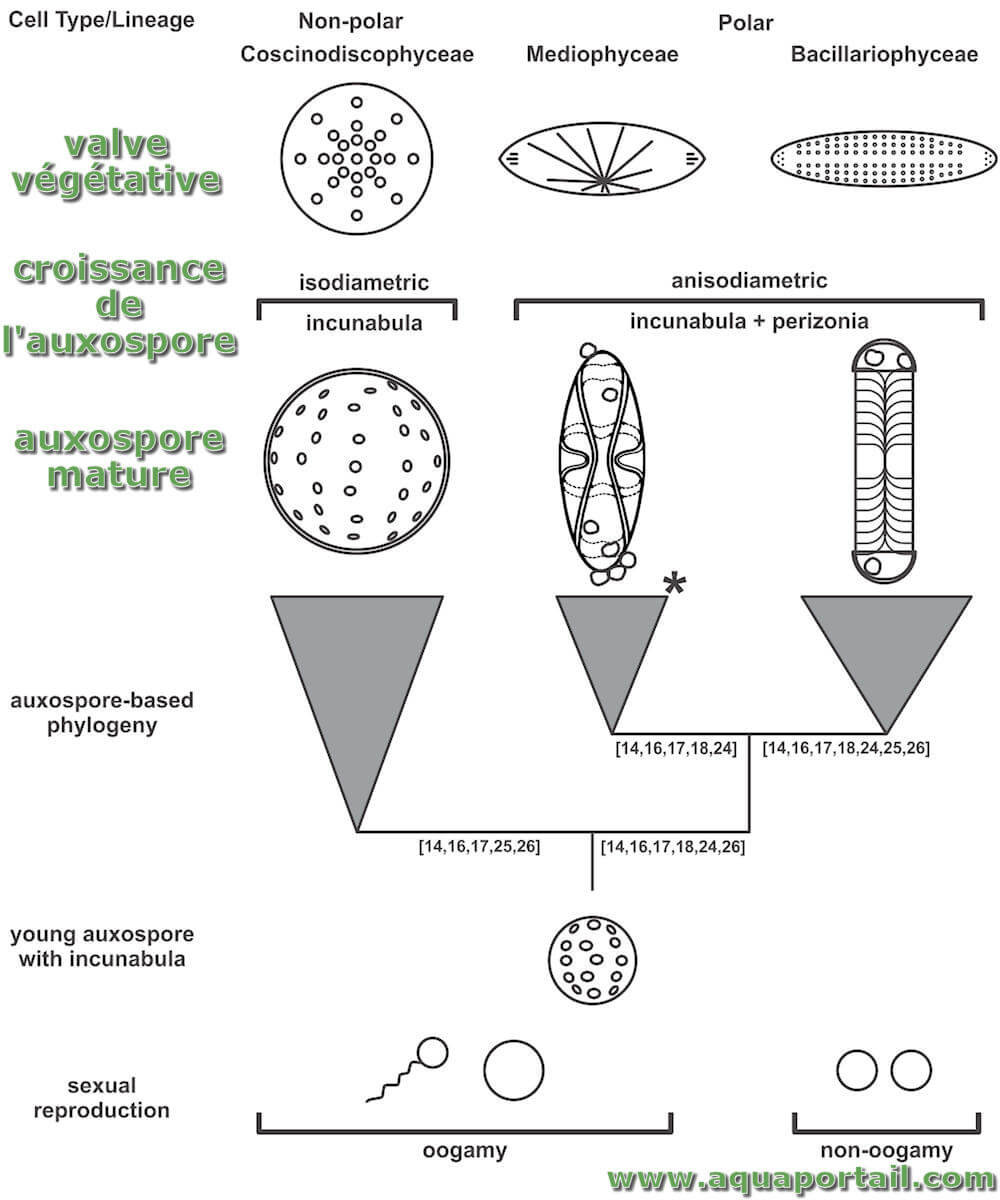
An auxospore is a reproductive cell in diatoms generally resulting from the union of two smaller cells or their contents and associated with the rejuvenation...
