Teliospore
noun (n.)
Definition
A teliospore (teleutospore) is a thick-walled, multicellular fungal spore from which the basidium develops. This spore, in certain rust fungi, carries the fungus through the winter. Then, upon germination, it produces the promycelium. Teliospore production takes place inside the telium or teliosorus.
Teliospores of Gymnosporangium globosum:

The teliospore is pedicellate and fusiform. Shown here are two-celled teliospores of Gymnosporangium globosum. This plant-pathogenic rust fungus causes cedar-hawthorn rust.
Explanations
The telial host is the primary host in heteroecious rusts (Urediniomycetes and Ustilaginales). The aecial host is the alternate host for spermogonia and aecia. These terms apply when two hosts are required by a heteroecious fungus to complete its life cycle.
Teliospores consist of one, two, or more dikaryotic cells. They are often dark-colored and thick-walled, especially in overwintering species (acting as chlamydospores). These dark, non-infectious spores produced in each telium of rust fungi remain dormant during winter.
As teliospore cells germinate, the nuclei undergo karyogamy and subsequently meiosis, giving rise to a four-celled basidium bearing haploid basidiospores.
✅ The main difference between a urediniospore and a teliospore lies in the cell wall thickness of each spore. Urediniospores have thin cell walls, whereas teliospores have thick cell walls.
Spores are reproductive structures of fungi. They undergo meiosis during cellular propagation. Leaf rust and leaf smut are two plant diseases in which urediniospores and teliospores play a major role in disease spread.
Description
As host plants mature, uredinia gradually transform into telia, producing teliospores. Teliospores are blackish-brown, oblong, diploid, two-celled spores measuring approximately 40–60 × 16–23 μm (1.57–2.36 × 10-3 × 0.63–0.91 × 10⁻³ in). The spores remain attached to the telium by a pedicel and are quite resistant to environmental extremes. Teliospores serve as the overwintering stage of the fungus in climates where frosts are common. Teliospore viability decreases at high temperatures, especially when accompanied by dry conditions. Teliospore viability varies depending on the host and pathogen genotypes involved.
Teliospore dispersal usually occurs via humans or water when infected wheat or rye straw is moved. The teliospore germinates after a period of weathering involving alternating freezing and thawing as well as drying and wetting. Under laboratory conditions, however, teliospores germinate irregularly. Teliospores germinate by producing a basidium, during which meiosis takes place and haploid nuclei migrate into the basidium. A basidiospore develops on a sterigma and a haploid nucleus migrates into the spore.
Life cycle
In nature, teliospores are dispersed by insect vectors. Teliospores are collected from smutted anthers and germinate on the surface of leaves or flowers, in water, or on laboratory media. The germinating teliospore produces a short promycelium into which the nucleus migrates and undergoes meiosis. One nucleus returns to the teliospore and the other three nuclei are separated by septa.
Microbotryum violaceum is a bipolar species with mating types called a-1 and a-2, determined by two alleles. Thus, following meiosis, the two a-1 and two a-2 basidiospores form a linear tetrad on a short promycelium and can be separated by micromanipulation for tetrad analysis. Each basidiospore buds to produce a sporidium. Multiplication of sporidia by budding yields a yeast-like colony with four sporidial clones, each having the same genotype as the progenitor basidiospore. These colonies have been used for genetic analysis.
Wheat rust
It is sometimes assumed that teliospores of wheat rusts require cold treatment to germinate. However, with wheat leaf rust, cold treatment is not necessary. In regions such as Portugal, teliospores germinate in nature during autumn rains following a hot, dry summer.
For genetic studies, teliospores generally germinate when subjected to alternating wet-dry periods without cold treatment. Teliospores from certain cultures germinate readily, whereas others require a long period of such cycles. Teliospores generally germinate better if harvested while the plants are still green. Infection of the alternate host is easily achieved by suspending teliospores over young plants of a susceptible Thalictrum species. Self-fertilization or crosses between rust cultures are carried out by transferring pycnial nectar in various ways.
Synonyms, antonyms
Spanish translation: teliospora
2 synonyms (similar meaning) for "teliospore":
0 antonyms (opposite meaning).
Related words and expressions to TELIOSPORE are directly connected by general or specific meaning.
The word TELIOSPORE is listed on page 1 of words starting with T in the dictionary glossary.
Related to "teliospore"
aplanospore

An aplanospore is a non-swimming spore (as opposed to a planospore or a zoospore). Such spores lack flagella but may possess features of swimming cells such...
archaeospore

In red algae, an archaeospore is the contents of an ordinary vegetative cell which, released without prior mitosis, functions as a spore.
autospore

An autospore is each of the non-motile spores (aplanospores) produced by division and differentiation of the contents of a coccoid unicellular organism.
auxospore
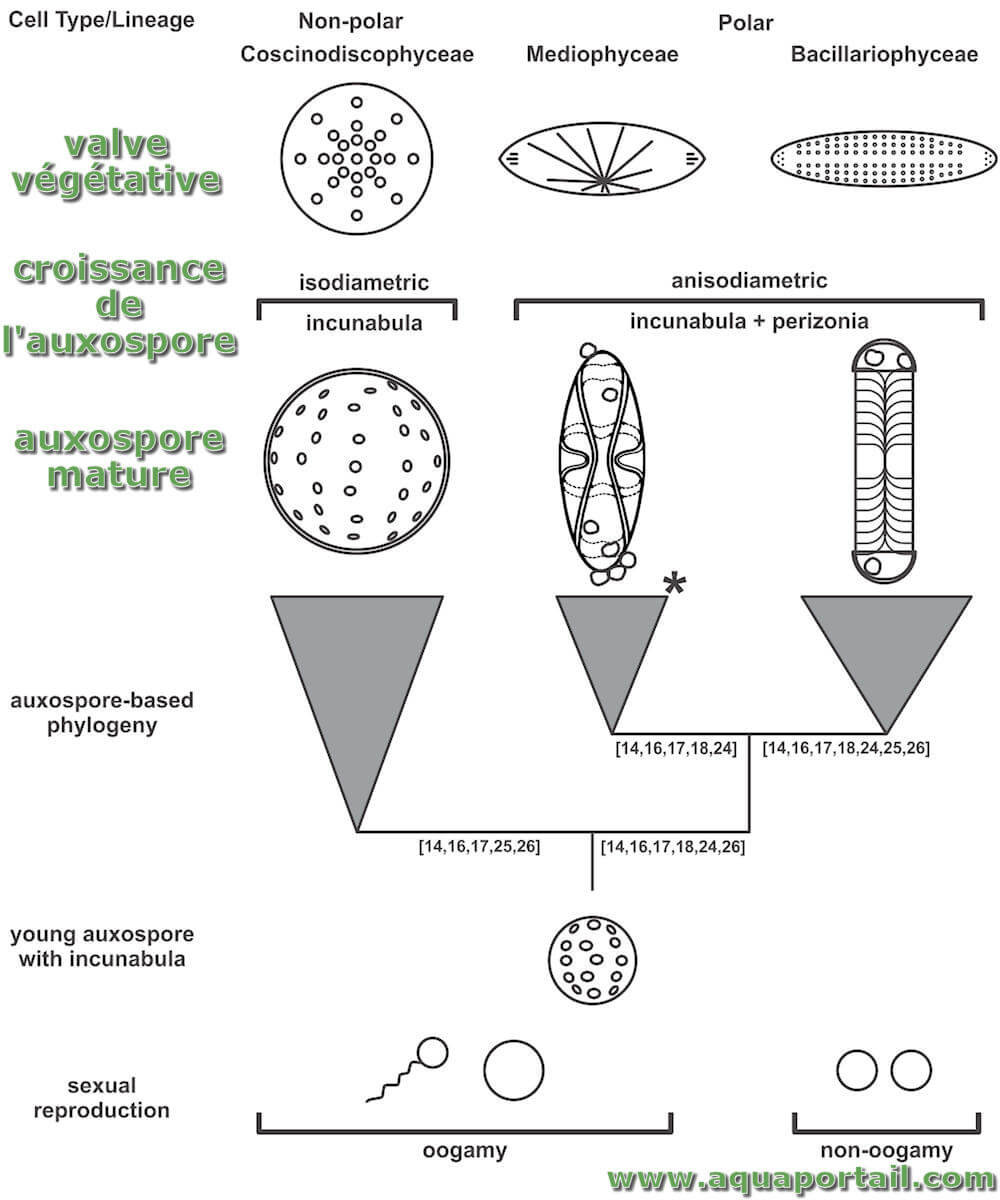
An auxospore is a reproductive cell in diatoms generally resulting from the union of two smaller cells or their contents and associated with the rejuvenation...
