Termite
noun (n.)
Definition
A termite is a soft-bodied social insect, winged or wingless, that lives in large colonies composed of several distinct castes, generally inside a termite mound. Related to cockroaches and native to warm regions, many termitophilous species feed on wood (lignivorous, xylophagous) and can cause extensive damage to trees.
Termites:
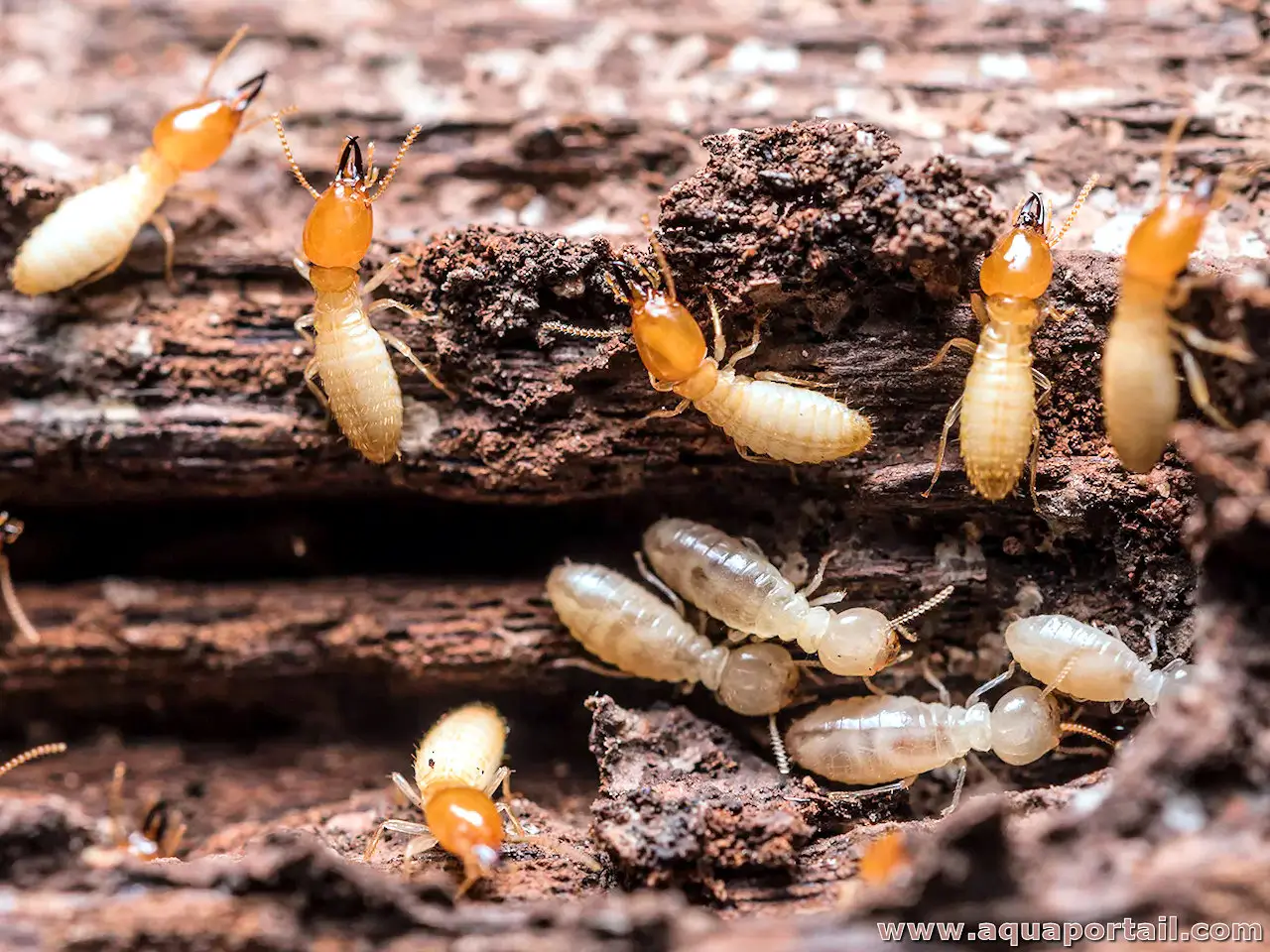
Termites are among the most destructive pests in a home. These tiny insects can ravage wooden structures, leading to costly repairs and even safety hazards. One indicator of termite presence is the sighting of a swarm of winged reproductive termites.
Explanations
A termite is an insect of the infraorder Isoptera (isopterans) within the order Blattodea.
Termites are small insects, generally measuring less than 1.5 cm (0.6 in) in length. They live in colonies organized according to a well-defined social hierarchy, and colony size can vary considerably: from a simple pair (a king and a queen) to several thousand individuals. Mature colonies, depending on the species, can house between 60,000 and one million termites. Termite colonies spread through swarming, forming new independent colonies capable of reproducing and growing rapidly.
Termites have either a subterranean lifestyle or a fairly aerial one in termite mounds (mounds of cemented soil).
There are more than 2,000 species of termites worldwide. Termites feed primarily on wood to extract cellulose. This process benefits the ecosystem by contributing to nutrient recycling and maintaining soil health.
The life cycle of termites is notably long, with lifespans ranging from 2 to 50 years depending on the species and role within the colony. While most termites live less than a year, queens can live for several decades. Under favorable conditions, colonies can persist indefinitely, as queens lay thousands of eggs each day. These eggs hatch into nymphs, which undergo several molts before becoming adult termites.
Termite colonies exhibit a highly organized social structure composed of queens, kings, workers, and soldiers. The primary function of the queen is reproduction, while workers perform various tasks such as foraging, caring for the young, and maintaining the nest. Soldiers are responsible for defending the colony against predators, notably ants, certain spider species, birds, and mammals such as anteaters and aardvarks. These natural predators can have a considerable impact on termite populations.
🚩 In French, the term "termite" is a masculine noun.
Castes
Depending on the species, a colony may contain several forms or castes, notably immature termites, workers, soldiers, nymphs, and reproductives. Workers and soldiers are sexually immature males and females. Soldiers defend the colony, while workers care for the king, queen, and nymphs.
Termite castes:
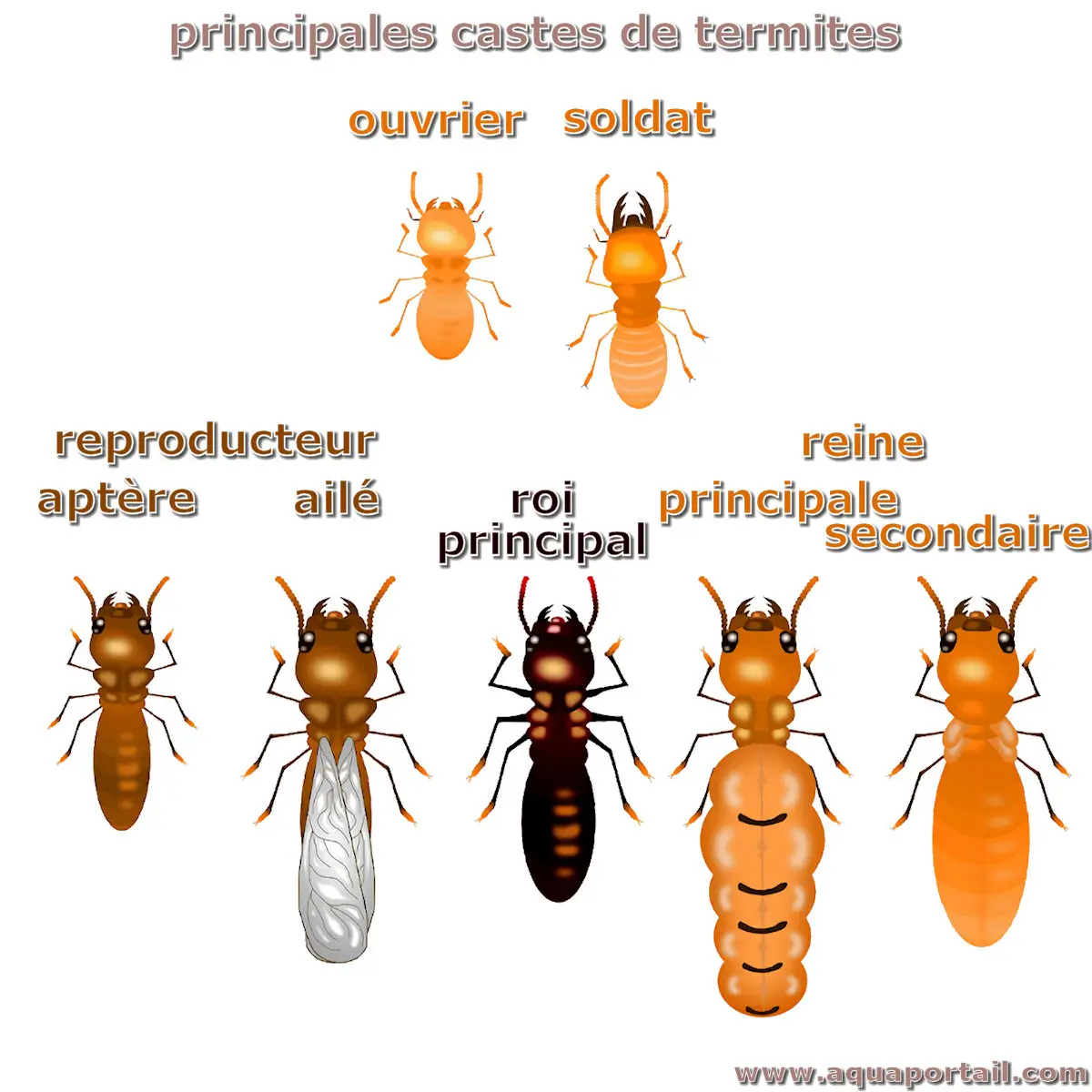
Main castes of termites including workers, soldiers, reproductives, kings, and queens.
The queen founds the colony and lays all the eggs until it reaches a certain size. She then allows certain immature termites to develop into secondary queens, which lay the additional eggs needed for the colony's survival.
Workers
In termite colonies, workers are wingless, soft-bodied, and make up the largest group. They are often seen when infested wood is disturbed. Occasionally, immature termites or sterile adults act as workers.
Workers care for the eggs, nymphs, and nestmates, while foraging for food, grooming, and maintaining colony structures. They feed on cellulose present in wood and other organic detritus, thus contributing to the natural decomposition of organic matter.
Worker termites are recognizable by their pale or white color, rounded head, straight antennae, and smaller size compared to the king and queen.
Soldiers
Soldiers are the defenders of the termite colony. They stand out clearly from other colony members due to their appearance and generally larger size.
Their head is generally darker and their mandibles are larger than those of workers. Their primary role is to protect the colony and safeguard it from potential predators.
Reproductives
Reproductives are the termites responsible for reproduction. This group includes the king, queen, and winged individuals (alates), recognizable by their generally darker bodies.
Winged individuals are sexually mature males and females equipped with wings, capable of leaving their parent colony to establish new ones.
During their nuptial flight, winged individuals mate and, once on the ground, shed their wings before burrowing underground to become king and queen of a new colony.
Queens
The queen, markedly larger than the workers, is primarily responsible for egg-laying, sometimes producing several thousand eggs per day. In established colonies, supplementary reproductives take over when the queen can no longer sustain egg production. These individuals can also replace the king or queen if needed.
Before mating, termite pairs excavate an underground royal chamber, sealing it with soil, saliva, and feces. After mating, they remain underground, tended by workers. The queen begins laying 6 to 12 eggs a few days or weeks after mating, thus founding the colony. Over time, a mature queen can produce thousands of eggs per year.
Kings
The termite king is essential to reproduction, ensuring the viability and strength of the colony. Unlike the far more imposing queen, he is similar in size to a worker, with his darker coloration being the main physical difference.
The termite king spends his entire life underground. Without him, the colony could neither grow nor thrive. Although he possesses neither crown nor throne, the termite king holds a vital position within the colony, second only to the queen.
Synonyms, antonyms
Spanish translation: termita
3 synonyms (similar meaning) for "termite":
- Termitoidea
- termitophilous insect
- white ant
0 antonyms (opposite meaning).
Related words and expressions to TERMITE are directly connected by general or specific meaning.
The word TERMITE is listed on page 1 of words starting with T in the dictionary glossary.
Related to "termite"
tagma

A tagma is a group of fused segments formed by series of metameres differentiated from the rest of an arthropod's body.
tapeworm
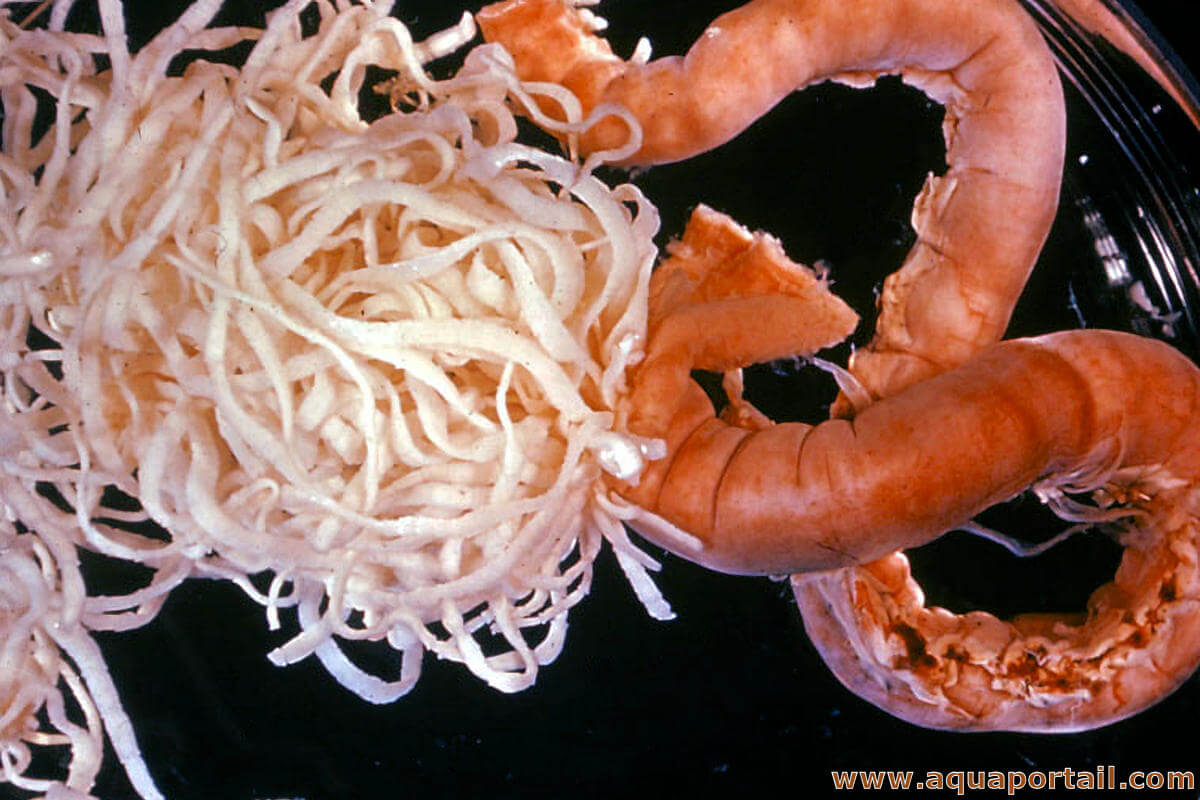
The tapeworm, or solitary worm, is a long, ribbon-like, segmented flatworm, a parasitic cestode of the genus Taenia.
tectonics

Tectonics is a branch of geology that studies the structure of the crust of a planetary body, such as Earth or the Moon, particularly the formation of folds...
teliospore

A teliospore (teleutospore) is a thick-walled, multicellular fungal spore from which the basidium develops.
