Adelphoparasite
noun (n.)
Definition
An adelphoparasite is a parasitic organism closely related to its host, often within the same family and sometimes the same genus. Adelphophagy is a trait of certain species that feed on other individuals of the same species.
Comparison between an alloparasite and an adelphoparasite:
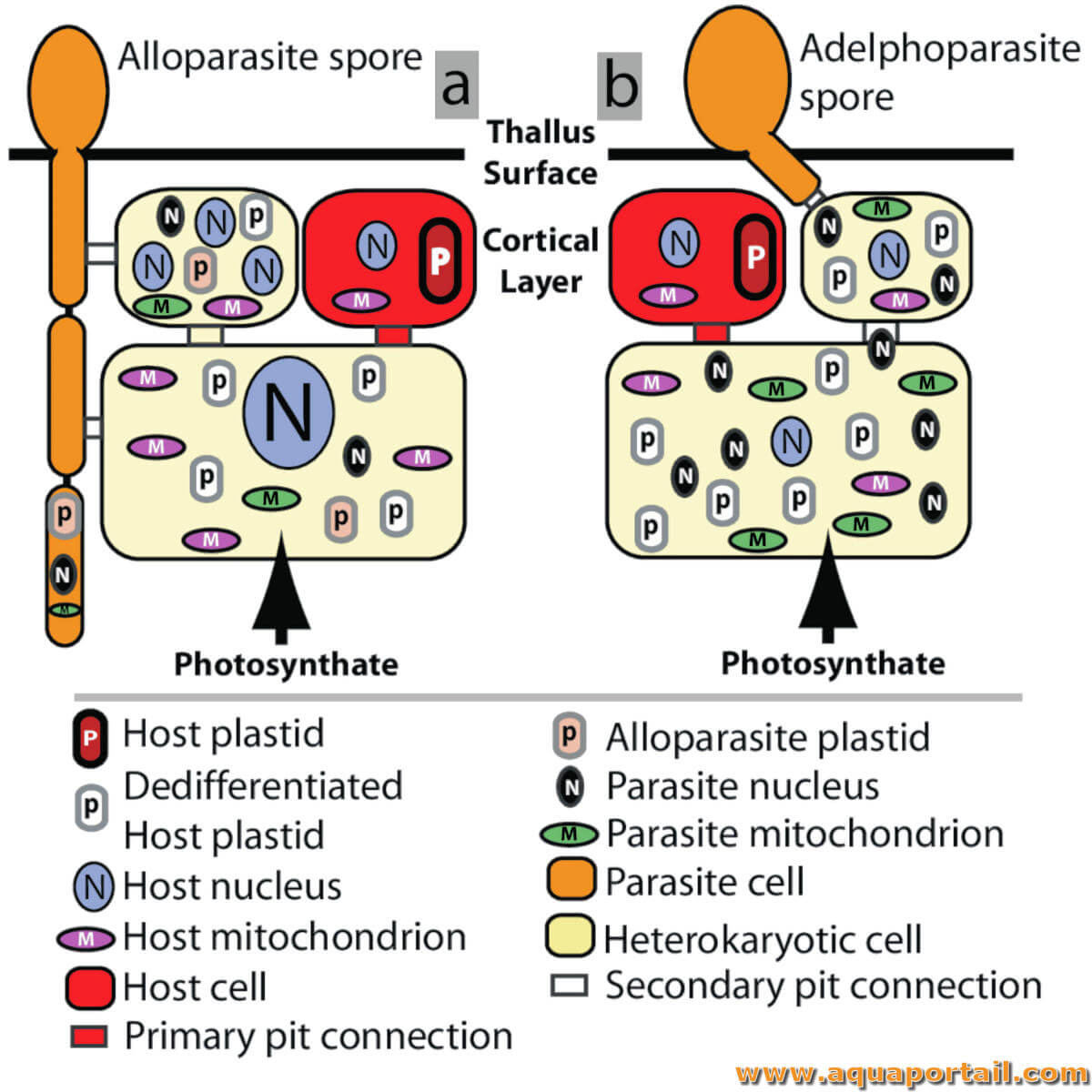
Infection strategies of red algal alloparasites and adelphoparasites.
Explanations
In several groups of parasites, notably parasites of insects, flowering plants, fungi, and red algae, morphological similarities between parasites and their specific hosts LED to the hypothesis that these parasites evolved from their hosts. Morphological traits shared by parasite and host may result from convergent evolution.
The hypothesis that adelphoparasitic red algae - that is, parasitic red algae morphologically very similar to their hosts - evolved from their specific red algal hosts was tested through molecular analysis.
Rather than comparing morphological features of parasites and hosts, nuclear small-subunit 18S ribosomal DNA and internal transcribed spacer (ITS) regions of the nuclear ribosomal repeat were compared across five parasites, their hosts, and related non-hosts from four red algal orders.
These comparisons reveal that each of these adelphoparasites evolved either directly from the host on which it is currently found or from another taxon closely related to the modern host.
Differences between alloparasite and adelphoparasite
In the illustration above:
- (A) Alloparasites penetrate the host thallus and develop a network of filamentous cells within the host. Each cell is capable of fusing with a host cell via a secondary pit connection and depositing its contents. Once inside the cell, the alloparasite nucleus does not divide, but causes the host nucleus to enlarge or, in the case of cortical cells, multiply. It is currently unknown whether the alloparasite plastid is derived from the host or the parasite
- (B) Adelphoparasite spores fuse with a cortical cell and inject their contents. These parasitic nuclei can multiply within the host; however, no nuclear DNA synthesis has been observed by the host after infection. Parasitic nuclei and organelles spread via the host's primary pit connections. Host organelles also multiply in response to infection.
Origin
The term comes from the Greek word adelphos, meaning brother.
The French word is used in the English language. Ronquist (1994) also proposed the term agastoparasite, from the Greek agastor, close relative, twin.
Synonyms, antonyms
Spanish translation: adelfoparásito
2 synonyms (similar meaning) for "adelphoparasite":
- agastoparasite
- alloparasite
0 antonyms (opposite meaning).
Related words and expressions to ADELPHOPARASITE are directly connected by general or specific meaning.
The word ADELPHOPARASITE is listed on page 1 of words starting with A in the dictionary glossary.
Related to "adelphoparasite"
abiotic

In biology and ecology, abiotic refers to what is not biotic, that is, not part of living beings.
aboral

Aboral refers to what is situated away from or opposite the mouth in zoology, and especially in marine biology.
absence

Absence refers to non-presence at an expected location, or the complete non-existence of something.
acetyltransferase
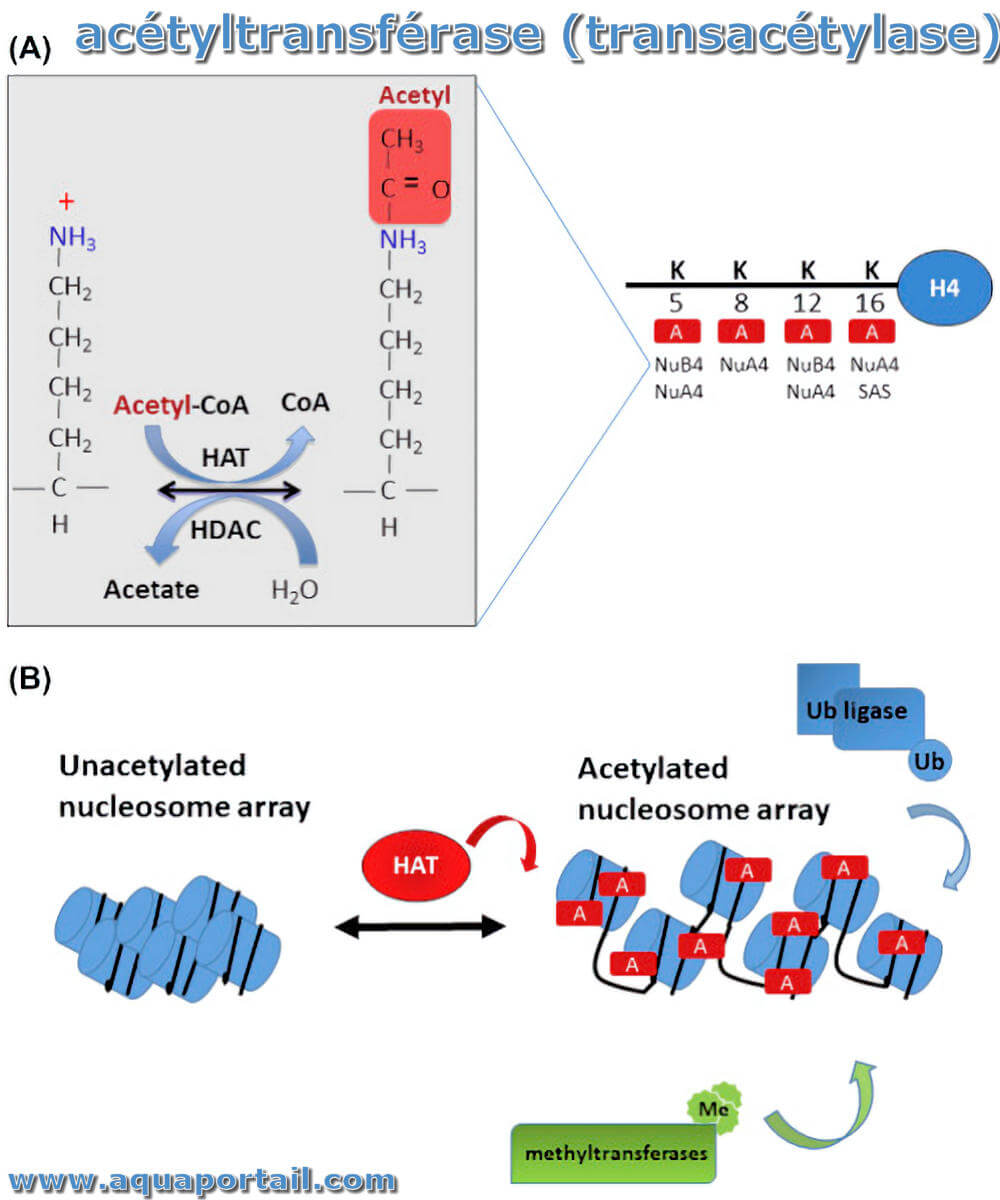
An acetyltransferase is an enzyme that transfers an acetyl group from acetyl-CoA to lysine amino acids.
