Agar
noun (n.)
Definition
Agar is a linear polymer, composed of galactose, extracted from certain phycocolloid red algae (Rhodophyta). Structurally, agar is a polysaccharide containing neutral agarose and heavily sulfated agaropectin units. Agar is marketed for its gelling properties. The name comes from a Malay word, agar-agar, meaning "seaweed."Agar = agarose + agaropectin:

Agar is a mixture of agarose (top) and agaropectin (bottom). Agar contains repeating disaccharide units of 1,3-linked β-D-galactopyranose and 1,4-linked 3,6-anhydro-α-L-galactopyranose (agarobiose and neoagarobiose units), with the possible presence of methoxyl, sulfate, and/or pyruvate substituents at various positions along the main chain (agaropectin).
Explanations
Agar is a polymer obtained from phycocolloid algae, composed of galactose sugar subunits. It is a mixture of two components: the linear polysaccharide agarose and a heterogeneous mixture of smaller molecules called agaropectin.
Agar consists of alternating units of D- and L-galactopyranose. The neutral fraction is called agarose. Agar is obtained by precipitating anionic agaropectins with quaternary ammonium salts and separating them by centrifugation.
Agaropectin refers to polysaccharides having the same backbone as agarose, yet containing numerous acidic groups such as sulfate, pyruvate, and glucuronate.
Agar is a mixture of polysaccharides generally extracted from the cell walls of red algae. They are composed of agarose and agaropectin, and exhibit structural and functional properties similar to those of carrageenans.
As with carrageenans, they are extracted with hot water. The genera Gelidium and Gracilaria are the main commercial sources of agar.
Like carrageenans, agars are used as stabilizers for emulsions and suspensions, and as gelling agents. Roughly 90% of all agar produced worldwide goes to food applications; the remainder is used in manufacturing capsules for medical applications and as a medium for cell cultures.
Agar affects ultraviolet radiation absorption and also exhibits certain bioactivities.
The European food additive code for agar appearing on food packaging is E406.
Applications
Agar is the most commonly used growth medium for microorganisms. Because of the ease with which agar can be handled (dry, dissolved, and gelled), it is ubiquitous in the modern laboratory. Solid agar plates can support microbial growth when supplemented with appropriate nutrients or be used for antibiotic selection.
Agar medium is essential for studying microorganisms and molecular biology and is widely used in culturing and detecting pathogens from contaminated food and water. Moreover, due to its porous 3D framework, agar is frequently used in biomolecular separation and purification.
Agar is one of the most common base media for gel electrophoresis, gel-bead chromatography, and size-exclusion chromatography.
In addition to its use as a solid growth medium, agar has been fabricated in various forms (e.g., microspheres and films) to encapsulate molecules for sustained drug delivery or immobilize proteins for tissue engineering.
Due to agar's gelling property, it is most often used as a hydrogel. To achieve sustained drug delivery, agar hydrogels have been modified by incorporating other biopolymers to form an interpenetrating network.
This network structure of agar hydrogels is capable of improving the mechanical properties of drug delivery systems and also extending the drug release profile. In tissue engineering, high-porosity agar hydrogels have shown promising results in promoting cell adhesion and proliferation.
Synonyms, antonyms
Spanish translation: agar
2 synonyms (similar meaning) for "agar":
0 antonyms (opposite meaning).
Related words and expressions to AGAR are directly connected by general or specific meaning.
The word AGAR is listed on page 1 of words starting with A in the dictionary glossary.
Related to "agar"
agaropectin
An agaropectin is a molecule of the agar family, very similar in composition to agarose, yet more heavily sulfated and non-gelling.
agarose
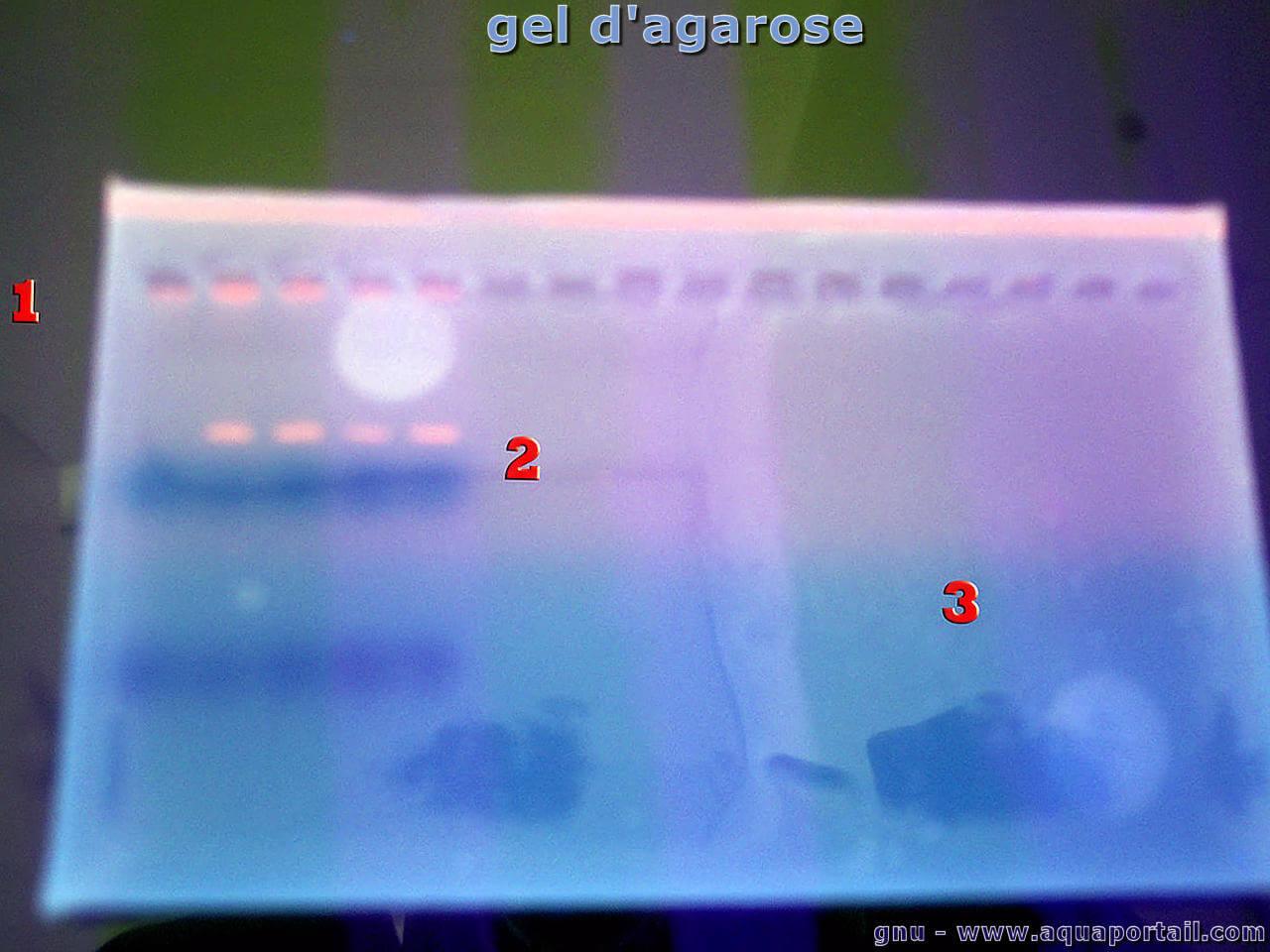
Agarose is a polymer of the agar family with very high gelling power, very low sulfate content, and composed of the regular repetition of a disaccharide unit.
abiotic

In biology and ecology, abiotic refers to what is not biotic, that is, not part of living beings.
aboral

Aboral refers to what is situated away from or opposite the mouth in zoology, and especially in marine biology.
