Agglutinin
noun (n.)
Definition
An agglutinin is a specific glycoprotein causing clumping and immobilization with the corresponding agglutinogen (antibody/antigen reaction). This antibody induces the agglutination of cells or bacteria to which it binds specifically. In the case of erythrocytes (red blood cells), it is called a hemagglutinin (a gamma globulin).
An agglutinin (hemagglutinin) with the influenza virus:

Here, the influenza virus attaches to the cell membrane via the surface protein hemagglutinin (agglutinin).
Explanations
An agglutinin also designates any substance that causes agglutination; for example, it causes the agglutination of the flagella of + and - gametes of Chlamydomonas. See also lectins and prolamins.
In medicine, agglutinins are used as a generic term for proteins that clump together with cells or corpuscular elements (agglutination) and thus form aggregates. The term hemagglutinin is used synonymously for historical reasons, though it strictly describes the agglutination of proteins with red blood cells (hemagglutination). In contrast to the agglutination of agglutinins and cells, protein aggregation refers to the clumping of proteins, while precipitation describes the clumping of soluble antigens by antibodies. Agglutinins can be detected by agglutination tests, for example in a Gruber-Widal reaction.
The specific agglutination reaction was discovered in 1896 by Herbert Edward Durham and Max von Gruber and is called the Gruber-Durham reaction. That same year, with the Gruber-Widal reaction, it became a practical application in medical diagnosis after Fernand Widal discovered clumping in the serum of typhoid patients upon adding cultures of the typhoid pathogen. In 1900, Karl Landsteiner discovered the hemagglutination of blood mixtures from different blood types, which LED to elucidating the ABO system.
Most agglutinins are immunoglobulin molecules of the IgM and IgG types. In the absence of type A agglutinogen on an individual's red blood cells, anti-A agglutinins are generated in the plasma. Similarly, when type B agglutinogen is absent from red blood cells, antibodies called anti-B agglutinins are generated in the plasma. Red blood cells carry agglutinogens on their surface, while plasma contains the corresponding agglutinins. Group O (lacking agglutinogens) contains both anti-A and anti-B agglutinins. Group A contains anti-B agglutinins, and blood group B contains anti-A agglutinins.
Synonyms, antonyms
Spanish translation: aglutinina
2 synonyms (similar meaning) for "agglutinin":
0 antonyms (opposite meaning).
Related words and expressions to AGGLUTININ are directly connected by general or specific meaning.
The word AGGLUTININ is listed on page 1 of words starting with A in the dictionary glossary.
Related to "agglutinin"
agglutinogen
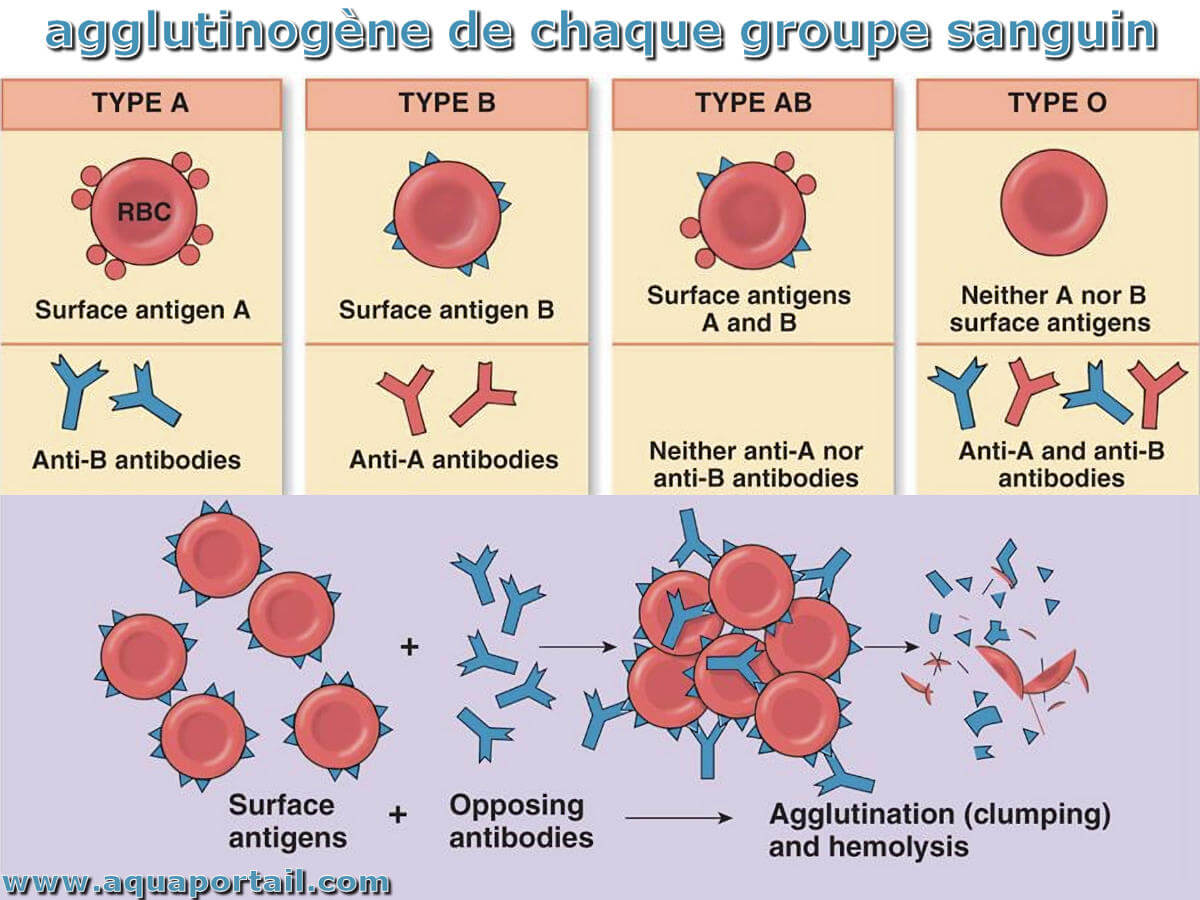
An agglutinogen is a specific substance causing clumping and immobilization with the corresponding agglutinin (antigen/antibody reaction).
abiotic

In biology and ecology, abiotic refers to what is not biotic, that is, not part of living beings.
aboral

Aboral refers to what is situated away from or opposite the mouth in zoology, and especially in marine biology.
absence

Absence refers to non-presence at an expected location, or the complete non-existence of something.
