Influenza
noun (n.)
Definition
Influenza, or the flu, is a viral infectious disease of birds and mammals caused by RNA viruses of the family Orthomyxoviridae, the influenza viruses. The most common symptoms of the various forms of influenza are chills, fever, runny nose, sore throat, muscle aches, headaches (often severe), coughing, weakness/fatigue, and general malaise.The avian influenza virus and virions:

The avian influenza virus (influenza A) is the virus that causes avian flu. The transmission electron micrograph of the virions is shown here in negative staining (light on a dark background).
Explanations
Influenza does not affect humans alone; it can infect many animals. Avian influenza is well known to the general public due to mass culling when it appears on a poultry farm.
Human influenza
Although influenza is often confused with other similar illnesses, particularly the common cold, influenza is a more severe disease caused by a different type of virus.
Influenza may cause nausea and vomiting, especially in children, though in children these symptoms are more frequently related to gastroenteritis, which is sometimes inaccurately called "stomach flu" or "24-hour flu."
Influenza is transmitted through the air via coughing or sneezing, creating aerosols containing the virus. Influenza can also be transmitted by direct contact with bird droppings in avian influenza (H1N1, H3N2, H5N1) or nasal secretions, or by contact with contaminated surfaces as in influenza A or swine flu. Airborne aerosols are thought to cause most infections, although which route of transmission is most important is not entirely clear.
Influenza viruses can be inactivated by sunlight, antiviral disinfectants, and detergents such as bleach, for example. Since the virus can be inactivated by soap, frequent handwashing reduces the risk of infection.
Influenza can occasionally lead to pneumonia, either viral pneumonia or bacterial pneumonia, even in people who are otherwise very healthy. In particular, influenza presents a warning sign if a child (or indeed an adult) seems to be getting better and then relapses with a high fever: this relapse may be bacterial pneumonia. Another warning sign is if the person begins having difficulty breathing.
Avian influenza
Avian influenza, bird flu, or fowl plague, is a viral infectious disease affecting birds, though it is also capable of infecting various species of mammals, including humans, pigs, and domestic cats.
Avian influenza specifies the original nature of a flu, with viruses specifically infecting birds serving as vectors for transmitting the viral disease. Influenza viruses H1N1, H3N2, and H5N1 are identifiable by their characteristic structures.
An avian strain named H5N1 raised concerns of a new influenza pandemic when it emerged in Asia in the 1990s, though it did not evolve into a form that spreads easily between people.
Avian influenza viruses belong to the genus Influenzavirus A of the family Orthomyxoviridae and are segmented, negative-sense RNA viruses. This family comprises several viruses classified into three types, A, B, or C, based on the antigenic character of an internal nucleoprotein. Type A is the only one that causes natural infections in birds. Types B and C primarily infect humans and occasionally pigs. The first cases of avian influenza were recorded in South Korea, where people began exhibiting symptoms of common flu, skin rashes, and coughing accompanied by blood.
The virus spreads in about 36 hours—meaning it takes 36 hours to fully develop in humans—and is also transmitted via the oral route. The disease can become an epidemic if quarantine is not enforced; otherwise, it will infect roughly 3% of the world's population.
✅ Recommendation: wear masks and try to stay away from people showing symptoms.
Highly pathogenic avian influenza was first described in Italy in 1878. It was also known as Lombard disease. Although Eugenio Centanni (1863–1942) and Ezio Savonuzzi identified a causative agent of the disease in 1901, it was not until 1955 that Werner Schäfer (1912–2000) described it as an Influenzavirus A virus. In its natural reservoir in waterfowl, infection is generally asymptomatic.
The first association of the H5N1 virus with respiratory disease occurred in Hong Kong in 1997 when 18 human cases during an outbreak of the H5N1 pathogen were described in live bird markets. This outbreak was characterized by a high mortality rate (up to 33%), a high incidence of pneumonia (61%), and a high incidence of cases requiring support in respiratory care units (51%).
All genes of the virus were of avian viral origin, suggesting that the H5N1 virus had crossed the interspecies barrier. Serological surveillance reveals little evidence of human-to-human transmission.
Influenza virus
The influenza virus, after the common cold, is perhaps the best-known respiratory infection in the world, although the coronavirus has altered the established order. In the United States alone, roughly 25 to 50 million people contract influenza each year. Flu symptoms are similar to those of the common cold, but tend to be more severe.
Fever, headache, fatigue, muscle weakness and pain, sore throat, dry cough, and a runny or stuffy nose are common. Moreover, these ailments can develop rapidly. Gastrointestinal symptoms associated with influenza are sometimes experienced by children, but for most adults, illnesses manifesting with diarrhea, nausea, and vomiting are not caused by the influenza virus, although they are often mistakenly called "stomach flu."
A number of complications, such as the onset of bronchitis and pneumonia, can also occur in association with influenza and are particularly frequent in the elderly, young children, and anyone with a weakened immune system.
Synonyms, antonyms
Spanish translation: gripe
1 synonym (similar meaning) for "influenza":
0 antonyms (opposite meaning).
Related words and expressions to INFLUENZA are directly connected by general or specific meaning.
The word INFLUENZA is listed on page 1 of words starting with I in the dictionary glossary.
Related to "influenza"
epidemic
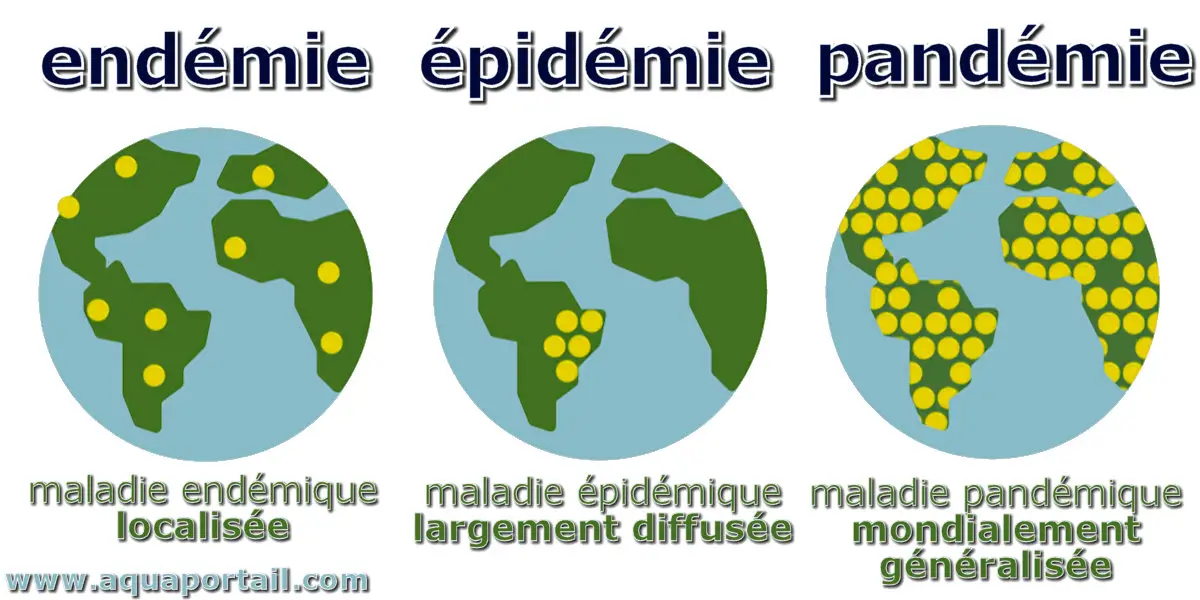
An epidemic is the widespread outbreak of an infectious disease within a community at a given time.
ice sheet

An ice sheet constitutes vast, very thick glacial expanses covering a large terrestrial surface area, such as the Antarctic ice sheet for example.
ichthyologist

An ichthyologist is a scientist who studies fish in the field of ichthyology. They conduct research and fieldwork on fishes across all aquatic environments.
illuvium

An illuvium is material displaced through a soil profile, from one layer to another, by the action of rainwater.
