Ahermatypic
adjective (adj.)
Definition
An ahermatypic coral is a non-reef-building coral, as opposed to hermatypic. Ahermatypic generally describes azooxanthellate stony corals (lacking symbiotic zooxanthellae), though not exclusively; it also applies to any stony coral whose zooxanthellae do not sufficiently promote calcification to build reefs.
The ahermatypic coral Balanophyllia elegans:
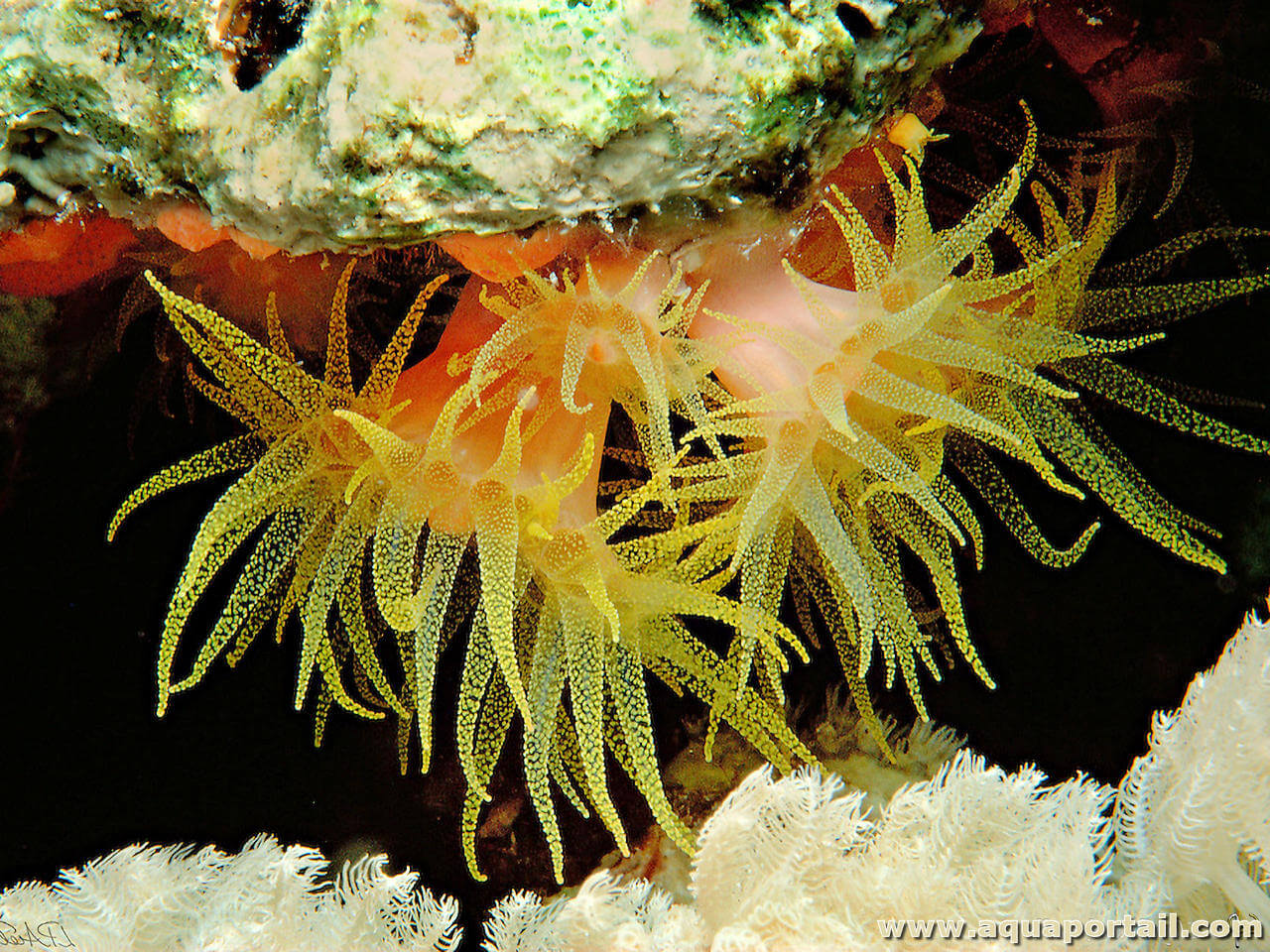
The orange ahermatypic coral Balanophyllia elegans extends its yellow-spotted 5 cm (2 in) tentacles to feed at night 15 meters (49 ft) below the surface of the Red sea (Sinai, Egypt). Although this organism closely resembles an anemone, it is actually a true stony coral. Balanophyllia elegans is an ahermatypic coral and does not associate with algal cells. The white soft coral below (Xenia) exhibits a slow, rhythmic opening and closing pulsing motion whose function remains debated.
Explanations
The term ahermatypic is reserved for stony corals (scleractinians) and sessile skeleton-forming corals! It makes no sense to use it for soft corals, sea anemones, etc., or mobile cnidarians.
Corals that build reefs are called hermatypic corals, whereas stony corals that do not build reefs are called ahermatypic corals. Most hermatypic corals harbor zooxanthellae algae living symbiotically inside the coral polyps. Other non-reef-building anthozoans include soft corals, black corals, gorgonians, and precious corals, most of which lack symbiotic relationships with algae. The cold waters of Alaska host numerous species of ahermatypic corals.
Corals are carnivorous animals that feed on microscopic zooplankton by trapping it with their tentacles. Most reef-building corals maintain a symbiotic relationship with unicellular algae called zooxanthellae and are therefore termed hermatypic. Because these algae undergo photosynthesis, hermatypic corals also derive energy from sunlight. Furthermore, zooxanthellae lower carbon dioxide concentrations within hermatypic coral tissues, thereby facilitating calcium carbonate precipitation from seawater.
Calcium carbonate is the mineral from which the calcareous coral skeleton is built. Unlike massive colonial hermatypic species, many ahermatypic corals consist of a single solitary polyp secreting only a simple, thin skeleton. Unlike their hermatypic counterparts, ahermatypic corals can be found throughout all the world's oceans and at depths beyond the reach of sunlight.
Synonyms, antonyms
Spanish translation: ahermatípico
0 synonyms (similar meaning) for "ahermatypic".
1 antonym (opposite meaning):
Related words and expressions to AHERMATYPIC are directly connected by general or specific meaning.
The word AHERMATYPIC is listed on page 1 of words starting with A in the dictionary glossary.
Related to "ahermatypic"
coral

A coral is a marine polyp animal living inside a rigid cup composed of calcium carbonate that it secretes itself (in stony corals).
hexacorallian
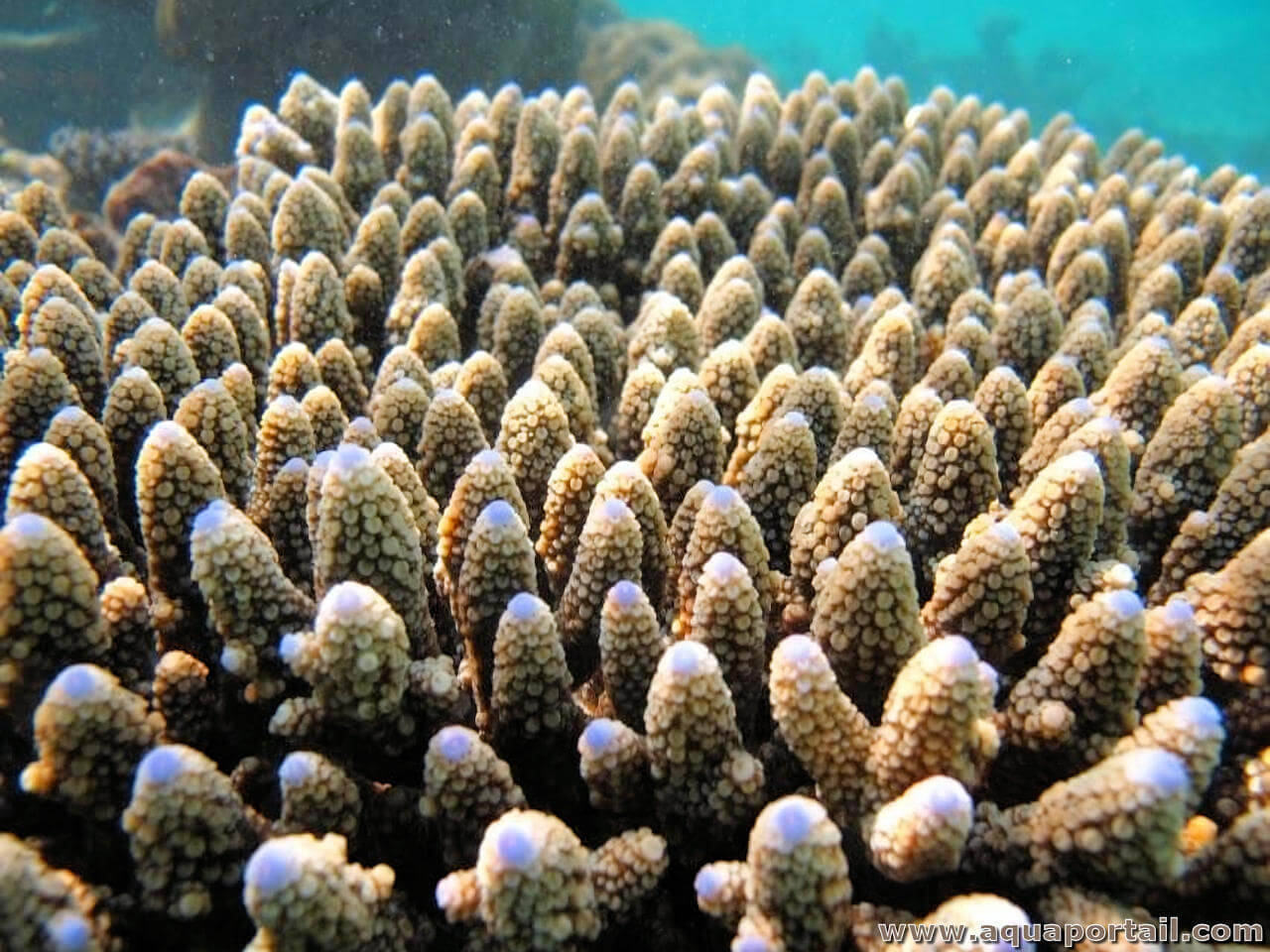
A hexacorallian is a cnidarian belonging to the anthozoan subclass Hexacorallia, in which each polyp is characterized by 6 tentacles (or a multiple...
octocorallian

An octocorallian is a member of the phylum Cnidaria and the anthozoan subclass Octocorallia, characterized by 8 pinnate tentacles surrounding the polyp's...
polytypic
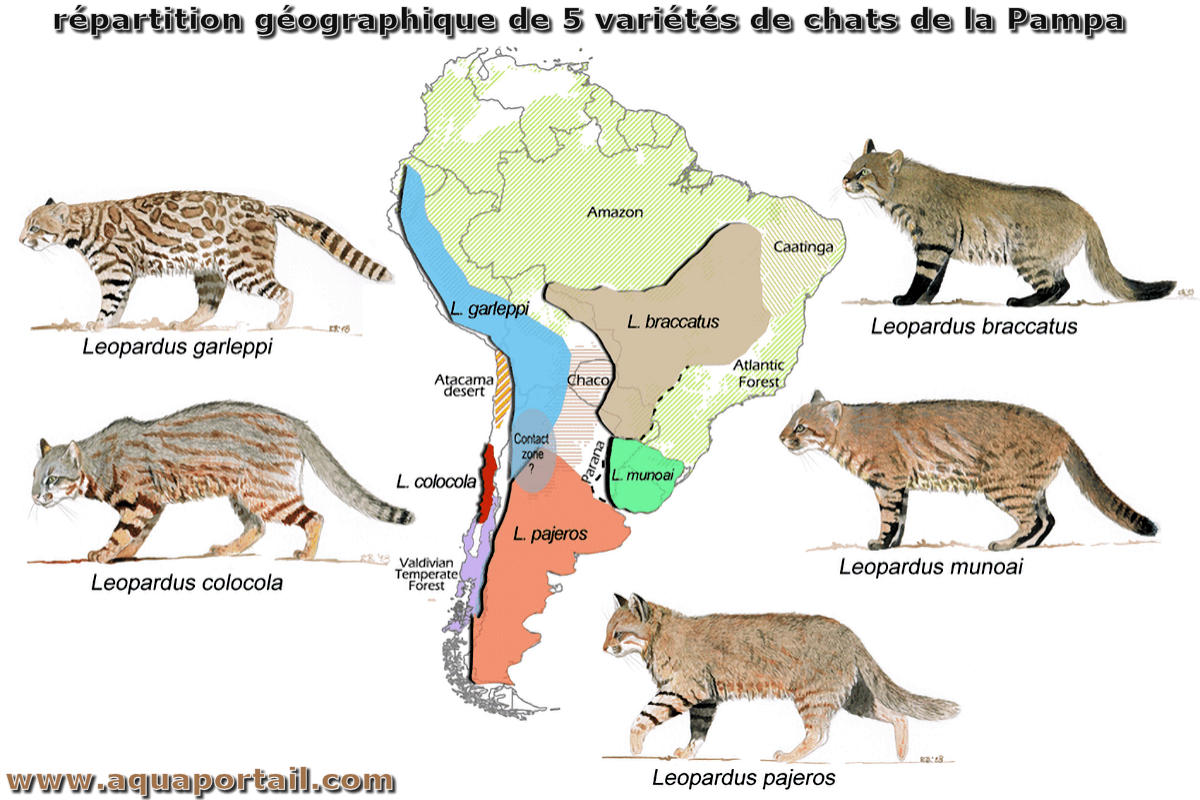
A polytypic species is one that exhibits or encompasses several distinct phenotypes (subspecies, types, or forms) with minor morphological variations.
