Redox
noun (n.)
Definition
The redox potential (rH) is the standardized abbreviation for oxidation-reduction potential via an oxidation-reduction reaction. Expressed in mV, this value indirectly reflects the health of an aquarium because, when the redox measured via a redox meter is too low, it is useful to inject ozone, for its strong oxidizing properties, in order to increase and raise the redox. A redox value that is too low generally indicates an aquatic environment overly loaded with nutrients.
A RedOx reaction:

A redox reaction is a chemical reaction in which atoms change their oxidation number. Some atoms lose electrons and are oxidized (a process known as oxidation). On the other hand, some atoms gain electrons and are reduced (a process known as reduction). Therefore, REDuction and OXidation take place simultaneously, hence the term redox. Redox reactions generally occur in one of two environments: acidic or basic.
Explanations
The rH, or redox potential, is of paramount importance in all chemical and biological processes. It takes on a special significance in seawater.
A redoximorphic environment indicates one that can be influenced by redox conditions. In a geological/pedological context, it defines the horizon containing more than 2% oxidation and/or reduction mottles. iron, whose distribution is very heterogeneous, results from a centripetal distribution during periods of water saturation.
One way to recognize a redox reaction is to look for a change in the oxidation number of the two elements involved in the reaction. The oxidized element increases its oxidation number, while the reduced element decreases its oxidation number. By checking this change, one can quickly determine whether the reaction is redox or not.
Redoxin
Redoxin refers to a protein electron carrier between two enzymes of an oxidation-reduction chain, such as ferredoxin, which contains iron.
A bit of chemistry
In distilled water, water decomposes reversibly into dihydrogen H2 and dioxygen O2: 2 H2O ↔ 2 H2 + O2. Oxidation-reduction neutrality occurs when the partial pressures of H2 and O2 are equal. This neutrality is achieved at a pressure of 10-27 bar. The rH potential is then said to be equal to 27. Between 0 and 27, the medium is described as reducing, and between 27 and 42, as oxidizing.
Formula: PH2 = PO2 = 10-27 bar, rH = -log(PH2).
Indeed, oxidation is the loss of one or more electrons by an atom, while reduction is the gain of one or more electrons by an atom. The atom that is oxidized loses its electrons to the one that is reduced.
Consequently, an oxidation reaction never occurs without a simultaneous reduction reaction; this is why it is an oxidation-reduction between two atoms.
Oxygen is one of the strongest oxidizers; by extrapolation, a molecule gaining oxygen is called oxidation, and a molecule losing oxygen is called reduction. It follows that the richer an environment is in oxygen, the more oxidizing it is.
Methods for measuring rH
Measurement of rH can be carried out using dyes with a colorimetric test, or by using a pH meter or pH test on which the glass electrode is replaced by a gold or platinum electrode to turn it into a redox meter, yielding a potential difference in mV that is then plotted on the Lescoeur chart together with the pH (potential of hydrogen).
Role of redox potential in aquarium keeping
In an aquarium, it is necessary to maintain an oxidizing environment, which is essential for fish survival as well as for the nitrogen cycle to transform nitrogen at each stage, while preventing a shift into anaerobic mode and reversal of the nitrogen cycle (aside from the existence of an anaerobic zone in the deepest substrate layer, where a black coloration appears if this shift occurs).
The redox rH thus has paramount importance in water, potentially indicating the required frequency of water changes and the oxygenation level of the environment to remain oxidizing. Maintaining rH within valid values also helps prevent filter clogging. Adding hydrogen peroxide in small quantities in the event of a serious issue temporarily offsets a redox imbalance.
Redox zonation of an ocean
Redox zonation refers to the way terminal electron transfer processes resulting from the degradation of organic matter vary over time and space. Certain reactions are favored over others due to their energy yield. Under oxic conditions, where oxygen is readily available, aerobic respiration is favored because of its high energy yield. Once oxygen consumption by respiration exceeds oxygen supply from bioturbation and diffusion, the environment becomes anoxic and organic matter is broken down by other means (anaerobic respiration with demineralization and/or remineralization), such as denitrification and manganese reduction.
Synonyms, antonyms
French translation:
redoxSpanish translation: redox
3 synonyms (similar meaning) for "redox":
- oxidation-reduction reaction
- redox potential
- rH
0 antonyms (opposite meaning).
Related words and expressions to REDOX are directly connected by general or specific meaning.
The word REDOX is listed on page 1 of words starting with R in the dictionary glossary.
Related to "redox"
ramulus

A ramulus is a small branching of branches or stems of a plant that has undergone a metamorphosis resulting in growth arrest.
reaction rate

The chemical reaction rate corresponds to the change in concentration of a reactant (taken as a positive value) or a product over time, divided...
recessive
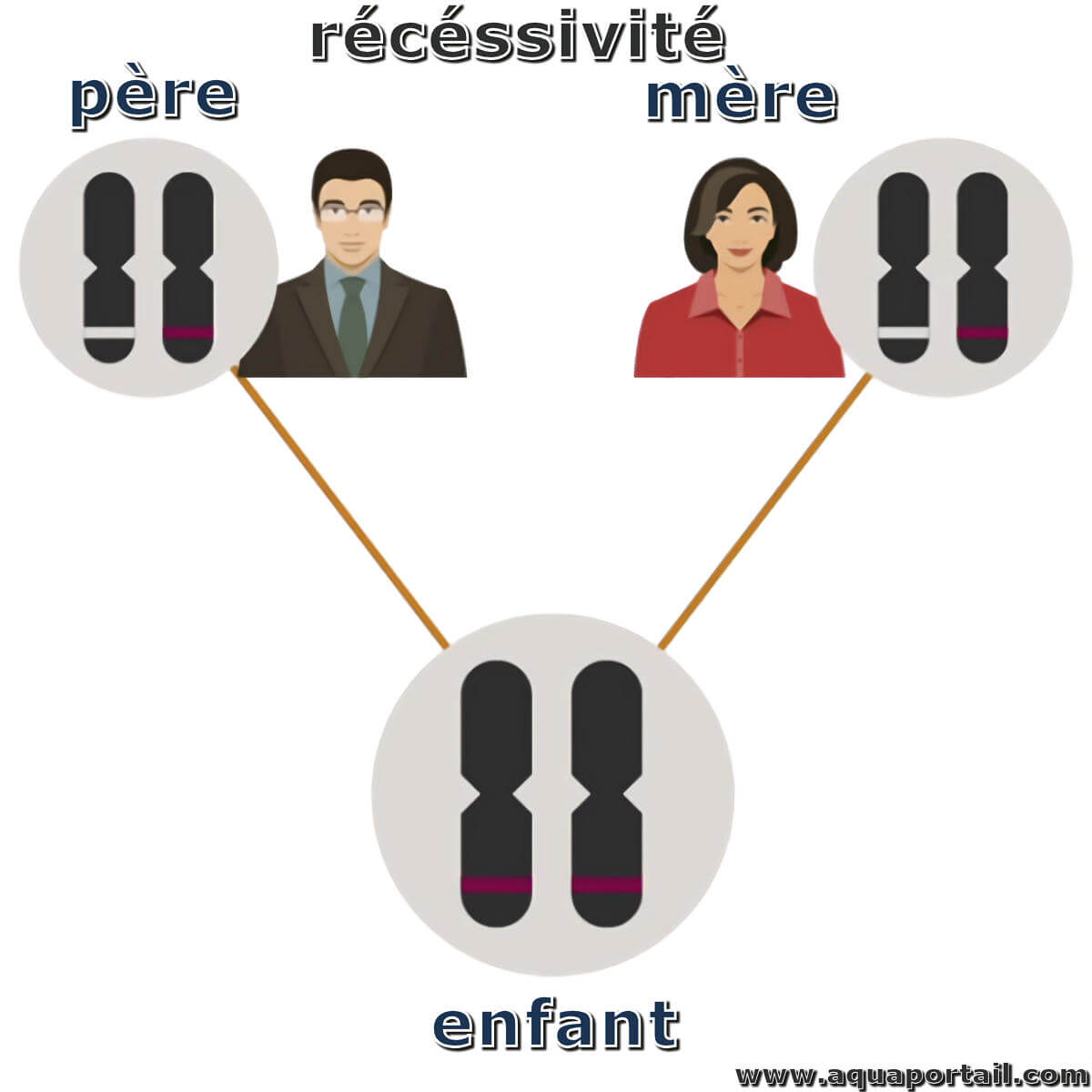
In genetics, a recessive trait refers to an allele or character that is expressed in the phenotype only if the organism is homozygous for the allele.
reed

A reed is a tall wetland helophyte plant with an erect hollow stem and narrow leaves. All true reeds are classified in the order Poales. Most are perennial...
