Zonation
noun (n.)
Definition
Zonation is the ecological distribution of organisms in superimposed bands visible to the naked eye. Distribution into zones or regions has a defined character, such as tiering or vertical zonation. When this zonation falls within the framework of urban planning, the term zoning is more appropriate.Zonation of a coastline:

Zonation of a coastal shoreline depends on depth, which determines the presence of certain animals or plants. Zones have distinct tiers according to levels in the water column. These zones influence the types of marine organisms living in the habitats.
Explanations
In ecology, zonation is the distribution of plants or animals into specific zones based on parameters such as altitude or depth, each characterized by its dominant species. For example, applied to the marine environment, zonation of large seaweeds can be observed in the intertidal zone (tidal range). Similarly, zonation involves encrustations of lichens, sedentary animals, and algae.
Scientific zonation is the natural (or human) arrangement of places such that various environments are divided into zones, or belts, according to a dominant natural factor (climate zonation...) or a human factor (suburbs vs. city center). On the coastline, the dominant factor for the zonation of activities and developments is distance from the shoreline.
Zonations are vertical distributions of the marine environment and communities into successive bands called zones, based on physical criteria such as light, pressure, humidity, temperature, water agitation...
In terrestrial environments, zonation corresponds to the arrangement of vegetation in more or less parallel zones corresponding to a gradient of latitude or altitude (more commonly called altitudinal zonation or tiering) or continentality. Not to be confused with zoning. See vegetation belt.
See also Huet's zonation.
✅ Zonation is the distribution of a living species, populations, communities, or biomes over a given continental or oceanic surface, or along a latitudinal, altitudinal, or bathymetric gradient.
Altitudinal zonation
Earth's atmosphere is defined by vertical gradients. As one ascends, the air becomes thinner, humidity decreases, and temperatures drop. This is the cause of altitude sickness when traveling to high places, and why the peaks of very high mountains are snow-capped. Climbing from sea level to the summit of a high mountain, a loose set of vertical layers appears along the way, each with a specific set of environmental conditions based on available oxygen, moisture, and temperatures. This vertical stratification is altitudinal zonation, a variant of vertical zonation.
Diagram of altitudinal zonation according to Humboldt:
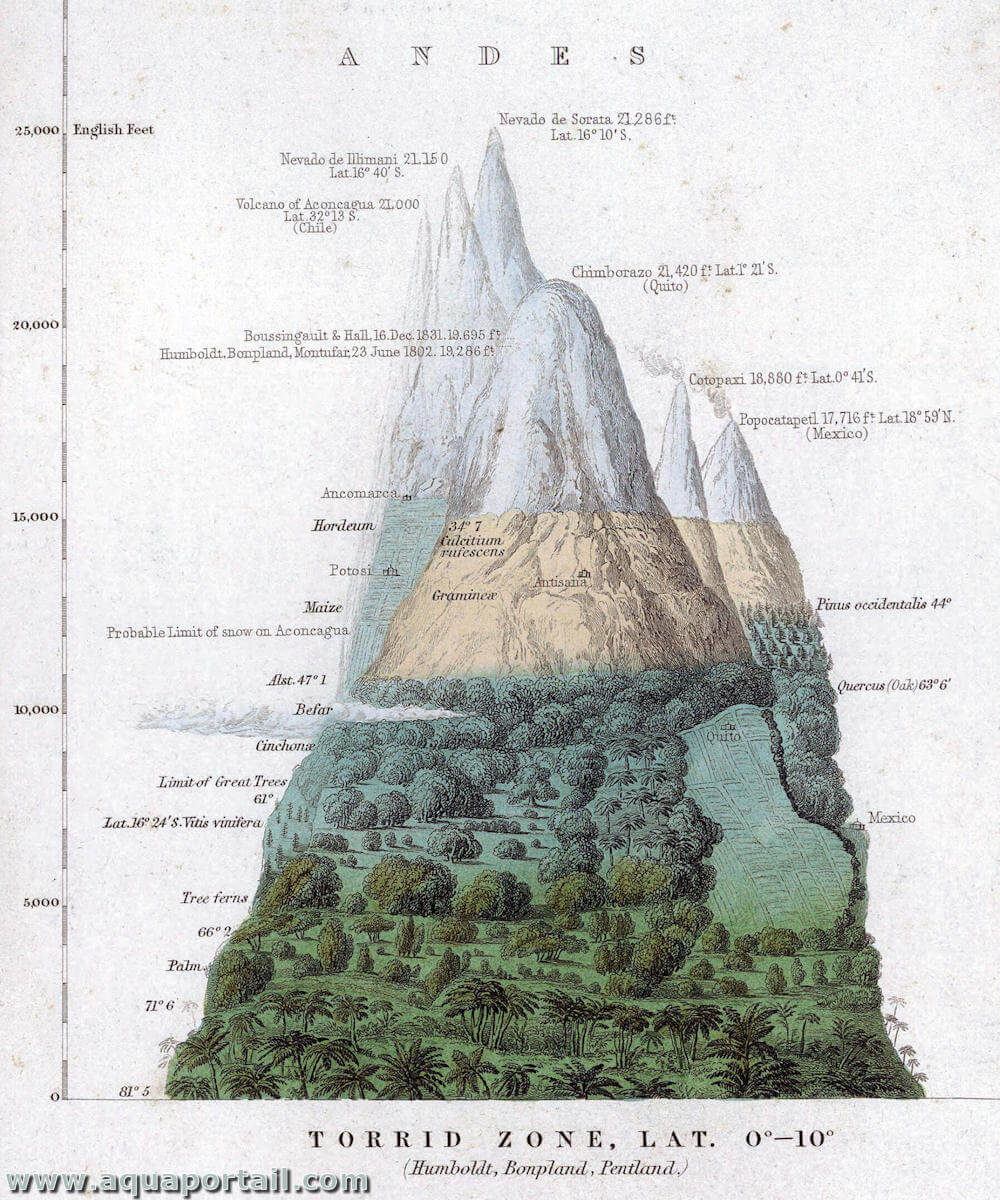
Illustration of the altitudinal zonation of the Andes Cordillera, drawn from the studies of Alexander von Humboldt, after observing that plant life changes as elevation increases above sea level.
Altitudinal zonation was first proposed by the German naturalist and explorer Alexander von Humboldt in 1805. During a five-year voyage from 1799 to 1803, Humboldt traveled around the world and noticed that plant life changes as one moves away from sea level, in much the same way as when moving from the equator toward the poles. The most dramatic of these changes occurs in mountains, where major changes in elevation can happen fairly rapidly. Humboldt subsequently published his thoughts in 1805 in his Essay on the geography of Plants. This essay explained his theory of altitudinal zonation and included a detailed illustration of the hypothesis, called Tableau Physique.
Humboldt's theory remains valid today, though it has been refined over the years with a better understanding of what causes it.
Synonyms, antonyms
Spanish translation: zonación
2 synonyms (similar meaning) for "zonation":
0 antonyms (opposite meaning).
Related words and expressions to ZONATION are directly connected by general or specific meaning.
The word ZONATION is listed on page 1 of words starting with Z in the dictionary glossary.
Related to "zonation"
bio-purification
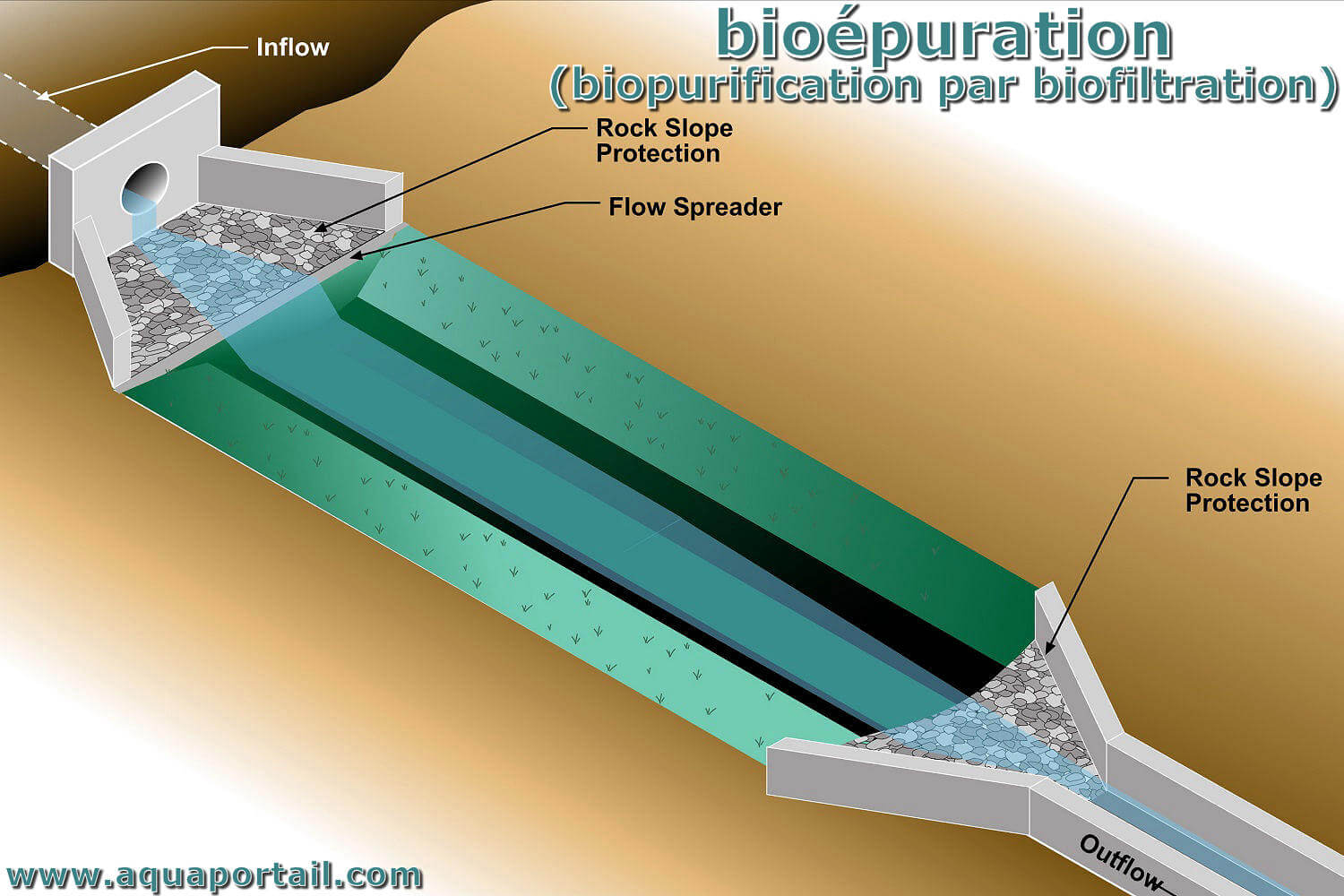
Bio-purification (biodepuration) refers to harnessing living organisms—such as plants, fungi, and symbiotic bacteria—to reduce pollution in an environment.
civilization

A civilization is generally defined as an advanced state of human society containing highly developed forms of government, culture, industry, and social...
cohabitation

Cohabitation is the simultaneous coexistence of several elements, similar or different, in the same place (habitat) over the same (extended) period.
concentration

Concentration (geographic) is the clustering of numerous elements around a central location.
