ZEOvit method
noun phrase (n. phr.)
Definition
In marine aquariology, the ZEOvit method is a form of saltwater aquarium management aimed at enhancing the coloration of stony corals, though without using zeolite. The ZEOvit method relies on supplementation via the Balling method, applied precisely and effectively to achieve vibrantly colored SPS corals.
Acropora corals are the primary target of the ZEOvit method:
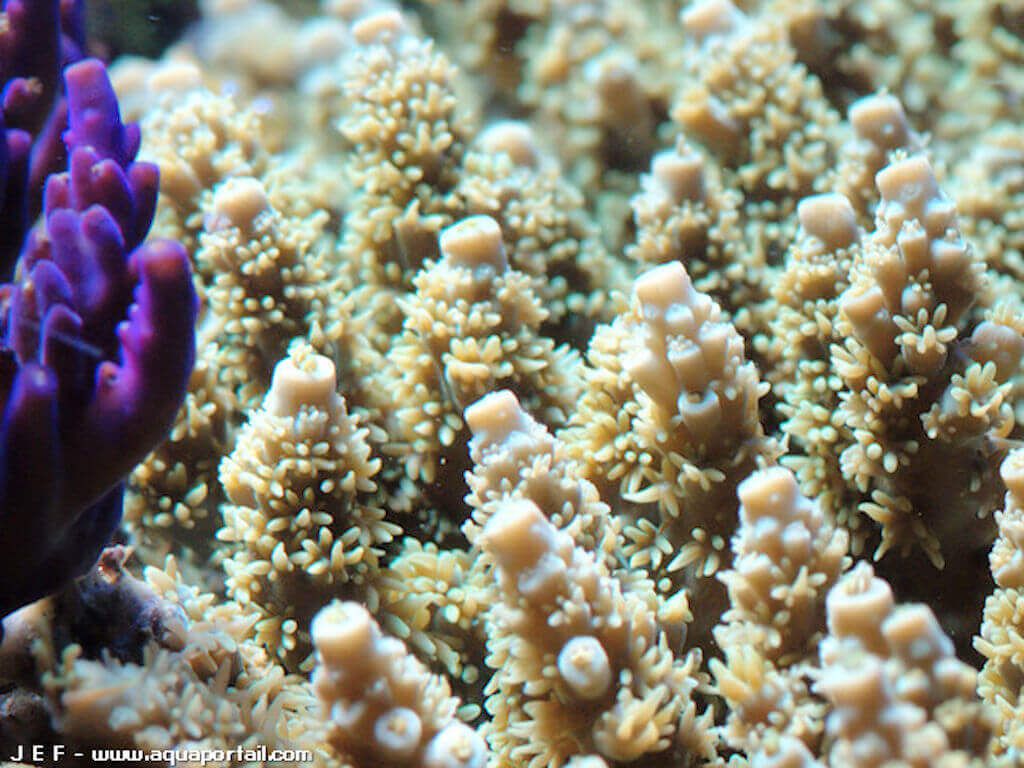
The ZEOvit method requires a reef aquarium with healthy, well-lit SPS stony corals and crystal-clear water in an oligotrophic environment. Shown here are Acropora corals.
Explanations
The ZEOvit method is a far more complex protocol requiring solid knowledge of chemical elements, or at the very least, laboratory-grade rigor as a starting requirement! Indeed, the "ZEOvit" method is not limited to simple supplementation of calcium, magnesium, and carbonates (which is entirely sufficient initially), but pushes the principle of the Balling method further to take advantage of dosing pump injection of multiple products in order to achieve maximized coloration of SPS corals.
The ZEOvit method is used alongside the Berlin method, as the Jaubert method creates too many uncontrollable interactions.
As a reminder, the modified Balling method as described in the cited article allows simple, ionically balanced supplementation of the main elements used by hermatypic corals, namely calcium, magnesium, and carbonates. This most often involves using dosing pumps to add these products in known quantities, without calculations or waste and without extensive mixing of complex chemicals to the exact gram.
Process of the method
In the method described below, injecting the four products of the simplified Balling method remains a necessity. This can be adapted and adjusted to the demands of today's reef aquarists. Indeed, until a few years ago, simply succeeding in keeping and growing SPS stony corals such as Acroporidae, Pocilloporidae, and other scleractinians satisfied most hobbyists. Today, standards are rising, and the trend among marine aquarists is shifting toward corals with ever more vibrant colors and ever faster growth... The limits of this desire to go beyond what nature offers us on reefs will likely brush up against biological constraints at some point, though that is another debate.
Without getting bogged down in chemical formulas that are unreadable for many, the goal here is simply to present a straightforward, effective solution—albeit not without risk—to give your corals superb colors. In addition to adding the basic mineral elements of the modified Balling method, we will add numerous other elements favorable to coral color development. It was primarily the company "Korallen Zucht" that, by adopting the following procedure (the principle remains the same), fostered the emergence of this type of husbandry. We know this under the commercial name of the ZEOvit protocol, which is reminiscent of zeolite, a product interesting in several respects.
However, in this protocol, there is no need to use zeolite, but rather heavy metals (for the most part) that have a dual impact on zooxanthellate corals: the heavy metals stress the coral enough to make it expel part of its zooxanthellae, thereby revealing the coral's tegumentary pigments beneath the lost zooxanthellae. To develop coral coloration and remove part of the zooxanthellae, aquarists employ several solutions: using ultraviolet light (with UV-B, as UV-A is readily assimilated and used by corals), achieving the most oligotrophic environment possible (various methods allow this, such as very heavy skimming and activated carbon, for example), as well as this approach relying on heavy metals.
This use of heavy metals leverages a property specific to heavy metals: their oligodynamic action, that is, their antimicrobial capacity. Furthermore, it also clarifies the water (an interesting consequence, as crystal-clear water allows light radiation to pass through better, without photon scattering or deflection on troublesome particles—only a calculation of oxygen metabolism clearly determines photosynthetic irradiance).
At this stage, it is assumed that you have mastered the simplified Balling method and know the volumes to inject into your reef tank for each solution. This point is crucial because everything that follows is a matter of proportion... You must also, without exception, have a reliable setup for adding the prepared solutions to the aquarium (typically a dosing pump system). Be sure to regularly monitor salinity (and especially its trend) and perform regular, adequate water changes. It is important to continue changing 10% of the water volume each week (personally, I perform 10% weekly water changes based on gross volume, though 10% of estimated net volume is already good) in order to prevent accumulations (the empirical nature of these methods and protocols calls for caution).
At the same time, we will dose several trace elements essential for coral growth, whose proportions are well known. We will thus combine dosages of heavy metals and trace elements. Obviously, the use of activated carbon must be avoided with this method...
Equip yourself with 3 containers of 10 liters (2.6 gal), several small-capacity receptacles (1-liter / 1-quart plastic water bottles, for example, washed and rinsed with RO water), reverse osmosis water (as pure as possible, which is essential for the preparations), and follow the instructions below.
We will first prepare 6 solutions in a very specific order!!! Certain previously prepared solutions will be added to subsequent ones: following the preparation order is therefore critical. At the end, only 3 will remain...
Synonyms, antonyms
Spanish translation: método Zeovit
0 synonyms (similar meaning) for "zEOvit method".
0 antonyms (opposite meaning).
Related words and expressions to ZEOVIT METHOD are directly connected by general or specific meaning.
The expression ZEOVIT METHOD is listed on page 1 of words starting with Z in the dictionary glossary.
Related to "ZEOvit method"
zeaxanthin
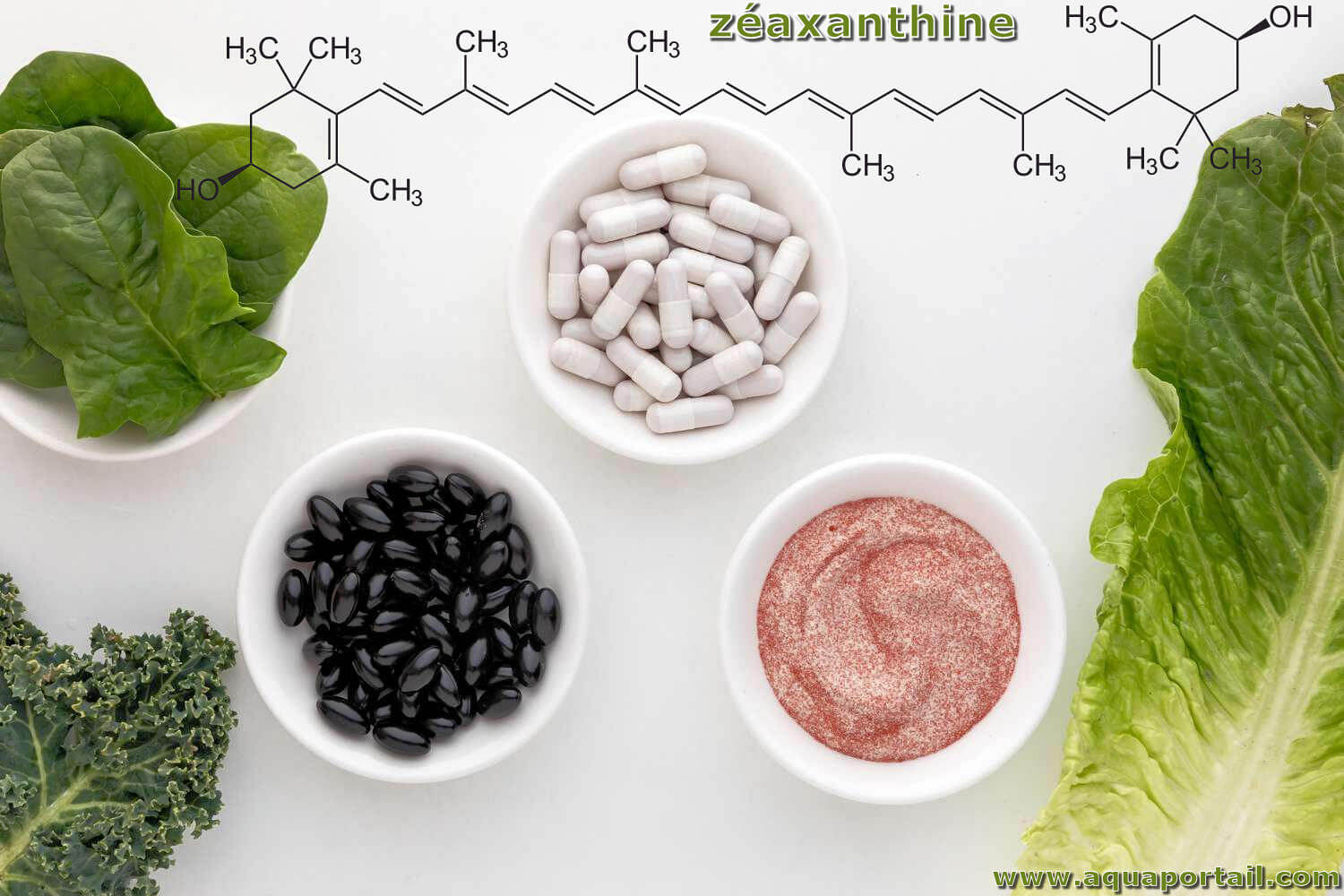
Zeaxanthin is a carotenoid pigment of certain algae such as red algae, cryptophytes, and others.
zoanthid

A zoanthid (or zoantharian) is a small, soft-bodied anthozoan lacking a calcareous skeleton, resembling a sea anemone, either solitary or colonial.
zoid

A zoid is a motile reproductive cell, whether a spore or a gamete, that moves by means of flagella or cilia.
zonation

Zonation is the ecological distribution of organisms in superimposed bands visible to the naked eye.
