Geography
noun (n.)
Definition
Geography is the science studying the physical features, geomorphology, of Earth and its atmosphere. It includes the description, distribution, and interaction of the various physical, biological, and cultural features of Earth's surface. It takes into account the distribution of populations and resources, as well as land use and industries.A world map in geography :
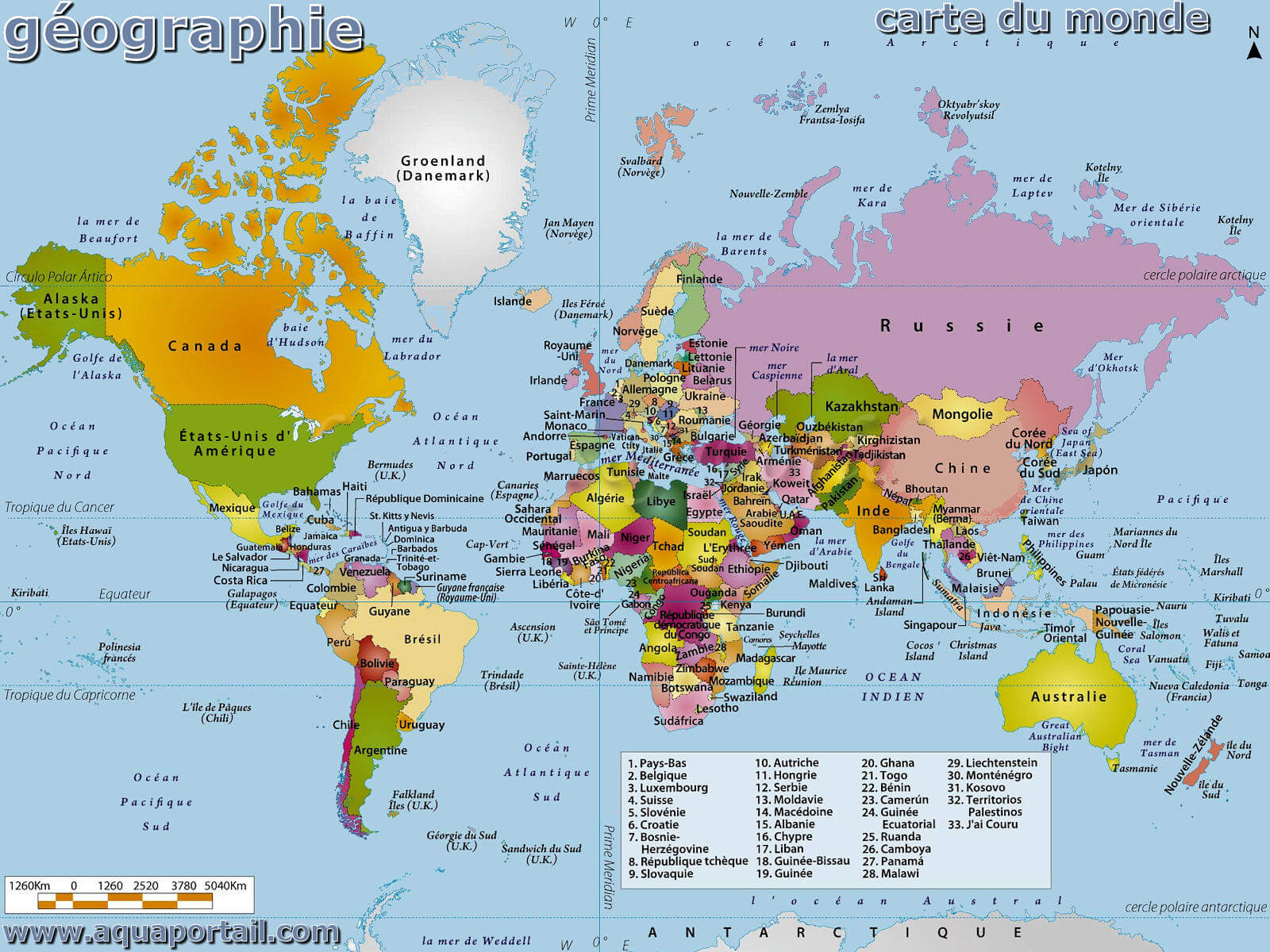
Geography is a field of science dedicated to examining the surface of planet Earth and understanding all of its physical aspects. Alongside cartography, it enables the creation of a geographical map of the world.
Explanations
Geography can divide Earth's surface into biogeographical zones, for instance to highlight geographical characteristics within biogeographical realms. It includes modifications resulting from human activity that affect Earth's surface.
Branches of geography
Geography is divided into two main branches: human geography and physical geography. Additional branches include regional geography, biogeography, cartography, and integrated geography (environmental geography).
Human geography
Human geography is one of the main branches of geography and primarily covers studies of the human species. This normally involves understanding the origins of a human population, as well as the interactions and perceptions that members of that population hold toward the various ideologies affecting them.
In addition, the discipline also studies how groups of people inhabiting Earth organize themselves within the specific regions they occupy. In fact, many other branches of geography normally fall under human geography.
Modern applications of human geography may include mapping human migrations, showing the movement of food resources and their impact on communities, as well as the impacts climate change may have on humans living in vulnerable areas.
Here are some examples of disciplines within human geography:
- cultural geography;
- economic geography;
- health geography;
- historical geography;
- political geography;
- population geography;
- rural geography;
- social geography;
- transport geography;
- urban geography.
Physical geography
Physical geography is a major branch of geographical science and deals primarily with the study of Earth's natural features. It covers both features located on Earth's surface and those nearby.
Physical geography makes it possible to map landmasses, while also being used to examine what lies beneath Earth's ice sheets and oceans. Researchers use satellite technology to observe the landmass beneath Antarctica; moreover, ongoing work continues to explore and map the physical composition of the Earth beneath the oceans.
Here are some examples of disciplines studied in physical geography:
- geomorphology;
- climatology;
- hydrology;
- biogeography.
Integrated geography
Integrated geography may also be known as environmental geography or human-environment geography. Integrated geography brings human and physical geographical issues together into a unified framework. Integrated geography can be used to explore humanity's relationship with Earth as well as Earth's relationship with people.
This geographical field is useful for connecting humans and the impacts we have on our natural environment. GIS (geographic information system database) and remote sensing technologies can be used to show where humans have physically altered an environmental landscape.
Drones, LiDAR, Earth observation satellites (geostationary satellites), and aerial photography are all technologies geographers have used to help study the Earth.
Geomatics is closely linked to GIS (geographic information systems) and other geospatial sciences.
For example, it is possible to identify where Iraqi wetlands have dried up due to overexploitation of water resources there, and where conservation efforts have more recently succeeded in restoring some of those wetlands.
Regional geography
Rather than looking at geography on a global scale, regional geography breaks the science down into more specific areas. Regional geography examines the cultural and natural aspects of geography unique to a particular place.
Regional geography may involve subdividing locations by examining different watersheds, or simply examining coastal zones, etc. Regional geographers study the interaction of different geographical factors or features at the regional level.
The most common example of regional geography is by country, across drawn borders and looking inside those borders. Often, the human geography contained within these countries is far more varied and diverse than expected.
Natural boundaries such as rivers, mountain passes, or other large bodies of water often influence where borders are drawn.
An understanding of the political and cultural factors of regional geography can also help paint a clearer picture.
Synonyms, antonyms
Spanish translation: geografía
3 synonyms (similar meaning) for "geography":
- biogeography
- geo
- topography
0 antonyms (opposite meaning).
Related words and expressions to GEOGRAPHY are directly connected by general or specific meaning.
The word GEOGRAPHY is listed on page 1 of words starting with G in the dictionary glossary.
Related to "geography"
biogeographic zone

A biogeographic zone is a geographically defined area based on its floristic and/or faunistic composition, its biocenosis, its biotope, and the ecology...
gabelle

The gabelle was an ancient excise tax on salt. This indirect tax remained the main source of revenue for the French monarchy until the Revolution of 1789...
gardening

Gardening is the practice of growing plants in a garden, encompassing planting and plant care activities in a domestic and family setting.
genital

Genital refers to what relates to biological genesis (generation), animal reproduction, and reproductive organs such as the genital tract, genital organs...
Simple summary
Geography is the study of Earth's landscapes and environments, as well as the interactions between populations and the environment. It encompasses the examination of the planet's physical features (such as mountains, watercourses, and climates) as well as human actions, studying how these alter natural elements and are shaped by them. Geography also investigates the spatial relationships and patterns specific to regions.
