Geranium
noun (n.)
Definition
A geranium is an annual, biennial, or perennial plant of the genera Geranium and Pelargonium, frequently used in gardening for its attractive flowers and characteristic aroma. There are more than 400 species of geraniums in botany, and their leaves are most often palmatipartite.
Geranium is also the common name used in subtropical regions to refer to several species of the genus Pelargonium, known as pelargoniums.
A wild geranium plant:
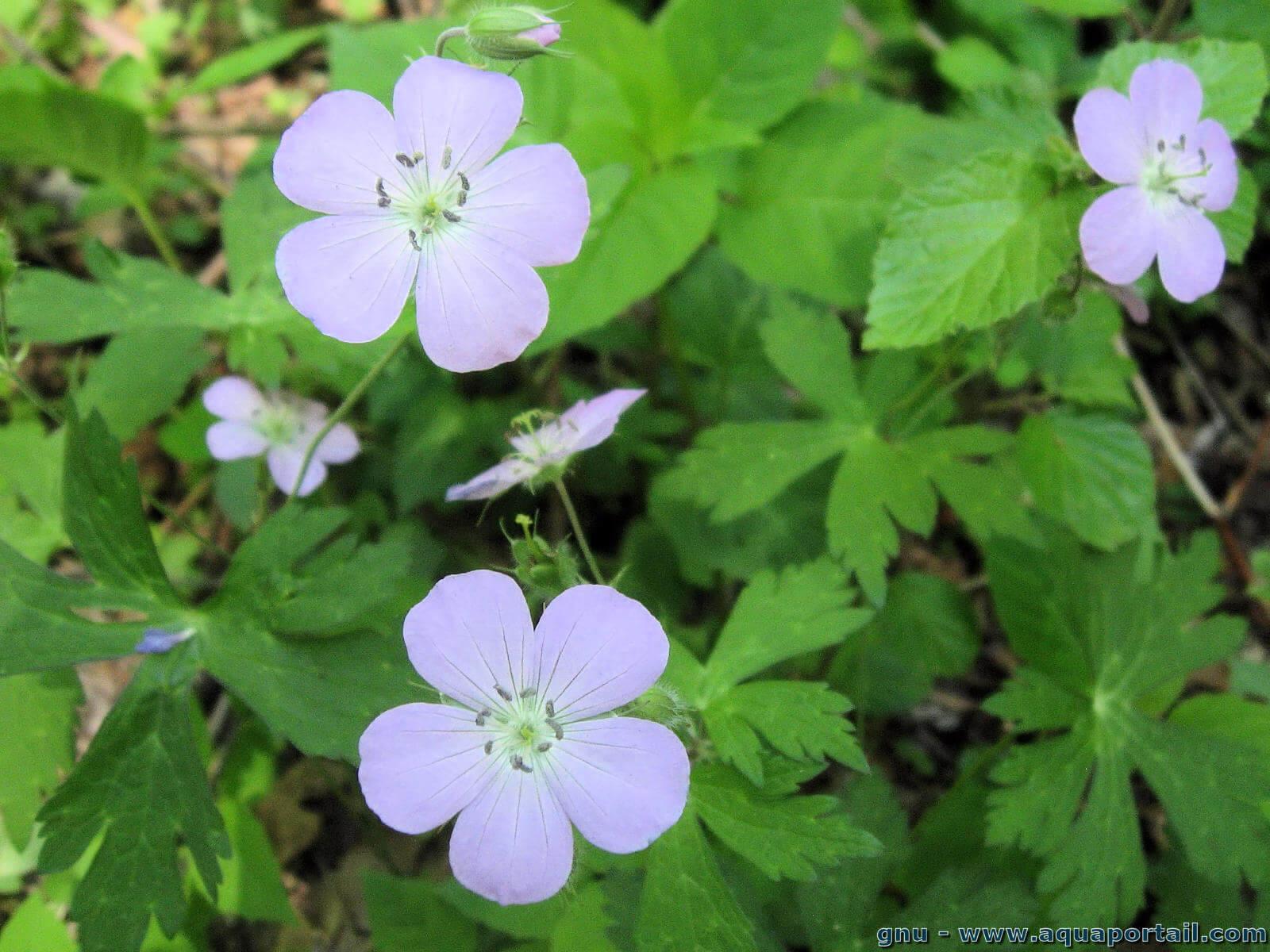
The wild geranium Geranium maculatum, according to the etymology of its name, has fruits resembling the bill of a crane or stork.
Description
The habitat of geraniums spans all temperate regions of the world, including mountainous regions of the tropics, although they occur primarily in the eastern Mediterranean region.
Many species possess phytotoxins, making it difficult for other herbaceous plants to encroach into established plantings of a given species in this genus. Consequently, geraniums are recognized as reliable groundcovers. Geraniums produce geraniol.
Species grouped within the genus Geranium possess a differential seed-dispersal mechanism whereby seeds are ejected as the fruit dries—a schizocarp capsule subdivided into five mericarps, each containing a single seed.
Planting a geranium
Although they can be kept outdoors during the warmest part of the year, pelargoniums ("geraniums") are generally brought indoors to overwinter. Alternatively, if provided with sufficient light, they can bloom indoors year-round.
- Geraniums can be grown as houseplants or as annual bedding flowers. During the warmest months of the year (between your local frost dates), they can be kept outdoors in a sunny spot. ⭐ If you keep geraniums as houseplants, be sure to bring them indoors in late summer or early autumn when nighttime temperatures begin dropping consistently below 13 °C (55 °F).
- When purchasing geraniums, pay close attention to color and size. Healthy leaves will show no discoloration on top or underneath, and stems will be sturdy rather than leggy. Also be sure to avoid plants showing obvious signs of pests; common houseplant pests include mealybugs, whiteflies, and spider mites.
- Place plants in pots with drainage holes to prevent root rot.
- Use a well-draining potting mix (not heavy clay soil) when planting in containers, as geraniums dislike sitting in waterlogged, compacted soil.
- For maximum flowering, place the plants in an area where they receive 4 to 6 hours of sunlight.
Geranium care
Here is how to care for a geranium:
- Allow the soil to dry out to some extent between waterings, then water thoroughly.
- During winter, water much less, yet do not let the roots dry out completely. Geraniums fare best when given a dormancy period during the winter months, during which they use less water and grow very little.
- To achieve more continuous and tidy blooming, spent flowers can be deadheaded.
- To encourage bushier branching of stems, pinch back flower stems to temporarily halt blooming.
- During active growth months, fertilize roughly every 2 weeks using a half-strength water-soluble fertilizer. Do not fertilize in winter when the plant should be dormant.
- Geraniums can be repotted in spring to encourage fresh growth, or whenever they appear in need of refreshing.
Differences between geranium and pelargonium
The flower of Geranium has five regular petals, unlike the genus Pelargonium, in which the petals are irregular (the upper two petals differ in shape, color, or size from the lower three).
In general, species grouped in the genus Geranium are more cold-hardy than those in the genus Pelargonium, with the exception of Geranium maderense.
The plants we commonly call "geraniums" were introduced to Europe by Dutch traders who brought them from South Africa in the early 18th century. Because these new plants resembled the hardy wild cranesbills already growing in Europe, botanists mistakenly grouped them into the same genus.
In 1753, the Swedish botanist Carl Linnaeus classified them under the genus Geranium. When it was later discovered that these new "geraniums" differed from European geraniums in petal shape, stamen count, and other traits, they were reclassified under Pelargonium, meaning "stork's bill"—a reference to the long, pointed shape of their fruit.
Their original common name stuck, however, and we still say "geranium" when we actually mean "pelargonium."
Synonyms, antonyms
Spanish translation: geranio
1 synonym (similar meaning) for "geranium":
0 antonyms (opposite meaning).
Related words and expressions to GERANIUM are directly connected by general or specific meaning.
The word GERANIUM is listed on page 1 of words starting with G in the dictionary glossary.
Related to "geranium"
gabelle
The gabelle was an ancient excise tax on salt. This indirect tax remained the main source of revenue for the French monarchy until the Revolution of 1789...
gardening

Gardening is the practice of growing plants in a garden, encompassing planting and plant care activities in a domestic and family setting.
genital

Genital refers to what relates to biological genesis (generation), animal reproduction, and reproductive organs such as the genital tract, genital organs...
genus

In biology, the genus is a unit of the systematic classification of living beings, a taxonomic rank within which species sharing common characteristics...
Simple summary
Geranium is a flowering plant belonging to the genus Geranium, comprising various species commonly cultivated for their vibrant blooms and pleasant fragrance. These plants are prized in both gardens and interiors for their colorful flowering and ease of cultivation. The term is also sometimes used to refer to certain plants of the genus Pelargonium. Geraniums come in a variety of colors, including pink, red, white, and purple, and are native to temperate regions.
