Rot
noun (n.)
Definition
Rot is a degradation of organic matter by bacterial decomposers and by fungi and molds. Their actions lead to a breakdown of organic tissues into increasingly simple substances. These substances will eventually be assimilated.A fruit undergoing rot:
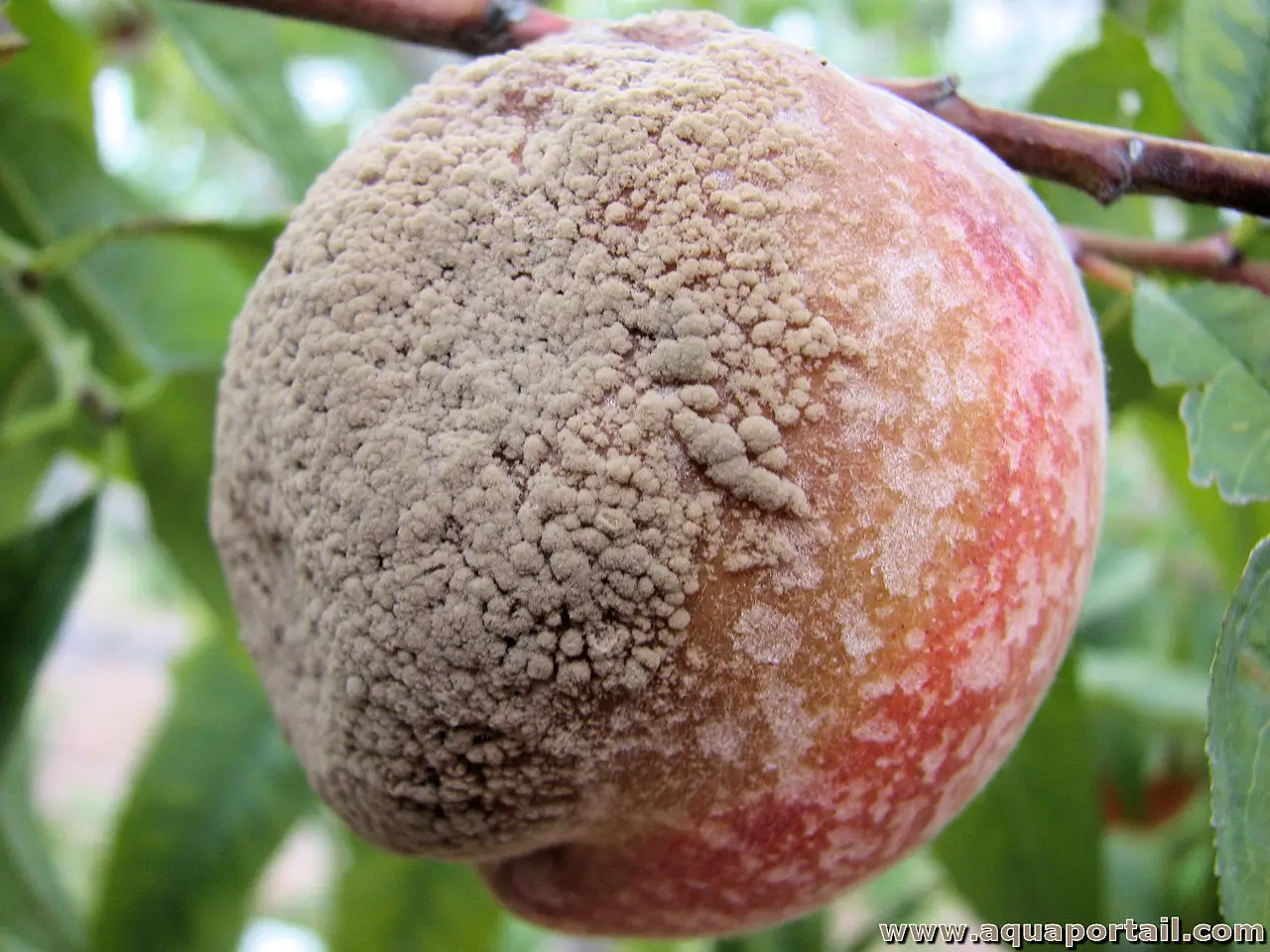
Brown rot of fruit is not fatal to the tree, but once fruit is infected, there is no curative treatment. Brown rot is caused by two fungi of the genus Monilinia (mainly M. fructicola and, more rarely, M. laxa). These fungi can be introduced into a garden by airborne spores produced by nearby wild or volunteer plum trees and shrubs. insects such as bark beetles, fruit flies, and bees can also carry these spores.
Explanations
Rot is a process of decomposition and degradation of organic tissues. Microorganisms causing rot include bacteria and fungi with molds. A stage of putrefaction may occur.
In plants
In agroforestry, "soft rot" is a form of decay generated solely by fungi (not by other microorganisms) leading to the degradation of wood cellulose.
In trees, white rot, also called rust rot or fibrous rot, is the process of lignin degradation in woody plants by fungi. This type of wood decay occurs exclusively among fungi of the class Agaricomycetes.
In viticulture, the rotting of grape clusters is either desired with "noble rot" or feared with "gray rot":
- Noble rot is a process in which mold affects the skin of grapes. It is conditioned by the presence of the specific gray fungus Botrytis cinerea, which, under certain climatic conditions—morning mist and warmth—occurs late in the year, at the end of ripening of mature grape berries. Desired for sweet dessert wines, the end result is a wine with a high flavor profile and great sweetness, free of bitterness or acidity.
- Gray rot occurs on unripe grape berries when Botrytis cinerea, also known as gray mold, develops on them at the wrong time during fruiting. It is favored by a very humid, cool climate; it also occurs frequently when berries are damaged by hail. If the fungus attacks the grape stems, it causes stem rot and berry drop.
"Noble" rot on grapes:

Noble rot, caused by an ascomycete of the genus Botrytis, has colonized these red grapes, ready for harvesting and winemaking to produce sweet or dessert wines. These wines are often called late-harvest wines.
In agriculture, potato rot takes several names depending on the causal agent of decay:
- Watery wound rot is a disease caused by an oomycete, Pythium ultimum, which enters through wounds in potato tubers. Decay may occur after harvest, in storage, if the weather is very warm.
- Brown rot is a bacterial disease caused by the bacterium Ralstonia solanacearum, which is easily transmissible and subject to phytosanitary quarantine measures. Symptoms consist of stem wilting. When a freshly cut wilted stem is placed in a glass of water, a milky white ooze slowly streams down from the stem. When an infected tuber is cut open, small white droplets develop in the vascular tissue ring of the tuber.
- Fusarium dry rot (or fusariosis) is one of the most common potato diseases. It is caused by fungi of the genus Fusarium. This fungus causes a variety of colored rots (white or pink mycelia) in potatoes. This pathogen, while having both a sexual and an asexual form, remains in an asexual cycle due to the way it spreads. Preferring warmer climates, this pathogen is commonly found in Mediterranean crops (for example), where it has been reported to affect yield by up to 60%. It is a devastating post-harvest disease.
For all plants with non-tuberous root systems, in plant pathology, root rot refers to a disease caused by fungi, bacteria, or nematodes that affects the roots of vascular plants. The attack by pathogens causes the disintegration of the plant organs responsible for nutrient absorption and management.
The plant undergoes more or less general deterioration. Plant decay may consist of branch dieback and can predispose them to attacks by secondary parasites. It is a disease that can be caused by polyphagous agents that attack many types of plants.
In animals
In fish, a disease called fin rot most frequently results from poor water quality and consists of a loss and deterioration of fin tissues.
More generally, the rotting of living tissue leads to its death, as with gangrene.
Synonyms, antonyms
Spanish translation: podredumbre
5 synonyms (similar meaning) for "rot":
- alteration
- decomposition
- degradation
- mold
- putrefaction
0 antonyms (opposite meaning).
Related words and expressions to ROT are directly connected by general or specific meaning.
The word ROT is listed on page 1 of words starting with R in the dictionary glossary.
Related to "rot"
ramulus

A ramulus is a small branching of branches or stems of a plant that has undergone a metamorphosis resulting in growth arrest.
reaction rate

The chemical reaction rate corresponds to the change in concentration of a reactant (taken as a positive value) or a product over time, divided...
recessive

In genetics, a recessive trait refers to an allele or character that is expressed in the phenotype only if the organism is homozygous for the allele.
redox

The redox potential (rH) is the standardized abbreviation for oxidation-reduction potential via an oxidation-reduction reaction.
Simple summary
Rot is a decomposition process, generally the degradation of organic matter under the action of bacteria, fungi, or other microorganisms. It is associated with the deterioration of wood, fruit, or plants, but can affect any material subject to natural degradation.
