Seedling
noun (n.)
Definition
A seedling is a young plant shoot emerging from a seed through germination. A plant's developmental stage becomes a seedling with the emergence of the first leaves, following the embryonic stage. A rhizome offshoot, or keiki, from a parent plant is sometimes called a seedling by extension (though it is strictly a propagule or young plantlet). This offshoot can be propagated by layering.
A borage seedling:
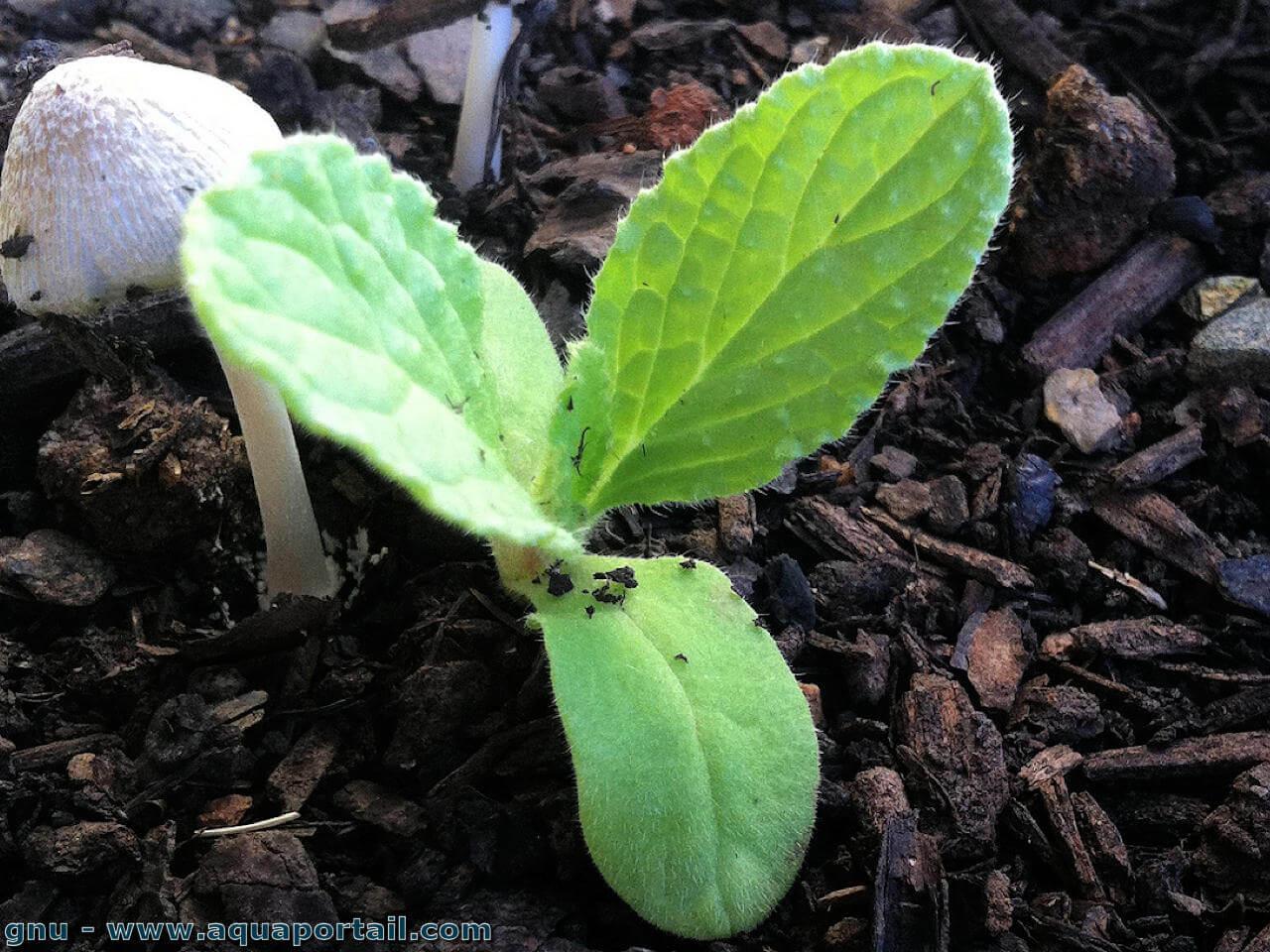
This blue borage seedling Borago officinalis can be planted outdoors after germination following sowing.
Explanations
The seedling is the first stage of a plant produced from seeds or layers. It is a young individual resulting from the development of a seed or spore. This embryonic plant exists during germination while the cotyledons are still functional.
Put another way, a seedling is a young spermatophyte still dependent on seed reserves. It consists of cotyledons (one, two, or more) and a radicle, giving rise respectively to the stem (still at the hypocotyl/epicotyl stage in a seedling), the apical meristem, and the root.
The epigeal features of the young plant are the slender stem supporting the cotyledons (1, 2, or more photosynthetic embryonic leaves with trophic and storage functions) and the plumule, or first bud, which through its meristematic activity will drive plant growth.
Anatomy of a seedling:
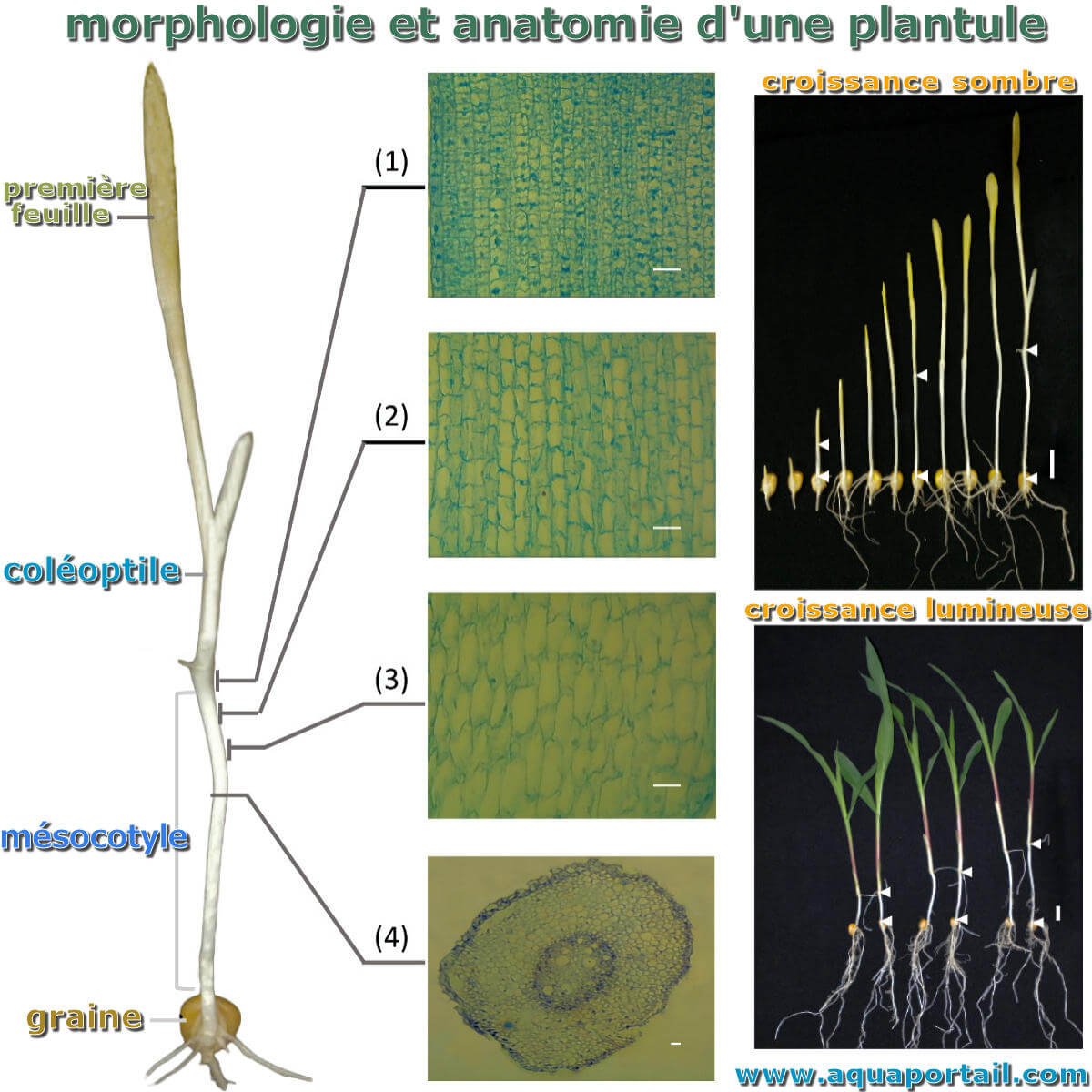
A growing seedling develops from the seed, forming a mesocotyl and then a coleoptile before the first true leaf.
The term seedling is used in everyday language outside a strictly botanical context; in fact, to refer to a newly sprouted seed, the term sprout is often used. In itself, this usage is not wrong, though it should be noted that in botany it encompasses both the seedling and any product of a bud, which may be the rudiment of a branch or a flower (the flowering apparatus represents the specialization of a branch for reproductive purposes).
⭐ A quiescent seedling denotes a dormant seedling that halts its development during the unfavorable season.
✅ Seedlings are used in cultivating forest trees (forestry), such as oak and beech. One-, two-, and three-year-old seedlings can still be easily transplanted. A drawback is that the taproot is sometimes damaged, making the tree more prone to windthrow later in life. Young saplings can be purchased from nurseries and garden centers, for example to plant a beech or maple hedge, measuring roughly 50 to 100 cm (20 to 39 in) tall and already possessing a woody structure. Natural regeneration from seed is often relied upon to renew forests, while annual and, to a lesser extent, biennial seedlings are used in reforestation—a practice known as forest planting.
Whereas a seedling is a young plant grown from seed, a propagule is a bud or germ that yields a clone of the parent plant.
A seedling is a very young tree, perhaps 1 or 2 years old, raised from seed in a nursery and transplanted into the area where the new forest will emerge.
Synonyms, antonyms
Spanish translation: plántula
2 synonyms (similar meaning) for "seedling":
0 antonyms (opposite meaning).
Related words and expressions to SEEDLING are directly connected by general or specific meaning.
The word SEEDLING is listed on page 1 of words starting with S in the dictionary glossary.
Related to "seedling"
layering
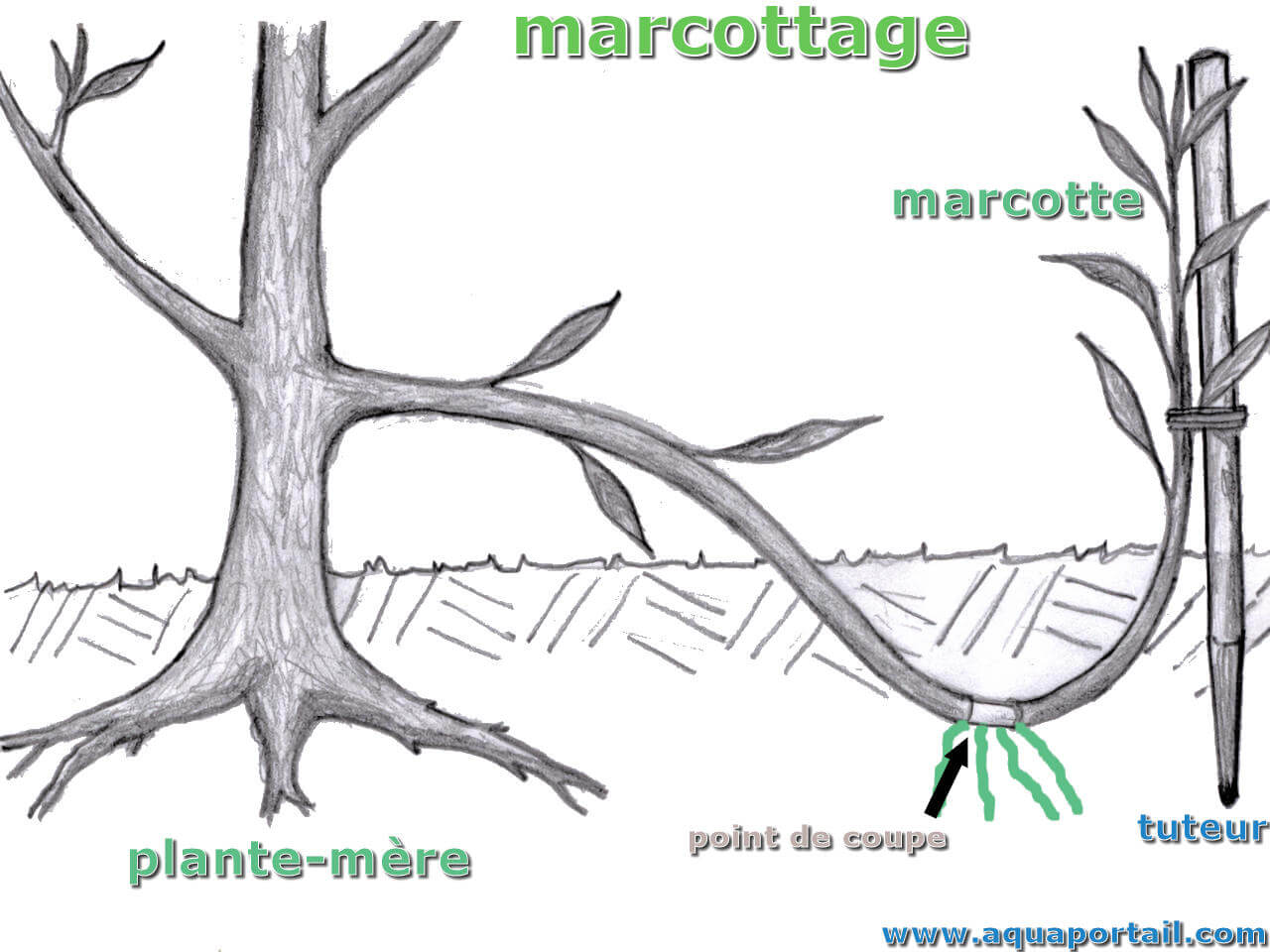
Layering is a plant propagation method that relies on encouraging root development on young stems and then separating them from the parent plant to obtain...
saccharide

A saccharide is a carbohydrate, a biomolecule composed of carbon, hydrogen, and oxygen atoms, usually with a hydrogen-to-oxygen atomic ratio of 2 :1.
sagittocyst

A sagittocyst is a capsule containing a spindle-shaped needle produced by epidermal cells of certain flatworms (acoels).
saltwater treatment
The saltwater bath method, or aquarium salt treatment, helps halt potential external infections via osmotic shock.
