Layering
noun (n.)
Definition
Layering is a plant propagation method that relies on encouraging root development on young stems and then separating them from the parent plant to obtain a new individual. The formation of a layer may be natural or artificial (forced).Layering propagates a green plant vegetatively, relying on the ability of certain aerial stems (aerial stolon, runner) to take root and produce a new plant.
Layering technique :
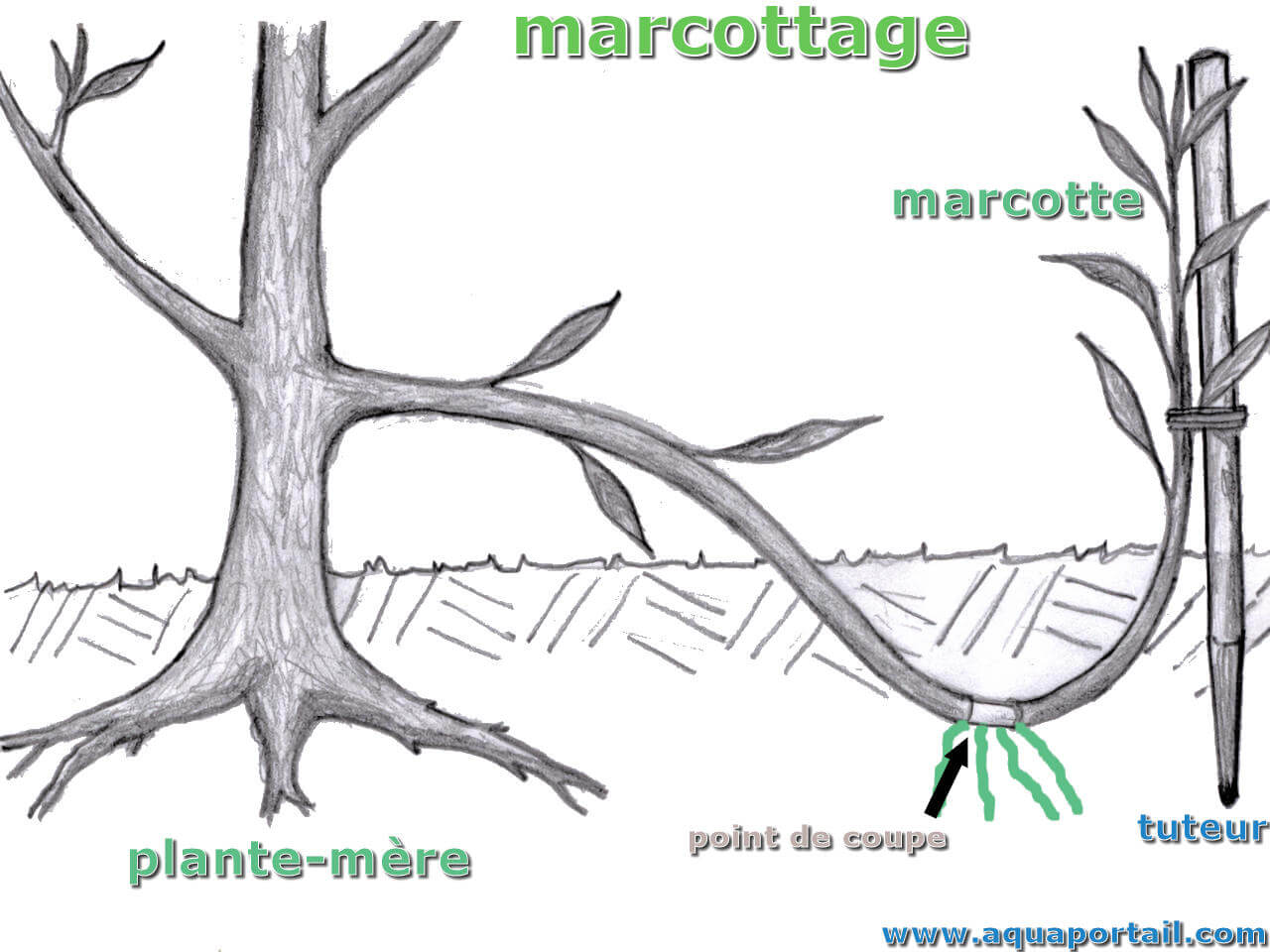
Layering is a technique of severing a runner to separate a daughter plant from its parent plant in order to create a new plantlet.
Plant reproduction often involves concentrating energy into seed production after flower fertilization, as vegetative growth tends to slow down or halt completely because seed formation consumes most of the plant's energy. However, alternative propagation methods exist allowing plants to continue spreading (vegetatively) across an area without expending energy on seed generation, including the growth of sprawling plant runners.
Explanations
Plant propagation by layering is a generally successful vegetative multiplication method because water stress is minimized and carbohydrate and mineral nutrient levels remain high. The development of roots on a stem while the stem is still attached to the parent plant is called layering. A layer is the rooted stem once detached (removed) from the parent plant.
✅ Rosette-stemmed plants often reproduce by forming new shoots, called offshoots, at their base or in leaf axils. Cut the new shoots from the parent plant after they have developed their own root system.
Natural layering
By definition in life sciences, layering is a form of vegetative propagation in vascular plants based on the rooting and subsequent isolation of an aerial shoot, or layer, which produces adventitious roots. Many plants naturally produce aerial (non-subterranean) stolons. Runners must remain attached to the host plant to survive and establish themselves, giving adventitious roots time to anchor and produce the first leaves.
Layer of a strawberry plant with runner:
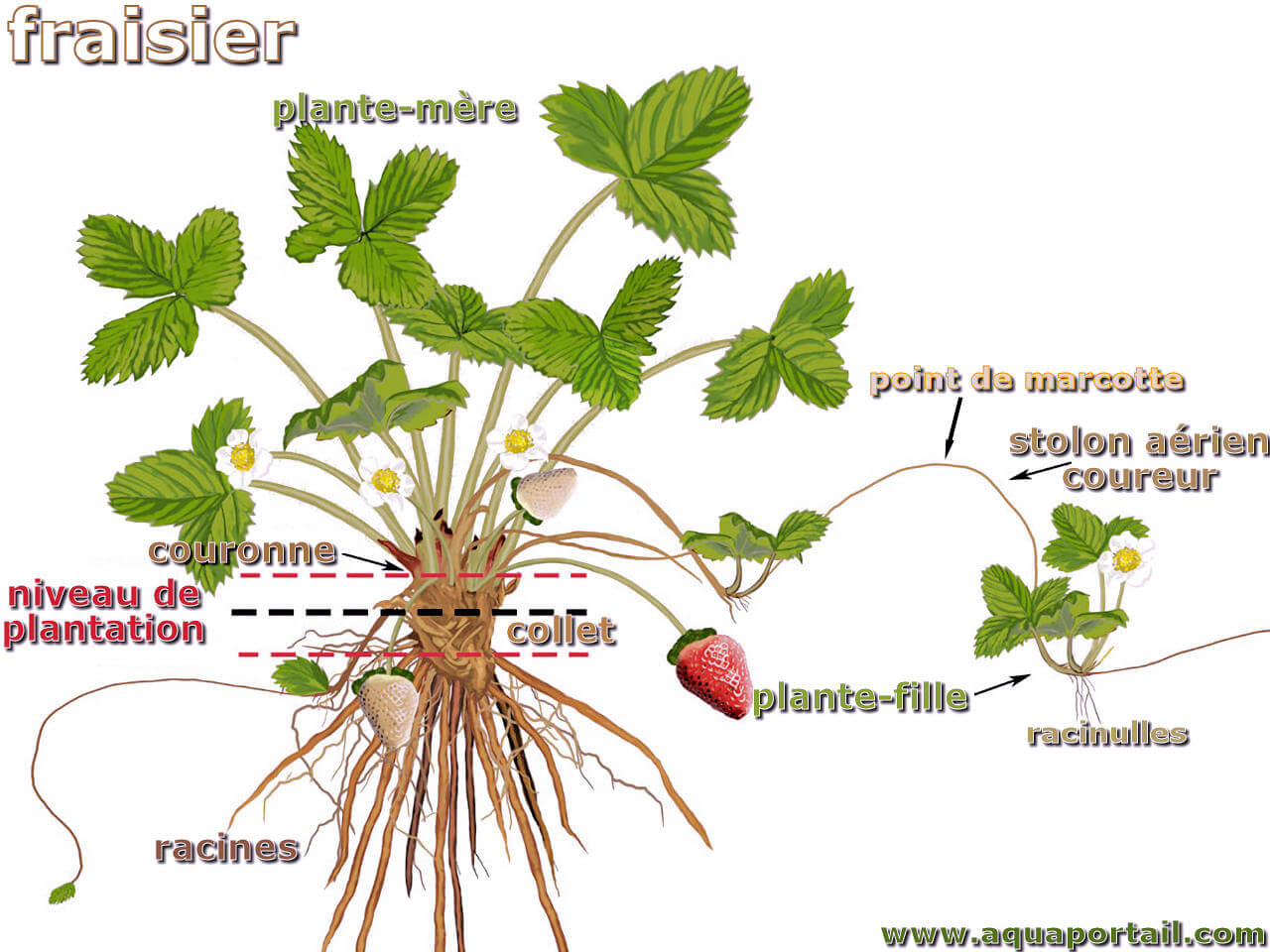
Layering, for this strawberry plant, takes place at the center of the runner (aerial stolon) between the parent plant and the daughter plant.
Plant runners are stem-like outgrowths extending from the growing point of a parent plant, such as the crown of a strawberry plant. Runners lack substantial leaves for photosynthesis, meaning they must draw their energy from the parent plant. Once separated from the parent plant, the daughter plant draws its energy from photosynthesis and no longer needs the runner, which dies back.
In such a situation, layering simply involves cutting the runner once the daughter plant has enough leaves and a well-developed root system (rootlets, small roots). After separating the daughter plant, it is best to wait a little longer before transplanting it elsewhere, giving the young plant time to strengthen.
🚩 Be careful not to confuse runners (stolons) with suckers (basal shoots), which are lateral shoots produced from the roots or base of a plant's stem.
Forced (artificial) layering
In horticulture and gardening, the layering technique involves bending a low branch (a recent, actively growing shoot) down to touch the soil so that it produces roots at the vegetative node (point of contact with the substrate). Stem branches still attached to their parent plant can form roots when brought into contact with a rooting medium.
Some plants propagate naturally by layering, though plant propagators often assist the process. Forced layer formation is enhanced by wounding the stem where roots are to form (see introductory diagram above). The rooting medium must always provide aeration and a steady supply of moisture to prevent any water stress.
Forced layering is carried out using several different methods: simple layering (flat or trench layering), tip layering, compound (serpentine) layering, mound (stool) layering, and air layering (marcotting).
Aquatic layering
In aquatic environments, layering also occurs and proceeds in the exact same manner as terrestrial-aerial layering, whether natural or induced. The genus Echinodorus is especially well known for sending out runners in whorls around the parent plant. Wait until the new plant has at least 5 leaves before cutting the runner to separate the daughter plant from the parent plant.
Synonyms, antonyms
Spanish translation: acodo
2 synonyms (similar meaning) for "layering":
0 antonyms (opposite meaning).
Related words and expressions to LAYERING are directly connected by general or specific meaning.
The word LAYERING is listed on page 1 of words starting with L in the dictionary glossary.
Related to "layering"
cutting

In botany, a cutting is a stem fragment with woody buds separated from a tree or shrub and then inserted into soil or substrate for rooting and formation...
root

In botany, a plant root is a part of the vegetative apparatus, generally subterranean for rooting though potentially aerial, bounded by a rhizodermis, devoid...
rootlet

A rootlet is a small, fine, hair-like secondary lateral root. Rootlets emerge along the main root, forming a dense lattice of very fine secondary root...
bottom watering

Bottom watering of a potted plant is a form of watering consisting of soaking the pot and its contents directly in unchlorinated freshwater.
