Limbing
noun (n.)
Definition
Limbing a tree or shrub consists of cutting branches from a plant, often as part of pruning or topiary work. When branch removal cuts back the crown or top of the tree trunk, it is called topping. In forestry, limbing is the operation performed prior to or immediately after felling.Limbing during tree pruning:
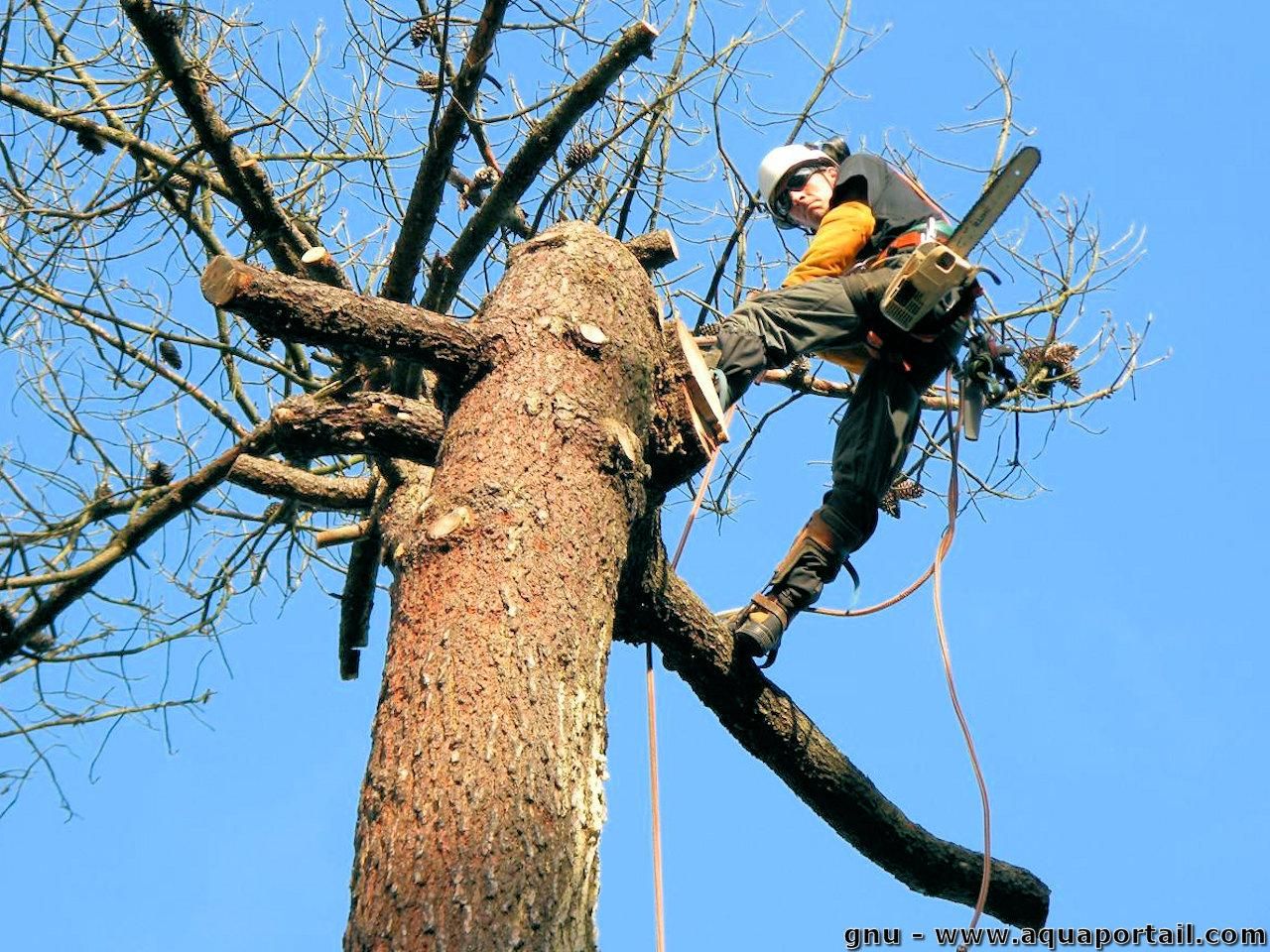
Limbing a tree is carried out during pruning, trimming, or topping as part of arboricultural maintenance operations.
Explanations
Whether you are using a chainsaw to cut firewood, prune trees, or harvest sawlogs, you will perform three basic operations: felling, limbing, and bucking. Felling consists of cutting a standing tree and bringing it down in the desired direction. Limbing is the removal of branches from standing or felled trees. Bucking is the process of cutting a felled tree into appropriate log lengths.
You can limb or prune most trees in any season (always check with a local arborist for exceptions), removing up to 20% of the tree's foliage in a given year.
When removing unwanted branches from standing timber, the basic safety rule is: never limb above your shoulders—that is, do not attempt to cut branches above shoulder height.
When limbing a tree lying on the ground, additional safety rules apply. The first step is to assess the downed tree. If the tree has become lodged or hung up in adjacent trees and has not fallen all the way to the ground, do not walk beneath it, as it could fall without warning. "Hung-up" trees are especially hazardous and must be brought down mechanically using a winch cable and properly equipped tractor with rollover and falling-object protection.
In addition to checking whether the felled tree is hung up, consider the following questions when inspecting the area:
- Do you see smaller trees that have been bent and pinned by the felled tree?
- Do you see limbs propping the tree partially off the ground?
- Is the trunk resting flat on the ground?
- If you have just felled the tree, are there dead branches or other debris overhead that could still fall?
Dead limbs and suspended debris are called "widowmakers" for good reason: they are notorious for falling several minutes after a tree is felled, seriously injuring or killing saw operators. To stay safe, wait a few minutes to let any loose debris drop to the ground, taking the opportunity to rest briefly.
Once you have assessed obstacles and hazards and are ready to limb the tree, stand on the uphill side of the trunk. Never stand on the downhill side of a felled log: if you sever a branch holding the log in place, the log could roll downhill and pin you. Make sure you have solid footing and maintain a balanced stance allowing freedom of movement.
Start from the base of the tree and work toward the top, removing branches on the opposite side of the trunk as you advance. Whenever possible, always cut on the far side of the log so the trunk stays between you and the saw, offering extra protection.
Keep the tip of the saw bar in view to prevent kickback. Periodically set the saw down and clear away slash so you have clear visibility and unobstructed footing around the tree.
Try to cut limbs as flush with the trunk as possible, making the log much easier to roll or move. If branches are positioned where flush cuts are not immediately feasible, remember to trim the stubs later.
Depending on the species and size of the tree being limbed, certain branches can be very heavy; when heavy limbs are severed from a log, the trunk may shift position unexpectedly.
Smaller trees bent and trapped under the weight of a felled log are called "spring poles." Bent branches or saplings store tremendous elastic energy and represent one of the greatest hazards during limbing. This tension can be safely released using an axe or chainsaw to gradually notch the spring pole on the inside of its bend.
When cutting a tree for firewood, you may want to start from the top of the tree so lower branches keep the trunk elevated off the ground, keeping the saw chain clear of dirt. Again, solid footing, good balance, and ease of movement are especially critical.
Synonyms, antonyms
Spanish translation: desrame, poda de ramas
5 synonyms (similar meaning) for "limbing":
0 antonyms (opposite meaning).
Related words and expressions to LIMBING are directly connected by general or specific meaning.
The word LIMBING is listed on page 1 of words starting with L in the dictionary glossary.
Related to "limbing"
pollarding
Pollarding is a severe tree-pruning technique involving the removal of upper lateral branches and, optionally, topping or heading back.
pruning
Plant pruning is the operation of limiting the growth extension of a plant, tree, or shrub. Pruning involves limbing for trees, but may amount to trimming...
topping

Topping is the operation of cutting off the head or crown of an organism. In botany, topping allows taking cuttings from a plant or pruning a tree or shrub...
tree topping
Tree topping consists of removing the crown of a tree or shrub, or of any vascular plant with a crown.
