Pollarding targets the upper portion and sides of trees, removing lateral shoots along a trunk, in contrast to coppicing, which cuts stems back near ground level.
Pollarded trees tend to live longer than unpruned trees because they are maintained in a partially juvenile state and do not bear the mechanical weight and wind load of an overly tall crown; sap transport also requires less energy. Like pruning, pollarding stimulates vigorous new shoot growth, rejuvenating the tree.
When performed indiscriminately without regard for tree physiology, severe lopping cuts lateral branches back to arbitrary lengths and can injure trees much like topping. Utility companies frequently prune trees heavily to prevent interference with overhead power lines; harsh lopping disfigures the tree's natural form and leaves stubs prone to decay.
limbing
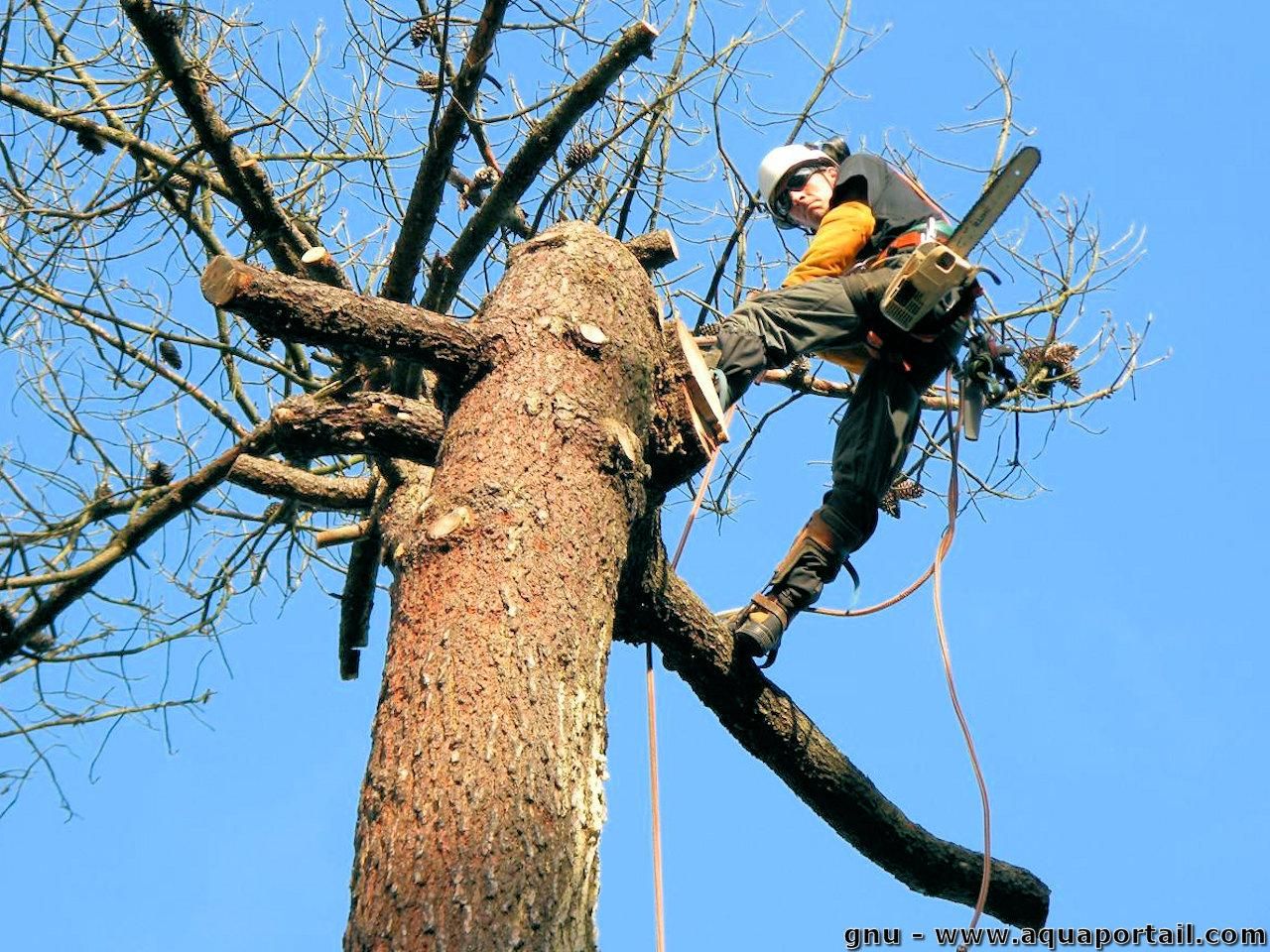
Limbing a tree or shrub consists of cutting branches from a plant, often as part of pruning or topiary work.
pruning
Plant pruning is the operation of limiting the growth extension of a plant, tree, or shrub. Pruning involves limbing for trees, but may amount to trimming...
topping

Topping is the operation of cutting off the head or crown of an organism. In botany, topping allows taking cuttings from a plant or pruning a tree or shrub...
tree topping
Tree topping consists of removing the crown of a tree or shrub, or of any vascular plant with a crown.
