Limivorous
noun and adjective (n. / adj.)
Definition
A limivorous organism is an animal that feeds largely on dead matter or detritus present in silt, marine or freshwater bottom sediments, ooze, or mud. A limivore (or mud-eater) ingests aquatic mud to feed on the organic matter it contains.
A limivorous bottom fish:
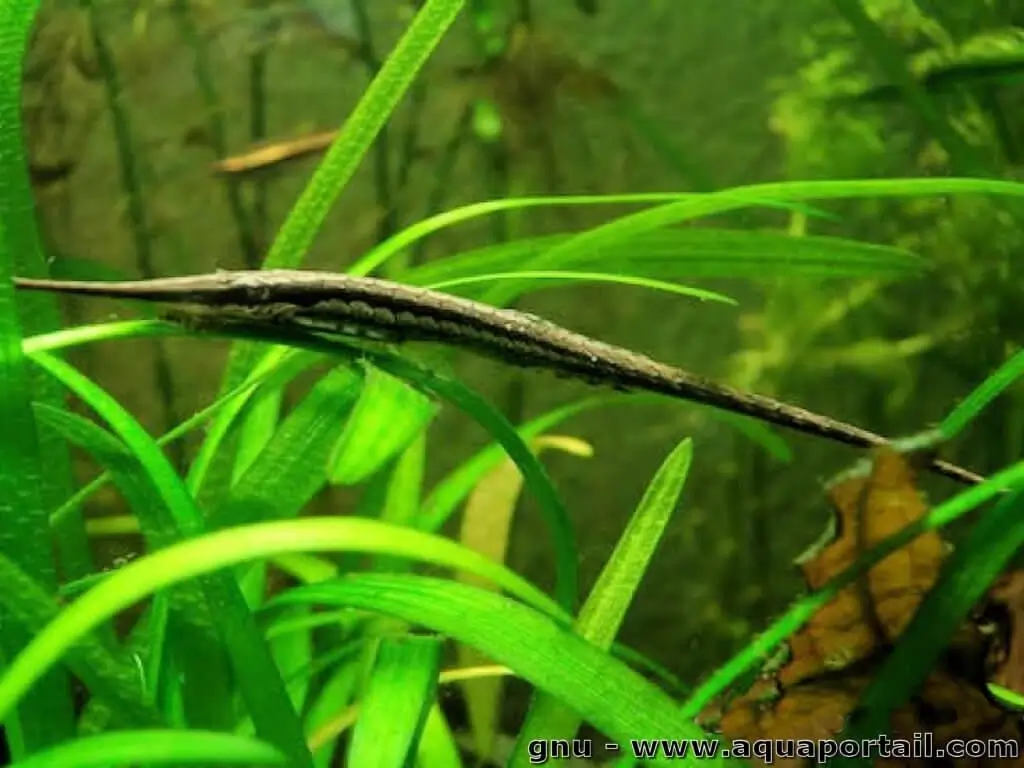
The fish Farlowella vittata is limivorous (or limophagous). It extracts lake organic residues by sucking up mud.
Explanations
Etymologically, a limivore is a mud-eater (limus = mud). Synonymous with limophagous, pelophagous; see also detritivorous. A limophagous diet is synonymous with limivorous, feeding by filtering mud. Limivores are "mud-eaters." They are not necessarily burrowers, though many are.
Limivorous pertains to or relates to animals, generally worms or bivalves, that ingest soil or mud to extract organic matter. The earthworm is a limivorous creature.
🚩 Do not confuse limivorous with lithophagous, lignivorous, or limnicolous. See also psammivorous.
A limivorous diet consists of eating mud or soil to obtain organic matter and the nutrients contained within it.
Synonyms, antonyms
Spanish translation: limívoro
3 synonyms (similar meaning) for "limivorous":
- limnivorous
- limophagous
- pelophagous
0 antonyms (opposite meaning).
Related words and expressions to LIMIVOROUS are directly connected by general or specific meaning.
The word LIMIVOROUS is listed on page 1 of words starting with L in the dictionary glossary.
Related to "limivorous"
concolorous

Concolorous describes an organism or structure of a single uniform color. Unlike strictly monochromatic coloration, a concolorous pattern may include subtle...
discolorous

Discolorous describes an organism or structure displaying two distinct, well-separated colors without uniform coloration, contrasting with concolorous...
heterosporous

In botany, a heterosporous plant is a sporophyte species that produces more than one kind of spore, generally of two different sizes and sexes.
isosporous

An isosporous plant produces only a single type of spore. This is characteristic of bryophytes and many pteridophytes, in contrast to heterosporous plants...
