Lateral line
noun phrase (n. phr.)
Definition
The lateral line, or linea lateralis, is a sensory organ located along the flanks and characteristic of fish and amphibians that enables them to perceive water movement and vibrations in order to orient themselves (even in darkness) and detect prey and predators.
The lateral line of a fish:

A lateral line is generally visible on a fish as a pale line running along each side from near the operculum (the structure covering the gills) to the base of the tail. Mediation through perception by lateral organs is also known as the sense of distant touch, a form of external thigmotaxis. Adequate stimuli are pressure waves occurring within a system of tubes when another fish swims past.
Anatomy, principles, and roles
In fish anatomy, the lateral line is generally visible along the sides of the body, consisting of scales pierced with pores that communicate with sensory cells capable of detecting pressure changes in the environment. In certain fish (known as electric fish), this line is sensitive to electric fields. Placodes give rise to this organ during development.
⭐ The role of the lateral line is particularly important in blind or cave-dwelling fish living in darkness, or for all species in muddy or turbid water.
Sometimes parts of this organ are modified as electroreceptors, which are organs that detect electrical impulses. It is possible that vertebrates such as sharks also use lateral lines to detect magnetic fields.
The receptors that make up the lateral line are neuromasts, each composed of a cluster of hair cells. The cilia are surrounded by an overhanging dome, generally 1/20 to 1/5 mm (0.002 to 0.008 in) in size. The hair cells and domes of the neuromasts lie beneath the visible pore in the fish.
The hair cells of the lateral line are similar to the hair cells of the inner ear, indicating that the lateral line and the inner ear share a common evolutionary origin.
Species with a lateral line
Teleosts and elasmobranchs generally possess lateral line canals, in which the neuromasts are not directly exposed to the environment but communicate through canal pores; however, the lateral line is directly exposed to the environment in certain elasmobranchs such as Chlamydoselachus, Notorynchus, and Echinorhinus.
Additional neuromasts may appear at several locations across the body surface, and the development of the lateral line system depends on the fish's lifestyle. For example, active-swimming fish tend to have more neuromasts within the canals, and the line is situated farther from the pectoral fins, likely reducing the amount of "noise" generated by fin movement.
Most amphibian larvae or tadpoles and certain fully aquatic adult amphibians possess sensory receptors similar to the lateral line. Some crustaceans and cephalopods have analogous organs.
Amniotes (reptiles, mammals, birds) never have a lateral line.
Structural principles
There are different types of lateral sensory organs, including ampullae of Lorenzini and neuromasts. An epipleural bone may connect the vertebral column to the lateral line.
Ampullae of Lorenzini are jelly-filled canals that penetrate deeply into the skin, at the ends of which nerve cells develop within the ampullae. The ampullae can receive pressure, cold, and chemical and electrical stimuli. Adequate stimuli are weak currents arising, for example, from the muscular activity of prey animals.
Neuromast cells consist of hair cells bearing one or more immobile cilia. These are finger-like structures surrounded by jelly (the cupula) that protrude into open water. The hair cells exposed to water are connected to nerve cells that receive signals when the cilia are bent by an external stimulus.
Over the course of evolution, some fish transformed their lateral lines into electroreceptors. These are partly used for geomagnetic navigation, allowing migratory fish to orient themselves using Earth's magnetic field.
Mechanism
On both flanks, a row of pores runs along the body. These pores open into a canal just beneath the skin. Into this canal, which is filled with a gelatinous mass, numerous sensory cells protrude. These are grouped in clusters surrounded by a protective membrane, the cupula. The gelatinous column within the canal is set into vibration by water pressure waves, bending the extensions of the sensory cells in specific directions.
Without this gelatinous column, water would flow through the canals and distribute along flow directions unrelated to the direction of water pressure waves. Instead, the gelatinous mass is pushed forward, backward, upward, downward, and simultaneously toward the sensory cells with varying intensity. Consequently, the fish perceives the finest flow changes and water pressure waves, such as those caused by a swimming enemy or an obstacle (distant touch sense).
Schooling fish such as sardines, mackerels, pilchards, etc., use their lateral lines to protect themselves from predators: the fish form a huge shoal (school of fish) that behaves like a single large fish from a distance. Every slight change in movement by a neighboring fish triggers the same response in the others, as even the tiniest pressure differences are sensed.
Synonyms, antonyms
Spanish translation: línea lateral
1 synonym (similar meaning) for "lateral line":
0 antonyms (opposite meaning).
Related words and expressions to LATERAL LINE are directly connected by general or specific meaning.
The expression LATERAL LINE is listed on page 1 of words starting with L in the dictionary glossary.
Related to "lateral line"
L-form bacteria
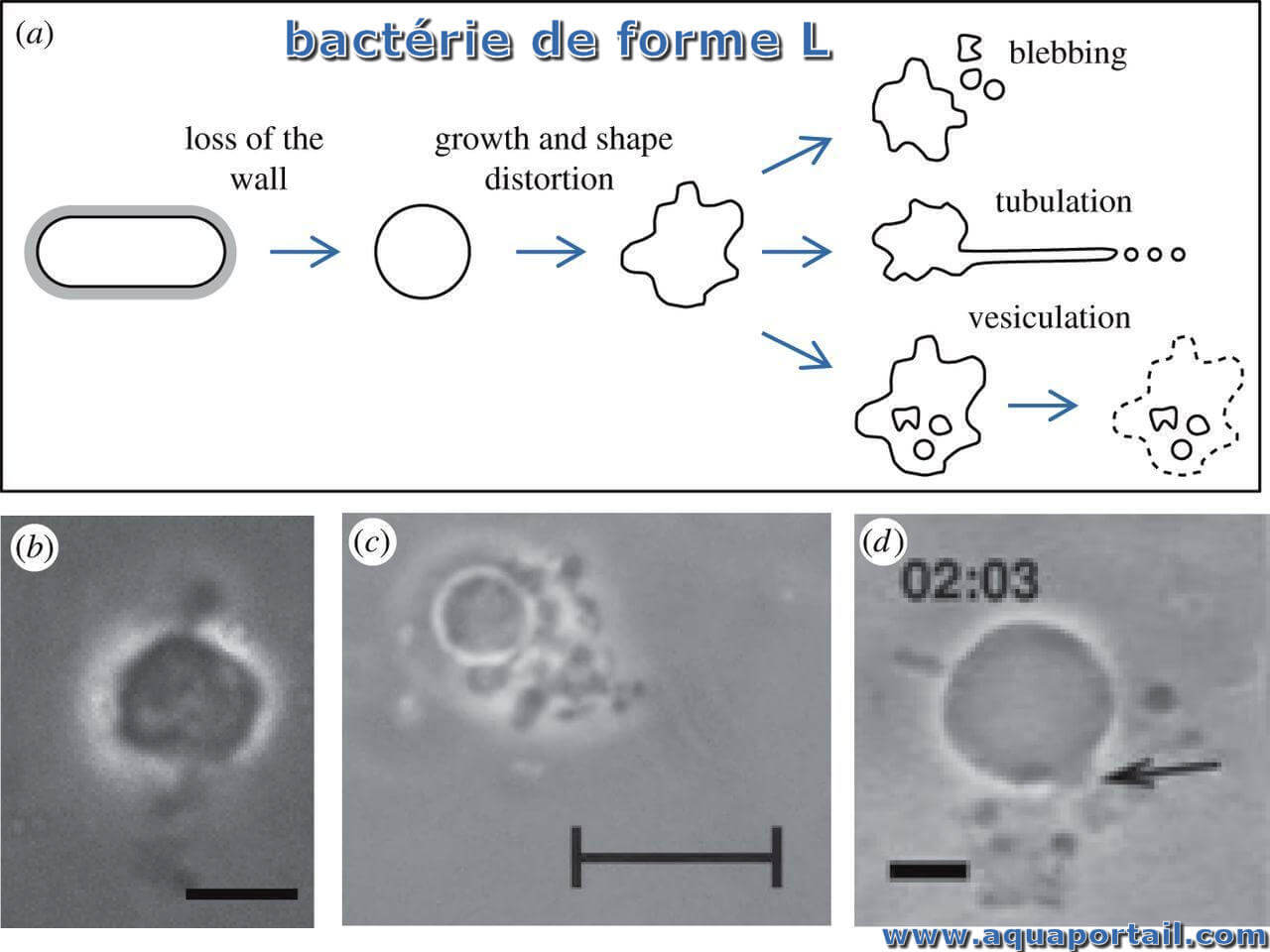
L-form bacteria originate from a strain of bacteria that lack cell walls while retaining the ability to grow.
lake

A lake is a large inland and continental body of freshwater, nearly stagnant or slow-moving.
lamprey

A lamprey is an aquatic vertebrate of the class Petromyzontida within the cyclostomes. Adult lampreys are characterized by a toothed, funnel-like sucking...
lanceolate

A leaf blade is said to be lanceolate when it has the appearance of a narrow lance. More generally, lanceolate indicates a lance-like or spearhead shape...
