Brevetoxin
noun (n.)
Definition
Brevetoxins are a group of very potent polycyclic polyether compounds produced by the dinoflagellate Karenia brevis. These toxins are the primary cause of neurotoxic shellfish poisoning in humans and contribute to significant mortality in fishes, marine mammals, and birds. Acting as neurotoxins, brevetoxins interfere with voltage-gated sodium channels, leading to symptoms such as respiratory distress, neurological disorders, and gastrointestinal disturbances.
Diagram of brevetoxins:

Top, structures of brevetoxin B (PbTx2), PbTx3, and [42-3H]PbTx3; bottom, schematic diagram of the sodium channel α subunit. The α subunit consists of four homologous transmembrane domains, each containing six transmembrane segments (S1-S6). A series of alanine mutants in three segments, including IS6, IVS5, and IVS6, was prepared for binding assays.
Explanations
A brevetoxin (PbTx) belongs to the family of dinoflagellate neurotoxins produced by the dinophyte Karenia brevis, a neurotoxic alga associated with red tides in the gulf of Mexico. Brevetoxins are tasteless, odorless, acidic, and heat-stable (up to 300 °C / 572 °F). These phycotoxins are biotoxins.
Brevetoxins can accumulate in the food chain. This means that fishes, mussels (and bivalves), and crustaceans contaminated with toxins find their way to humans as the final link in these food chains. In humans, poisoning is known as neurotoxic shellfish poisoning (NSP).
Brevetoxins belong to the reduced non-aromatic polyketides. They are polyethers, with the presence of tetrahydrofuran and/or tetrahydropyran rings being characteristic of these polyketides. They also have multiple ether linkages. Ten different toxins are currently known and can be divided into groups A and B. Brevetoxins A have ten five- to nine-membered rings, and B have eleven five- to eight-membered rings.
Actions
Brevetoxins act on voltage-gated sodium channels. Brain sodium channels consist of an α subunit containing the ion-conducting pore and the gating machinery that allows the channel to open in response to voltage, and two auxiliary β subunits, one of which is disulfide-linked to the α subunit.
The α subunit consists of four homologous transmembrane domains, each containing six transmembrane segments (S1-S6) and a pore-forming region between S5 and S6 called SS1-SS2. The α subunit is characterized by more than six biochemically independent defined neurotoxin receptor sites.
Brevetoxins act on the sodium channel by binding to neurotoxin receptor site 5. This results in persistent channel activation by producing a negative shift in the voltage dependence of activation and slowing the rate of the critical inactivation process. Furthermore, at the single-channel level, it produces subconductance states.
Brevetoxin binding to site 5 allosterically affects the action of toxins binding to neurotoxin receptor site 2, such as batrachotoxin and veratridine, and toxins binding to site 4, such as scorpion toxins. However, neither site 2 nor site 4 toxins affect brevetoxin binding.
Case of Karenia brevis
Karenia brevis is a marine alga and part of the phytoplankton of tropical regions, regularly observed in the Caribbean and particularly in the Gulf of Mexico. It appears as one of the causes of "red tides" (red tides are blooms, proliferations of red algae), which are formed by the proliferation of these algae. During these "red tides," fishes and higher trophic-level animals (for example dolphins) are poisoned by the toxic metabolic products of the algae, particularly brevetoxins. In addition to the toxic effect, the reduction in oxygen content caused by the high density of phytoplankton at the water surface is also involved in mass die-offs.
Yessotoxins
Yessotoxins (YTXs) are a group of lipophilic sulfur-containing polyketides, related and similar to brevetoxins and ciguatoxins. They are produced by a large number of dinoflagellates, particularly Lingulodinium polyedrum and Gonyaulax spinifera. When environmental conditions favor the growth of YTX-producing dinoflagellates, the toxins accumulate in the food chain. This leads to toxin-contaminated fishes, mussels, and crabs reaching humans as the final link in these food chains. In humans, the poisoning is called diarrhetic shellfish poisoning (DSP). The IC50 value of various YTX derivatives is approximately 0.5 nM.
Synonyms, antonyms
Spanish translation: brevetoxina
2 synonyms (similar meaning) for "brevetoxin":
0 antonyms (opposite meaning).
Related words and expressions to BREVETOXIN are directly connected by general or specific meaning.
The word BREVETOXIN is listed on page 1 of words starting with B in the dictionary glossary.
Related to "brevetoxin"
bacterial artificial chromosome

A bacterial artificial chromosome (BAC) is a DNA construct, based on a functional fertility plasmid or F-factor, used for transformation and bacterial cloning...
bacteriochlorophyll

A bacteriochlorophyll (BChl) is a pigment of photosynthetic eubacteria other than cyanobacteria, yet containing chlorophyll and able to carry...
bacteriorhodopsin
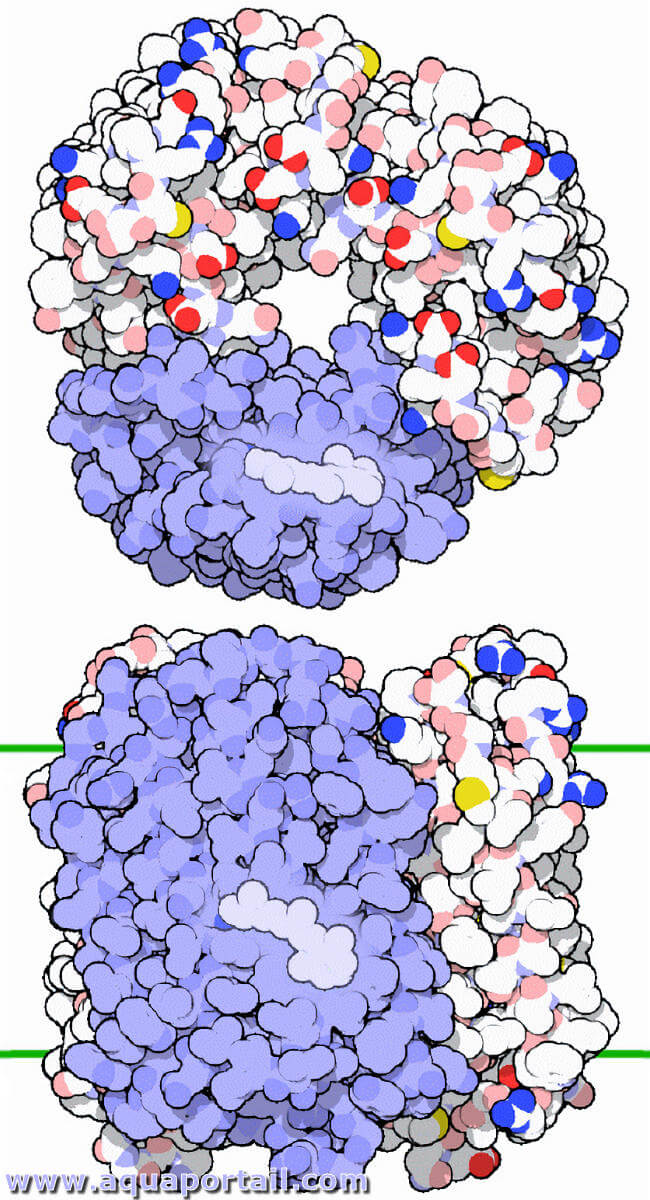
Bacteriorhodopsin (or proteorhodopsin) is a pigment of extreme halophilic photosynthetic archaebacteria.
bacterium

A bacterium is a unicellular prokaryotic microorganism, primarily round, spiral, or rod-shaped, that generally lives in soil, water, organic matter...
