Breast
noun (n.)
Definition
The breast is a mammary organ in women used for lactation, and a vestigial organ without function in men. Breasts exist in all mammals that produce milk to feed their young from birth.
A woman's breasts:
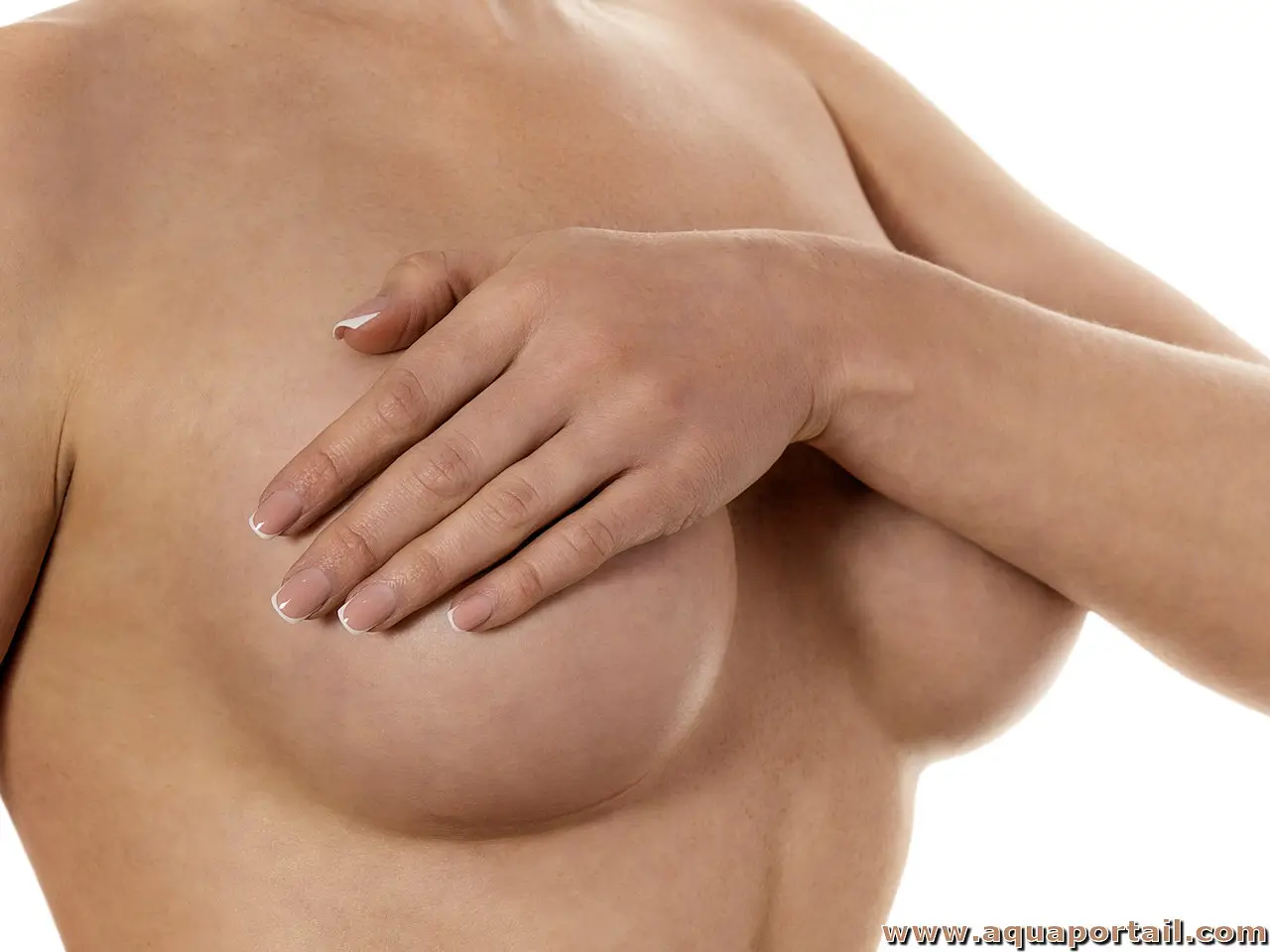
A breast is the prominent organ located on the upper anterior part of a woman's body. It secretes milk after pregnancy. It varies in size and firmness from woman to woman. The epithelial tissue of the breast comprises lobules, where milk is produced, connecting to ducts that carry milk to the nipple. These lobules and ducts are embedded in underlying tissue composed primarily of fibrous connective tissue and adipose tissue (fat), which makes up most of the breast. The anatomy of a woman's breast differs from that of a man.
Explanations
In mammals, the breasts of females are the galactogenic mammary glands that produce milk to nurse unweaned young. The breasts of males no longer have any function and are vestiges of the common lineage shared by the ancestors of Mammalia. The number of breasts (udders, teats) varies according to the species, though it is always a multiple of 2 (often 6 or 8).
In humans, the pair of breasts is visible in both women and men, though this structure is far less developed on a man's body. While lactiferous function is a female trait, this role has completely disappeared in men, and male breasts serve only as chest contour.
✅ In addition to their nourishing role in women, breasts are a secondary sexual characteristic of femininity, like the buttocks.
Anatomy
From an anatomical standpoint, the adult breast rests on the pectoralis muscle, which covers the rib cage. Horizontally, breast tissue extends from the sternum to the mid-axillary line (in the middle of the armpit). A portion of breast tissue, called the "tail of Spence," extends as an axillary tail into the armpit region.
Breast density:
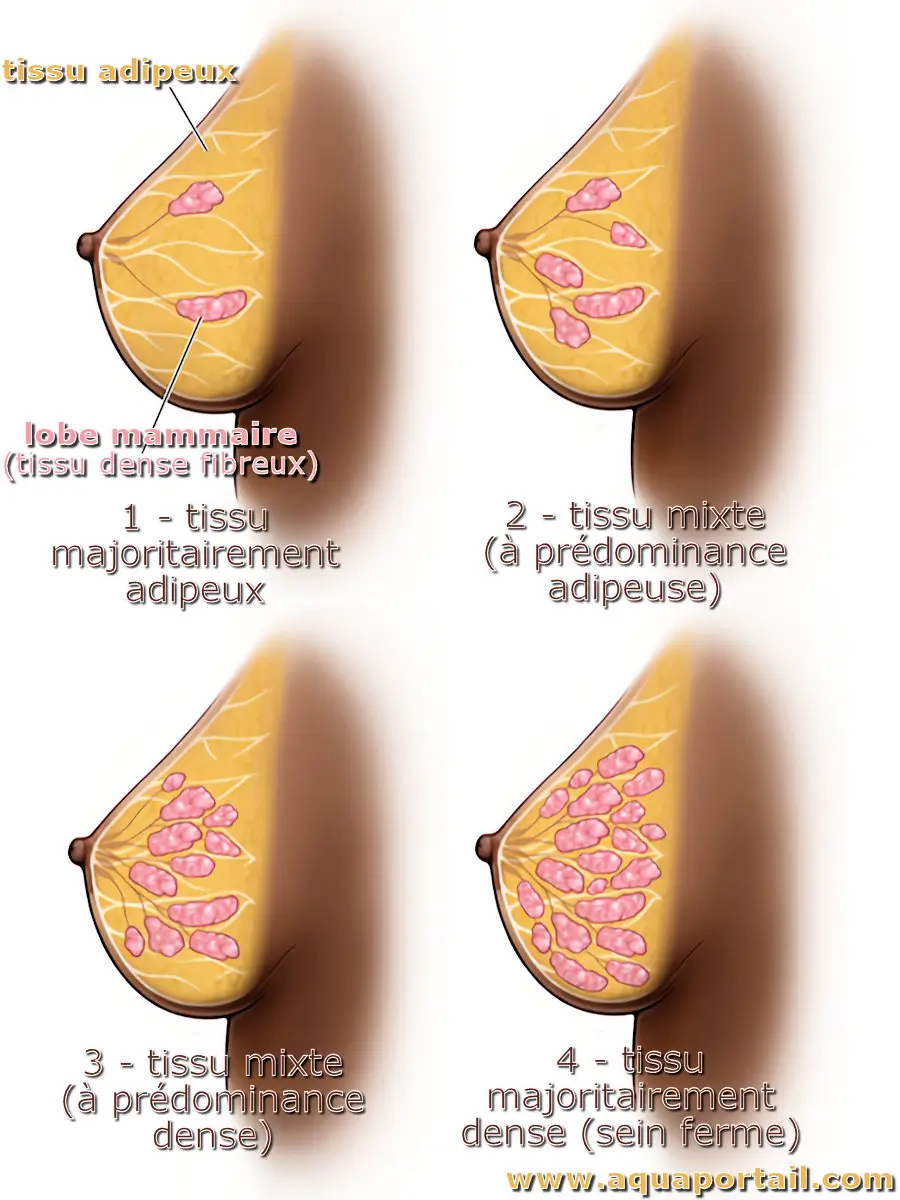
Female breasts are glandular organs. They are composed of connective tissue, adipose tissue (fat), and mammary tissue containing the milk-producing glands (mammary glands).
Depending on the density and proportion of mammary lobes (glands), breasts are firmer or softer, and the globe of a breast is larger or smaller. A typical number of mammary glands is 12 to 20.
Different breast shapes:
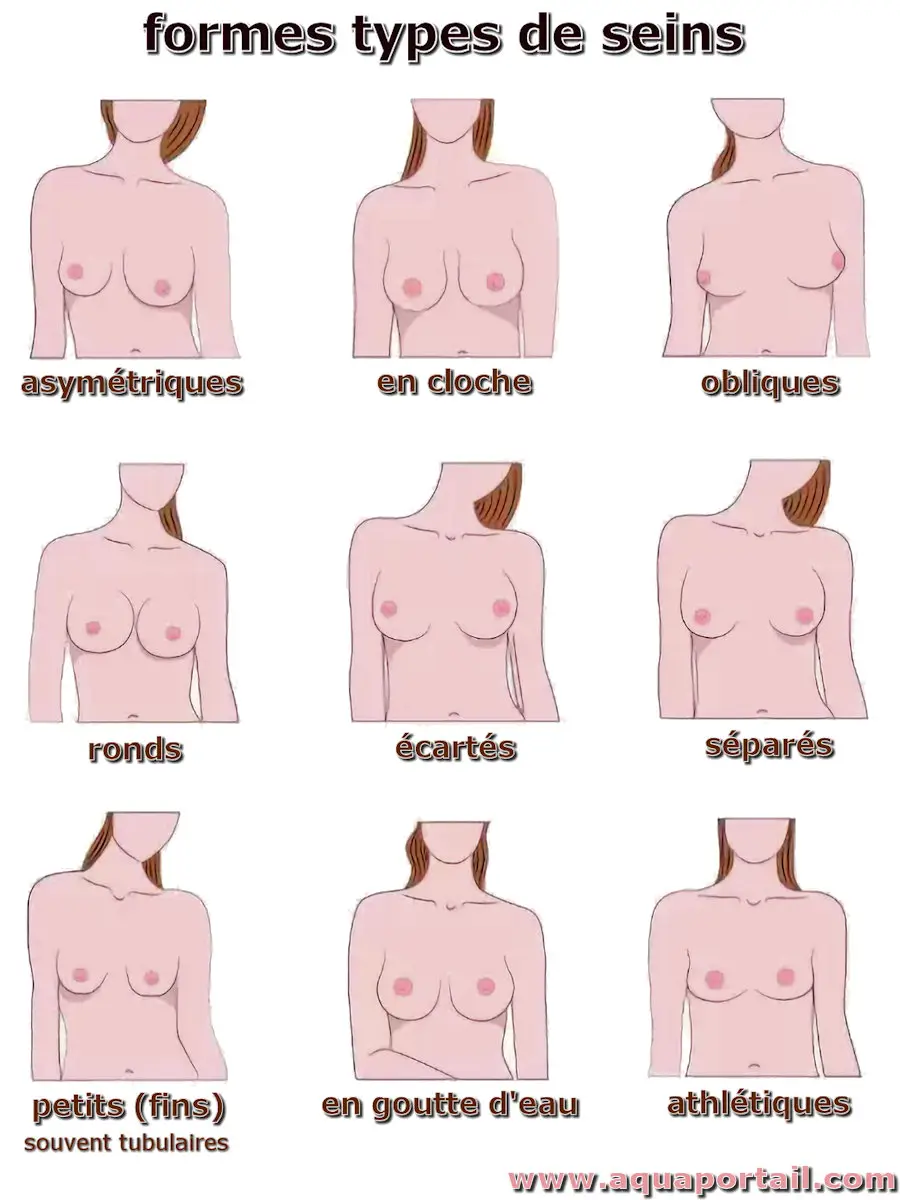
Female breasts vary widely in morphology according to their shape, weight, volume, spacing, and many other criteria.
At their tip, breasts feature an areola (darker area) and a nipple (teat). While the female nipple can be fairly developed, it remains very small in men.
The breast is enveloped in a thin layer of connective tissue called fascia. The deep layer of the fascia rests directly on the pectoralis muscle, whereas the superficial layer lies just beneath the skin. The skin of the breast is similar to that of the rest of the body: it features sweat glands, hair follicles, and other common structures.
Measuring breasts and cup size
Measuring breasts begins by determining the underbust measurement (inframammary chest circumference), located just beneath the breasts against the rib cage. Hold the tape measure flat against the chest, right along the crease beneath each breast.
The underbust measurement is then converted into a bra band size. The general rule is to increase the French band size by 5 units for every 5 cm (2 in) increase in underbust circumference:
- 63–67 cm (24.8–26.4 in) → 80
- 68–72 cm (26.8–28.3 in) → 85
- 73–77 cm (28.7–30.3 in) → 90
- 78–82 cm (30.7–32.3 in) → 95
- 83–87 cm (32.7–34.3 in) → 100
From 88 cm (34.6 in) underbust circumference onward, the band size is 105 and the rule of 5 applies.
To determine a bra's cup depth, measure the bust circumference by placing the tape measure across the breasts at nipple level. The value depends on the difference between bust circumference and underbust circumference, converted into an alphabetical letter (A, B, C, D, etc.). For example, a difference of ≈10 to 15 cm (4 to 6 in) corresponds to cup A. From a 16 cm (6.3 in) difference onward, it is a B cup or larger. Starting from cup B, add 3 cm (1.2 in) for each next cup size. If bust circumference - underbust circumference = 22 cm (8.7 in), the cup size is D.
How to measure a breast:
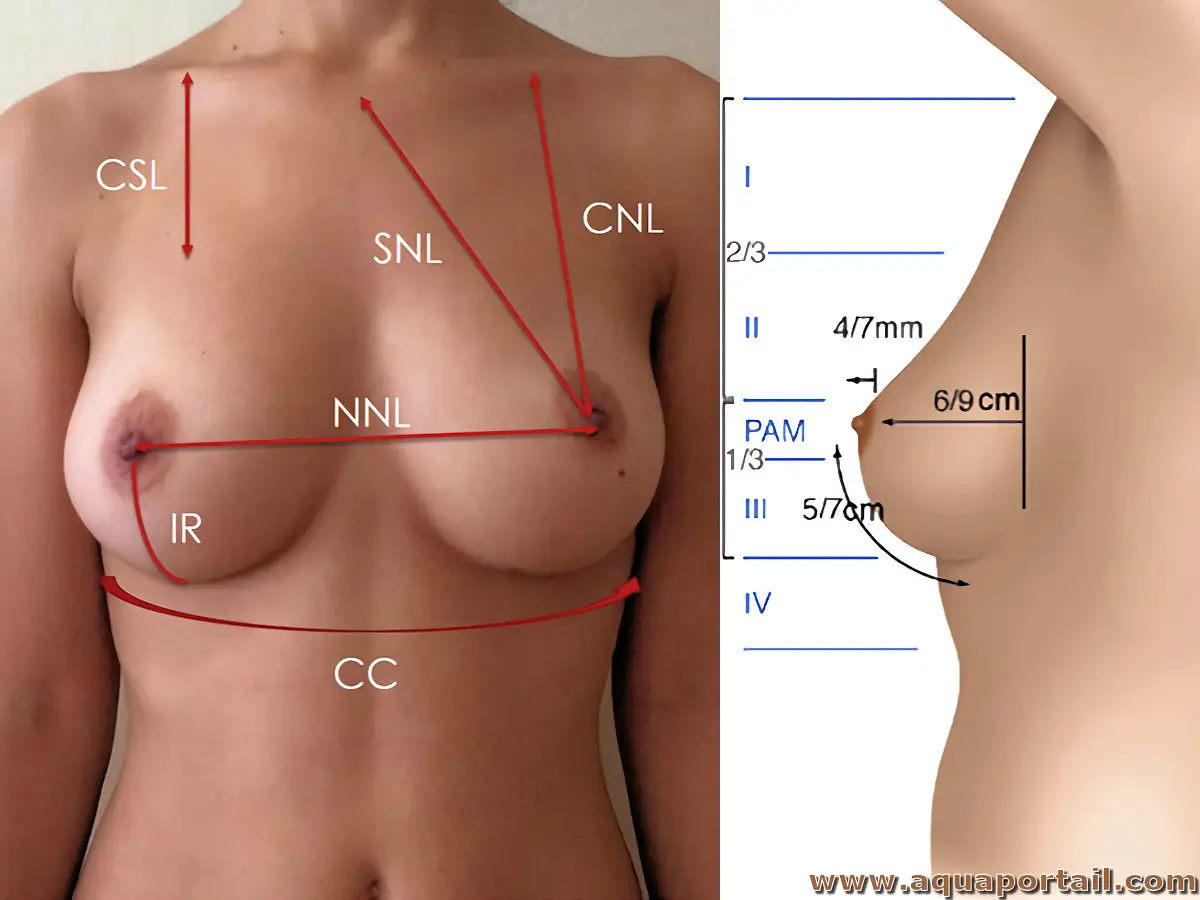
The anatomical measurement points of the breast are: SNL = sternal notch-to-nipple distance; NNL = nipple-to-nipple distance; CNL = mid-clavicular point-to-nipple distance; CSL = mid-clavicular point-to-superior breast border distance; IR = inframammary fold-to-nipple distance; CC = inframammary chest circumference (underbust).
Synonyms, antonyms
Spanish translation: seno
5 synonyms (similar meaning) for "breast":
- bosom
- bust
- chest
- mammary gland
- udder
0 antonyms (opposite meaning).
Related words and expressions to BREAST are directly connected by general or specific meaning.
The word BREAST is listed on page 1 of words starting with B in the dictionary glossary.
Related to "breast"
buttock

A buttock is one of the two fleshy, rounded prominences forming the lower rear portion of the human trunk or the rump of an animal.
chestnut

A chestnut is the fruit of a chestnut tree of the genus Castanea, containing an edible brown nut.
bacterial artificial chromosome
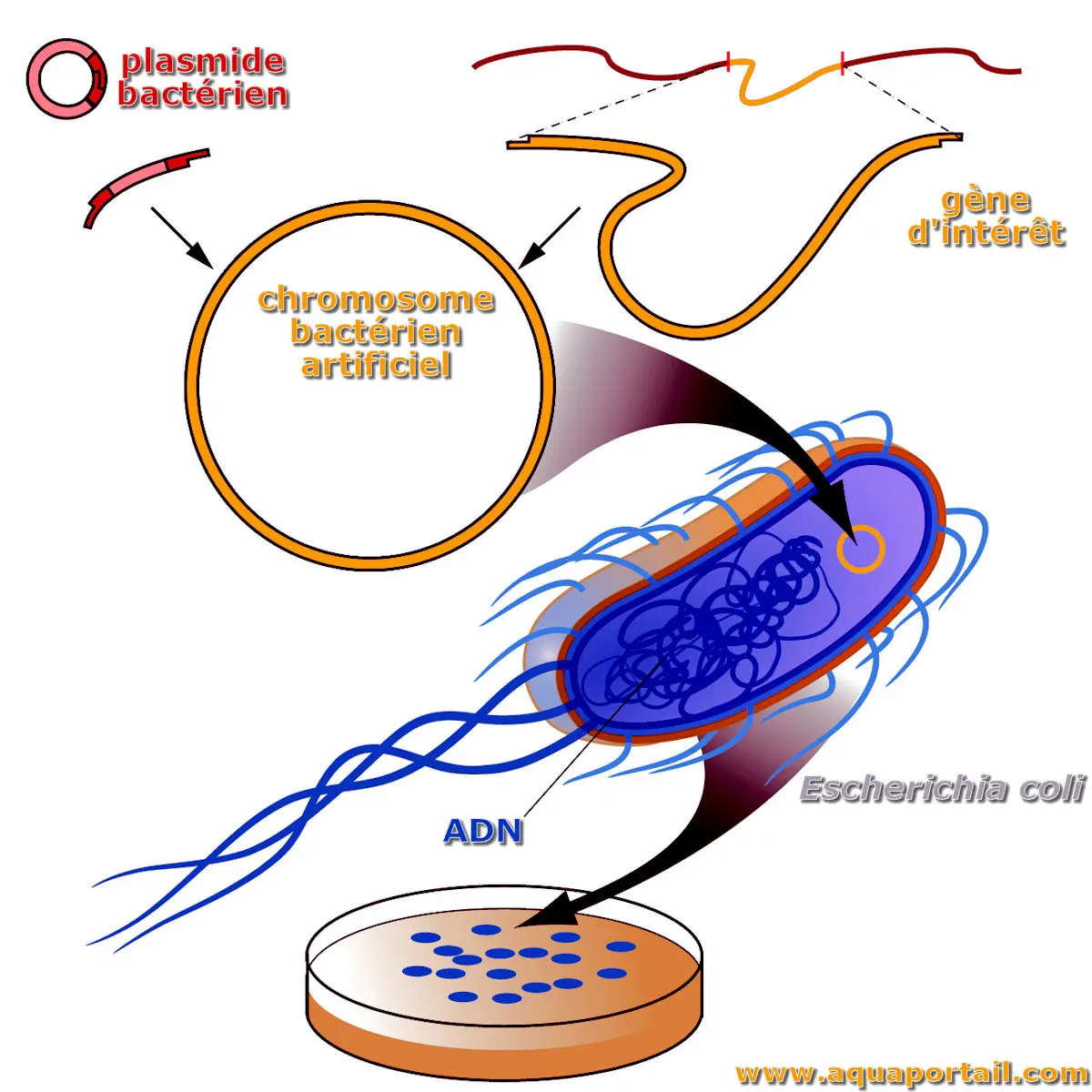
A bacterial artificial chromosome (BAC) is a DNA construct, based on a functional fertility plasmid or F-factor, used for transformation and bacterial cloning...
bacteriochlorophyll

A bacteriochlorophyll (BChl) is a pigment of photosynthetic eubacteria other than cyanobacteria, yet containing chlorophyll and able to carry...
Simple summary
The breast designates the anterior part of the thorax, composed primarily of soft tissues, fat, and glands. In humans, it is located on the upper torso and serves different functions depending on sex. In women, the breast houses the mammary glands responsible for producing milk to nourish an infant.
