Blossom
noun (n.)
Definition
In botany, blossom (flowering) is the formation and opening of a flower or inflorescence, followed by the period during which the flowers remain open. Flowering is the moment when the plant's inflorescence is most developed, and the flowering stage is followed by withering. Flowering concerns flowering plants, the angiosperms, as well as algae, for which a bloom occurs.
The stages of dandelion flowering with its withering:
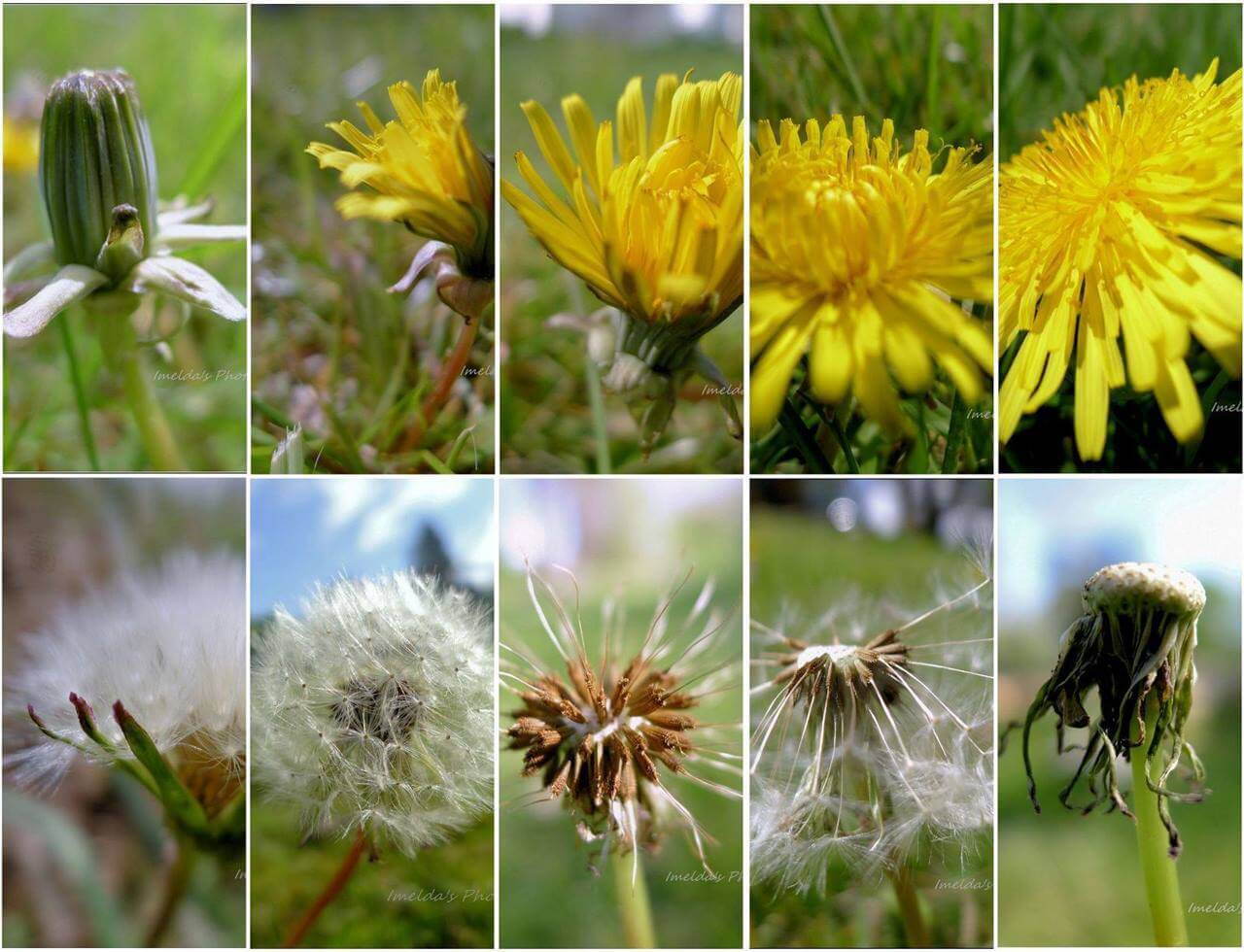
Dandelion flowering consists of various stages, beginning with budding (pre-flowering), the flowering itself, then withering after pollination, and finally fruiting if the flower has been pollinated.
Explanations
✅ The flowering process is called anthesis. Due to its etymological origin, the spelling "fleuraison" is occasionally found in French.
The flowers and fruits of flowering plants come and go as part of their life cycle. Some flowering plants do not even have stems or leaves all year round (such as the autumn crocus Colchicum autumnale). The fruits and vegetables we eat come from different parts of the life cycle of various plants, such as roots, stems, leaves, flowers, fruits, and seeds.
Flowering periods are variable and differ depending on the species, seasonal conditions, geographical area, etc., though flowering generally takes place in spring and summer. Full bloom is the best stage for pollinators that participate in the sexual reproduction of the flowering plant.
✅ Flowering concerns both dicotyledonous and monocotyledonous plants.
A military orchid Orchis militaris in full bloom:

Flowering varies according to each species, sometimes making it possible to characterize a flowering plant. The military orchid, present in France, blooms in mid-spring.
The number of flowering plant species, and therefore capable of blooming, is estimated between 250,000 and 400,000. This compares to about 12,000 species of mosses or 11,000 species of pteridophytes, showing that flowering plants are much more diverse. The diversity of plants producing flowers is not evenly distributed. Almost all species belong to the eudicots (75%), monocots (23%), and magnoliids (2%). The remaining 5 clades contain just over 250 species in total, or less than 0.1% of flowering plant diversity, distributed across 9 families.
Flowering process (anthesis)
Before the flower opens, it forms a bud corresponding to winter buds. Here, protective structures (bracts, involucres, etc.) serve as protection. The opening process can take place through various mechanisms:
- reversible ion accumulation, which has been unequivocally demonstrated in Koch's gentian Gentiana kochiana
- programmed cell death in defined areas of the petals
- water loss during the day and refilling during the night, observed among others in the white campion Silene latifolia, which blooms at night and whose petals curl up during the day due to fluid loss
- different growth rates on the outside and inside of the floral parts (in the tulip, the inside exhibits optimal growth at a temperature 10 °C (18 °F) lower than the outside, leading to opening in the morning and closing in the evening)
The increase in turgor pressure, which essentially results from the rise in sugar concentration following the breakdown of high-molecular-weight carbohydrates (for example, starch in roses or the fruits of daylilies Hemerocallis), is an important factor in petal expansion. Consequently, cell wall extension follows, although the dismissal of the role of plant hormones is contradictory in the literature. The physiological and especially genetic mechanisms of the cell governing flower opening and closing are still poorly understood. Flower opening (blooming) is triggered by external factors.
In hydrophytic or wetland species, it is often the increase in humidity in the evening that is crucial. Conversely, the predominant environmental factor is frequently higher temperatures: snowdrops Galanthus nivalis and crocus species Crocus spp. respond to this. A third group responds to light, such as the common daisy Bellis perennis. The opening and closing of older flowers take place via the same mechanisms, but are also subject to an internal rhythm.
Flower closure can occur through growth changes or reversible turgor changes. In such cases, there is a basis for repeated opening and closing. Loss of turgor pressure due to aging causes permanent closure of the flower.
Synonyms, antonyms
Spanish translation: floración
1 synonym (similar meaning) for "blossom":
0 antonyms (opposite meaning).
Related words and expressions to BLOSSOM are directly connected by general or specific meaning.
The word BLOSSOM is listed on page 1 of words starting with B in the dictionary glossary.
Related to "blossom"
algal bloom

An algal bloom is a pelagic phytoplankton proliferation or a phytoplankton bloom. The phenomenon of massive phytoplankton proliferation in the aquatic...
bacterial artificial chromosome

A bacterial artificial chromosome (BAC) is a DNA construct, based on a functional fertility plasmid or F-factor, used for transformation and bacterial cloning...
bacteriochlorophyll

A bacteriochlorophyll (BChl) is a pigment of photosynthetic eubacteria other than cyanobacteria, yet containing chlorophyll and able to carry...
bacteriorhodopsin
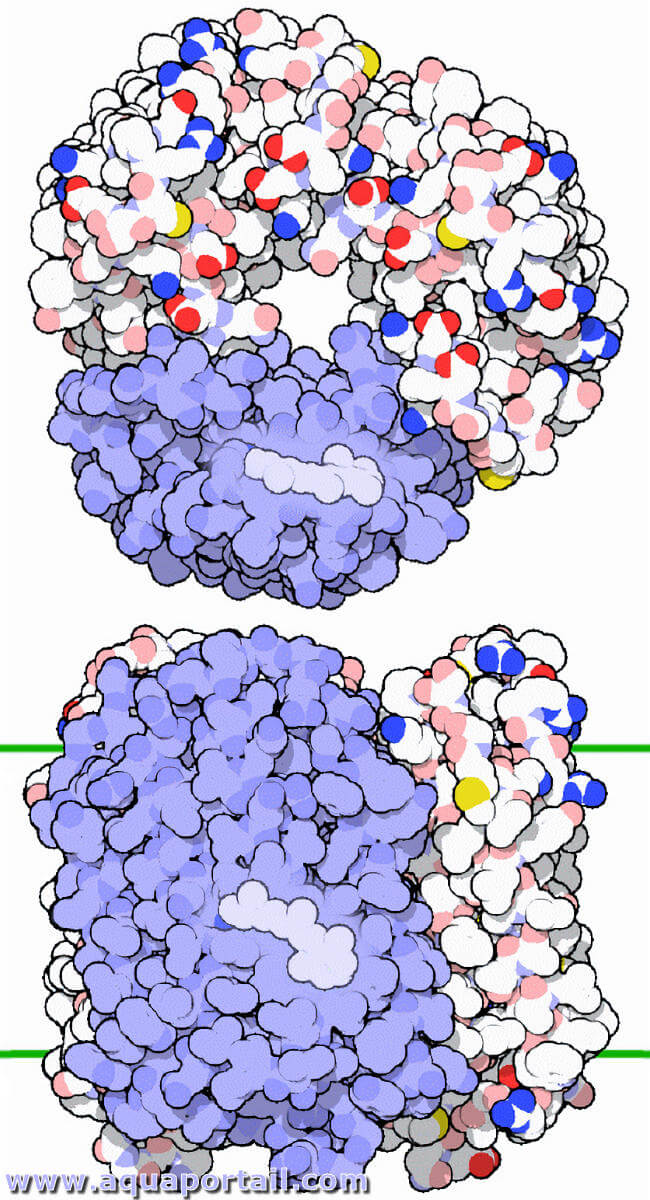
Bacteriorhodopsin (or proteorhodopsin) is a pigment of extreme halophilic photosynthetic archaebacteria.
