Algal bloom
noun phrase (n. phr.)
Definition
An algal bloom is a pelagic phytoplankton proliferation or a phytoplankton bloom. The phenomenon of massive phytoplankton proliferation in the aquatic environment results from the conjunction of environmental factors such as temperature, illumination, and nutrient salt concentration.
A severe algal bloom:

Harmful algal blooms (algal proliferations) occur when colonies of algae, simple photosynthetic organisms living in the sea and freshwater, grow out of control and produce toxic or harmful effects on people, fishes, shellfish, marine mammals, and birds.
Explanations
A bloom, essentially an explosive growth of bacteria or phytoplankton, is also known as a water bloom or efflorescence. An algal bloom (water bloom or algal and/or bacterial efflorescence) is an aquatic phenomenon linked to sudden outbreaks of planktonic populations.
Depending on the nature of the phytoplankton species involved, this algal proliferation can manifest as water discoloration, that is, colored waters, green or even red as in the Red Sea.
Excessive algal growth, or algal proliferation, becomes visible to the naked eye and may be green, blue-green, red, or brown, depending on the type of alga.
Algae are always present in natural water bodies such as oceans, lakes, and rivers, but only a few types can produce toxins. In these algae, toxin production can be stimulated by environmental factors such as light, temperature, and nutrient levels.
Algal toxins released into the surrounding water or air can seriously harm people, animals, fishes, and other parts of the ecosystem.
Scientists know that environmental conditions trigger severe algal blooms, such as warmer summer water temperatures and excessive nutrients from fertilizers or wastewater carried by runoff, but they are still learning more about why severe algal blooms occur.
As climate change gradually warms the Earth's climate, scientists expect severe algal blooms to become more frequent, widespread, and severe.
Algal blooms present in freshwater, such as the Great Lakes and other drinking water sources, are dominated by the cyanobacterium Microcystis. This organism produces a liver toxin that can cause gastrointestinal illnesses as well as liver damage.
Other fields
In ecology, a bloom is the rapid flowering (of a desert or savanna) after rainfall (ephemeral plants, nostocs).
In fishkeeping, a bloom is categorized according to the nature of the "bloom": bacteria (case of cloudy white water when cycling an aquarium), cyanobacteria (rather dark/black water, though variable), and microalgae (green water).
✅ The word "bloom" is of English origin, and although widely used in French, its use is discouraged in Quebec.
Synonyms, antonyms
French translation:
bloomSpanish translation: floración algal
1 synonym (similar meaning) for "algal bloom":
0 antonyms (opposite meaning).
Related words and expressions to ALGAL BLOOM are directly connected by general or specific meaning.
The expression ALGAL BLOOM is listed on page 1 of words starting with A in the dictionary glossary.
Related to "algal bloom"
abiotic

In biology and ecology, abiotic refers to what is not biotic, that is, not part of living beings.
aboral

Aboral refers to what is situated away from or opposite the mouth in zoology, and especially in marine biology.
absence

Absence refers to non-presence at an expected location, or the complete non-existence of something.
acetyltransferase
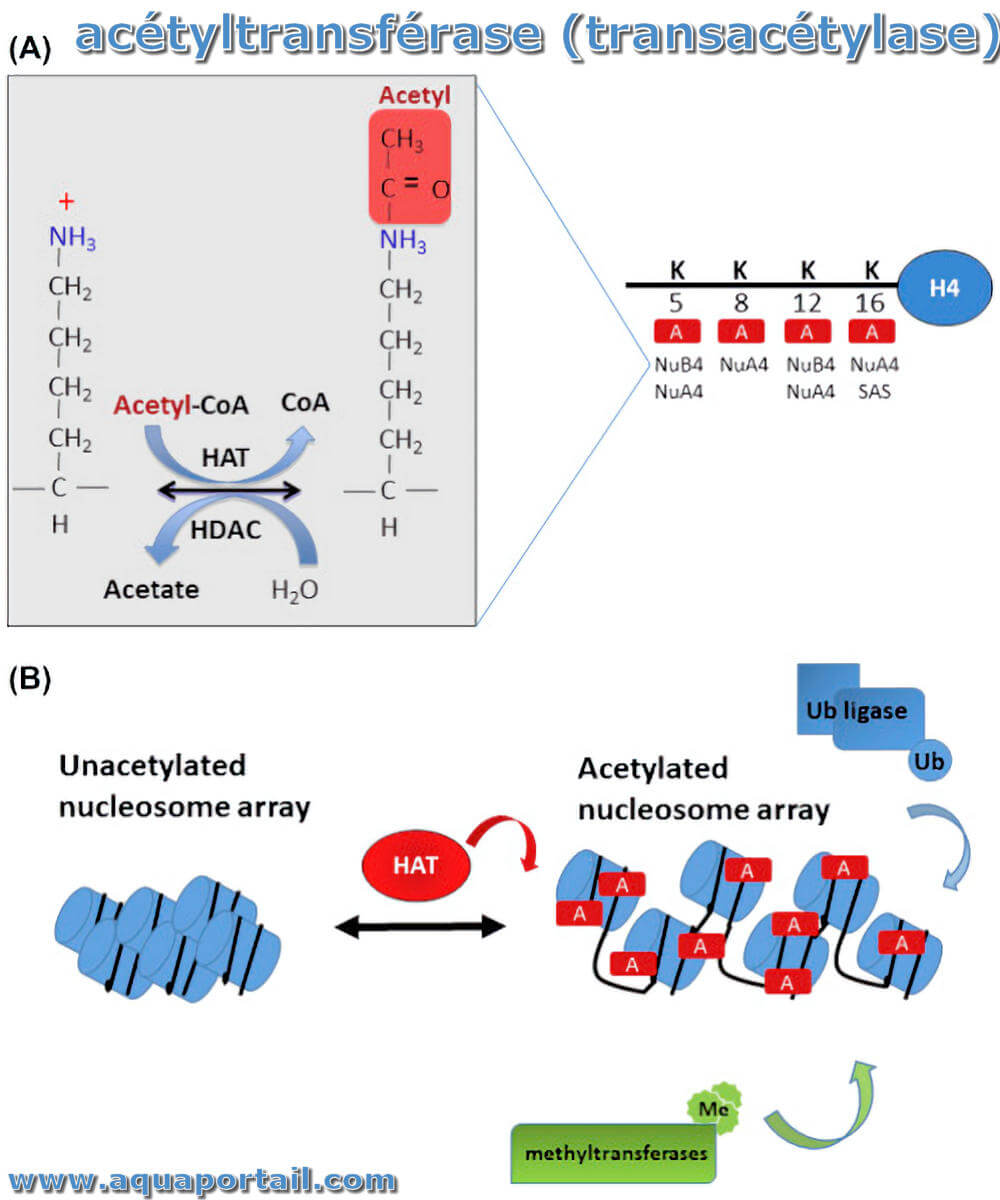
An acetyltransferase is an enzyme that transfers an acetyl group from acetyl-CoA to lysine amino acids.
