Alkaloid
noun (n.)
Definition
An alkaloid is a naturally occurring organic compound, often nitrogenous, found primarily in plants and, to a lesser extent, in certain animals and fungi. For example, morphine, strychnine, caffeine, nicotine, and quinine are alkaloids.
The poppy is dangerous because of its alkaloids:

The first individual alkaloid, morphine, was isolated in 1804 from the opium poppy Papaver somniferum.
General overview
An alkaloid is an organic compound of plant origin, generally alkaline as its name suggests. It contains at least one nitrogen atom, typically within a heterocycle (a ring composed of carbon and nitrogen).
Alkaloids often exhibit strong biological, toxic, or therapeutic activity, and the most frequently cited include: quinine, morphine, strychnine, cocaine, colchicine, ergotinine, ephedrine, atropine, nicotine, and caffeine.
Alkaloids are therefore complex nitrogenous organic compounds synthesized by plants and endowed with extremely important properties regarding the physiology of organisms. They possess numerous properties that scientists and physicians have harnessed by using them in very small doses.
This basic, nitrogenous organic substance, most often of plant origin, sometimes possesses formidable toxicity used by plants for defense against herbivorous predators.
The term is more pharmacological and medical than chemical, given that different alkaloids stem from a series of unrelated organic compounds, and the sole chemical feature uniting them is the presence of a reactive, alkaline nitrogen group. They can be classified from a chemical, biosynthetic, or biological standpoint.
A satisfactory single definition is impossible, since there is no sharp boundary between complex natural alkaloids and amines, but several shared characteristics are listed below. Alkaloids have certain traits:
- they contain nitrogen, generally derived from an amino acid
- they are bitter, usually plain white (except for nicotine, which is a white to yellow liquid)
- they precipitate with heavy metals
- most alkaloids precipitate in neutral or weakly acidic solution, with Mayer's reagent yielding a cream-colored precipitate
- Dragendorff's reagent with alkaloids produces an orange precipitate
- caffeine, a purine derivative, does not precipitate like most alkaloids
- they are basic and form water-insoluble salts; most alkaloids are well-defined crystalline substances that combine with acids to form salts, and in plants they may exist in the free state, as salts, or as N-oxides
- they occur in a limited number of plants (for example, morphine exists in only one species)
They are generally derived from plants, possess one or more nitrogen (N) atoms (usually in a heterocyclic ring), and exert strong physiological actions on humans and animals. They are strongly basic, often highly toxic and/or psychoactive.
Types (classification)
They are classified according to the chemical nature of their molecular core:
- pyrrole ring
- pyridine ring
- glycosidic alkaloids (such as solanine), which are eminently toxic under certain conditions, especially depending on dosage, yet useful when applied scientifically, responsibly, and in measured amounts
- phenanthrene core (such as morphine and codeine)
- steroidal (solasodine, tomatidine, etc.)
- quinoline (such as quinidine and cinchonine)
- isoquinoline (including papaverine and curare alkaloids)
- non-heterocyclic alkaloids (or atypical alkaloids, protoalkaloids, biological amines, such as colchicine)
- pseudoalkaloids (derivatives of terpenoids or purines)
- heterocyclic alkaloids (or typical alkaloids)
Examples (list of alkaloids)
Some examples of alkaloids:
- emetine refers to an isoquinoline alkaloid from ipecac Cephaelis sp., a Rubiaceae species with expectorant properties
- strychnine refers to an indole alkaloid from the strychnine tree Strychnos nux-vomica in the Loganiaceae family
- brucine denotes an indole alkaloid from nux vomica Strychnos nux-vomica, a dimethoxylated derivative (with 2 OCH3 groups) of strychnine; its name derives from an Abyssinian shrub dedicated to the explorer J. Bruce
- cocaine, synonymous with methylbenzoylecgonine, denotes a tropane alkaloid extracted from coca Erythroxylum sp.; it is a sympathomimetic that blocks norepinephrine reuptake, possessing analgesic, anesthetic, and psychotropic properties and used as a narcotic
The following alkaloids act on the neuromuscular system by targeting adrenergic receptors:
- quinoline, present in angostura (a spirit made from rum, gentian, orange peel, bitter substances, and aromatics) and in plants of the genus Cinchona (Rubiaceae that produce quinine)
- isoquinoline, derived from the former, of major importance
- mescaline, obtained from peyote Lophophora williamsii
- papaverine and narcotine, extracted from the opium poppy Papaver somniferum
- protopine, present in poppies Papaver sp.
- berberine, hydrastine, and canadine, present in Berberidaceae (barberry Berberis vulgaris, goldenseal Hydrastis canadensis) and Papaveraceae (greater celandine Chelidonium majus)
- the purine group, such as caffeine, theobromine, theophylline, and aminophylline found in cocoa, coffee, and tea: derivatives of adenine and guanine (collectively termed xanthines) that prolong the half-life of many hormones, including adrenaline
- terpenoids such as extracts of monkshood Aconitum napellus (toxic) and valerian Valeriana officinalis (calming)
Yohimbine is an alkaloid extracted from the bark of yohimbe, a tree of the family Rubiaceae native to Central Africa. Yohimbine is initially a poison, but at targeted doses this alkaloid is used as a sympatholytic drug reputed to be an aphrodisiac, facilitating vasodilation in the corpus cavernosum.
Various alkaloids:
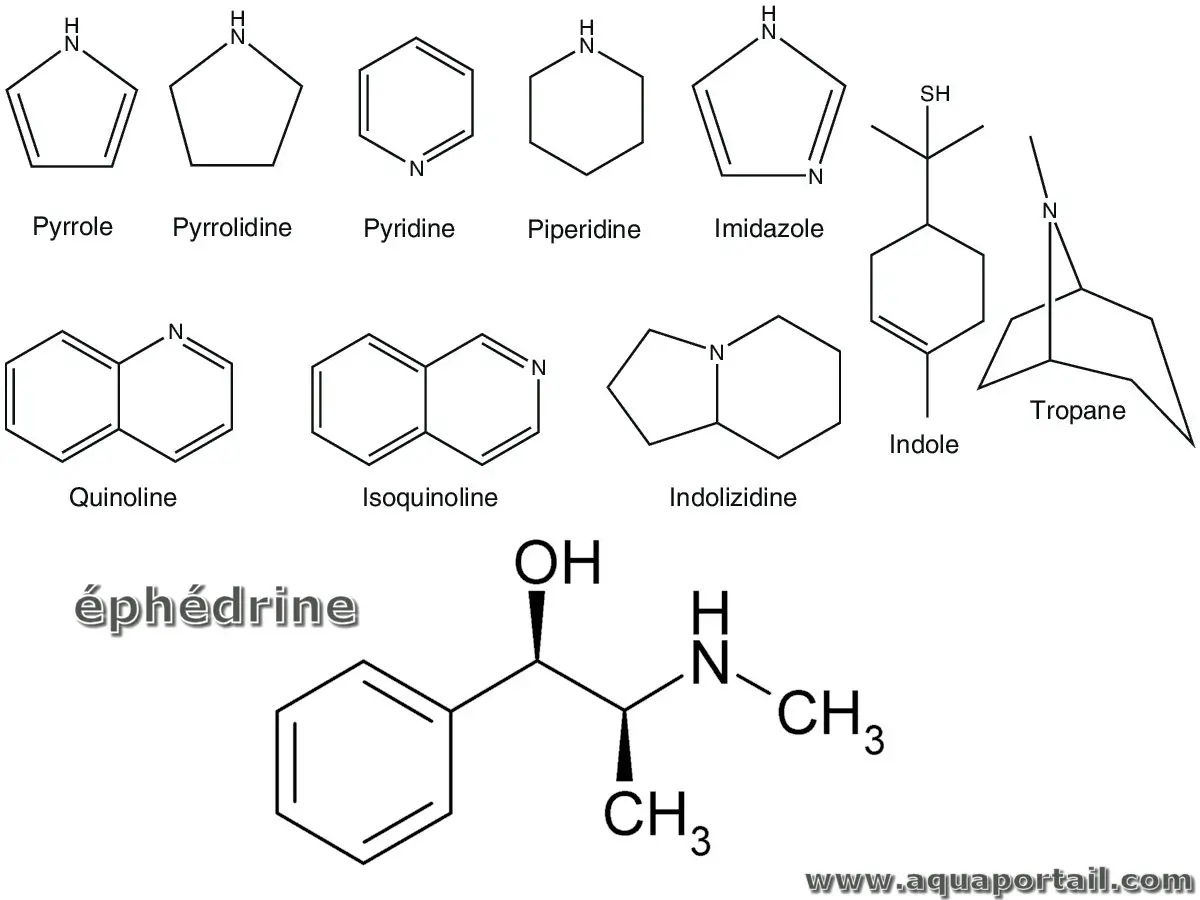
Alkaloids share basic nitrogen atoms in common. The name comes from the word alkaline and was used to describe any nitrogen-containing alkali. At the bottom of the image is the structure of ephedrine.
Alkaloids and antitumor chemotherapy
Since the 1940s, plant alkaloids have been the subject of intensive research for applications in tumor treatment. Colchicine, isolated from the autumn crocus Colchicum autumnale, was certainly the first to be used as such. This alkaloid prevents the polymerization of cellular structures called "microtubules" and targets their main protein, tubulin. However, colchicine is highly toxic and its use in tumor therapy has now been completely abandoned.
Another class of alkaloids was introduced after colchicine for cancer treatment. These are alkaloids isolated from the Madagascar periwinkle Catharanthus roseus (Apocynaceae) that are effective against the vast majority of human solid tumors, including certain forms of leukemia and/or lymphoma.
These are vinblastine and vincristine. Their molecular mechanism likewise interferes with microtubule dynamics, similar to colchicine. However, among their side effects, they exhibit marked toxicity toward nervous structures, particularly peripheral nerves. For this reason, less toxic derivatives have been synthesized, such as vinorelbine and vinflunine.
Indeed, among their earliest side effects are neuritis and neuropathies involving paresthesia, pallesthesia, shooting pains, and trophic abnormalities. The reason for these effects lies in their mode of action: by interfering with microtubules in nervous structures, they prevent the transport of essential proteins and certain nutrients to peripheral tissues.
From this arises nerve distress. A sound method to mitigate this effect is proper patient hydration and supplementation with B vitamins, all of which exert a beneficial action on peripheral nerve trophism.
Another class of alkaloids currently used in chemotherapy is the "taxanes", alkaloids isolated from the Canada yew Taxus canadensis that are highly active against various human carcinomas and sarcomas, whereas their use in hematologic malignancies is nil.
Their mechanism of action is the exact opposite of colchicine's: instead of preventing microtubule assembly, they prevent disassembly needed to form new microtubular structures (a structural "freezing" or stabilizing effect). The first to be tested was paclitaxel; however, derivatives have been synthesized with lower toxicity and greater bioavailability, such as docetaxel.
A final group that has recently entered clinical trials consists of alkaloids isolated from the tree Camptotheca acuminata (commonly called happy tree, cancer tree, or tree of life). The prototype is camptothecin, which does not directly target DNA, but rather a nuclear enzyme responsible for stabilizing the entire genome, topoisomerase. It has proved active against numerous forms of solid tumors, and several derivatives that are slightly more effective while being less toxic have also been synthesized.
In the 1980s, more than thirty alkaloids from various plant sources were studied. Some proved extremely effective in eliminating induced tumors and leukemias in animal models. However, their systemic toxicity remained too high to allow their introduction into human therapy. The most effective among them were:
- acronycine from Acronychia baueri
- thalicarpine from Thalictrum dasycarpum
- tetrandrine from Stephania tetrandra
- cepharanthine from Stephania cepharantha
- rutaecarpine from Evodia rutaecarpa
- ellipticine from Derris elliptica
This last molecule has attracted intense interest in oncology over the past few years. Its 9-hydroxy derivative can indeed bind certain mutated (inactive) forms of the well-known tumor suppressor p53 (responsible for the onset of solid tumors) and restore its proper function.
Laboratory studies are underway to understand the mechanism by which this molecule interferes with tumor progression through manipulation of the p53 protein. Still regarding acronycine, one of its derivatives (S 23906) is currently in phase II clinical trials, as it has yielded very promising results.
Synonyms, antonyms
Spanish translation: alcaloide
6 synonyms (similar meaning) for "alkaloid":
- caffeine
- glycoalkaloid
- morphine
- nicotine
- polycyclic alkaloid
- strychnine
0 antonyms (opposite meaning).
Related words and expressions to ALKALOID are directly connected by general or specific meaning.
The word ALKALOID is listed on page 1 of words starting with A in the dictionary glossary.
Related to "alkaloid"
abiotic

In biology and ecology, abiotic refers to what is not biotic, that is, not part of living beings.
aboral

Aboral refers to what is situated away from or opposite the mouth in zoology, and especially in marine biology.
absence

Absence refers to non-presence at an expected location, or the complete non-existence of something.
acetyltransferase
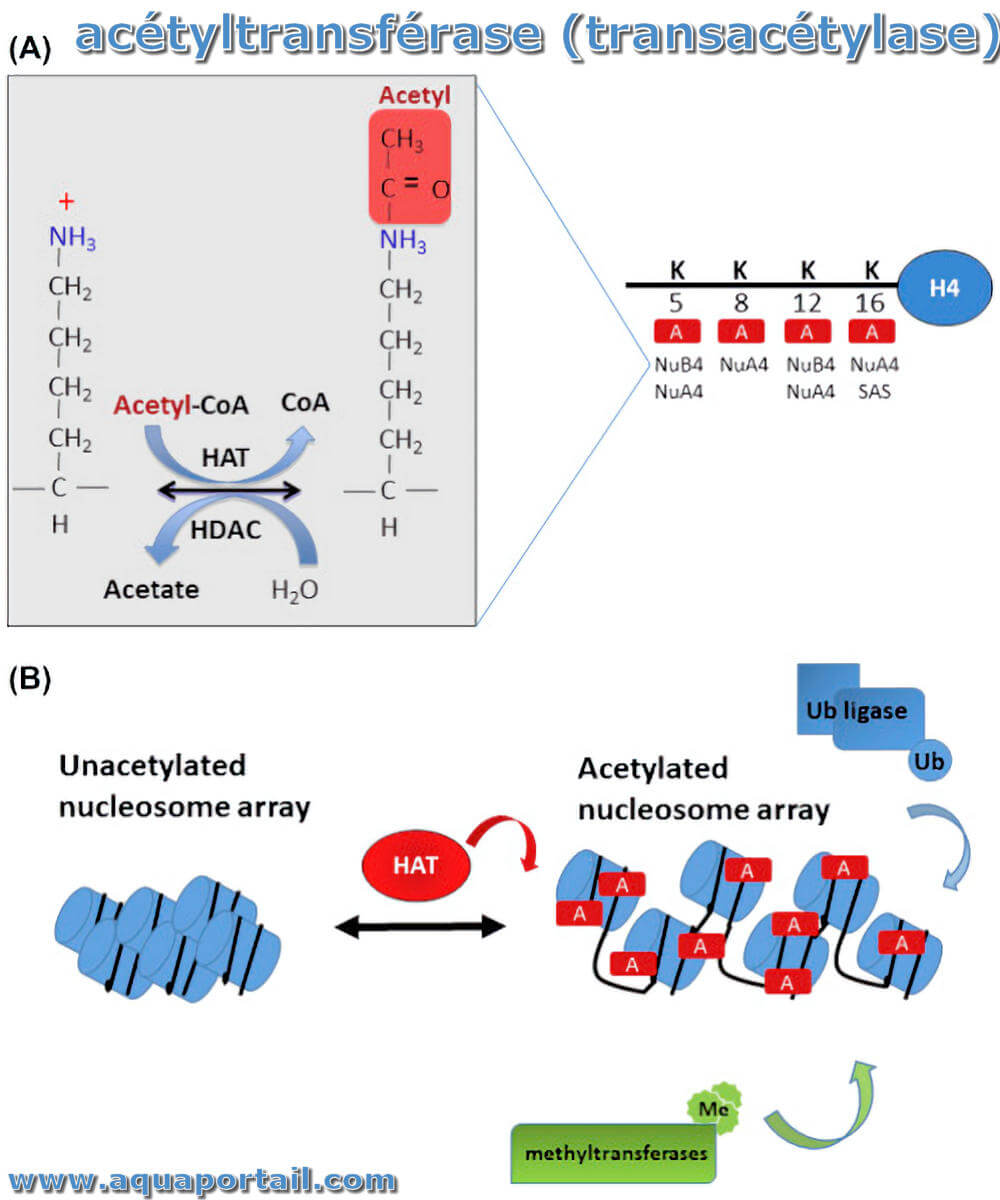
An acetyltransferase is an enzyme that transfers an acetyl group from acetyl-CoA to lysine amino acids.
Simple summary
An alkaloid is an organic substance of plant origin containing amine groups that confer a basic character to its structure, and exerting strong pharmacological effects upon absorption of small doses (for example caffeine, morphine, strychnine).
