Benzoquinone
noun (n.)
Definition
Benzoquinone is a simple quinone (a non-aromatic unsaturated cyclic compound) derived notably from the oxidation of hydroquinone, exhibiting the chemical properties of both a conjugated diketone and an alkene. With the molecular formula C6H4O2, it exists as two isomers: 1,4-benzoquinone and 1,2-benzoquinone.The benzoquinone core is a fundamental subunit of many natural quinones and occurs in plant pigments such as those in safflower. It is a crystalline solid sparingly soluble in cold water, soluble in organic solvents, and reactive in alkaline media.
Reaction from hydroquinone to benzoquinone:
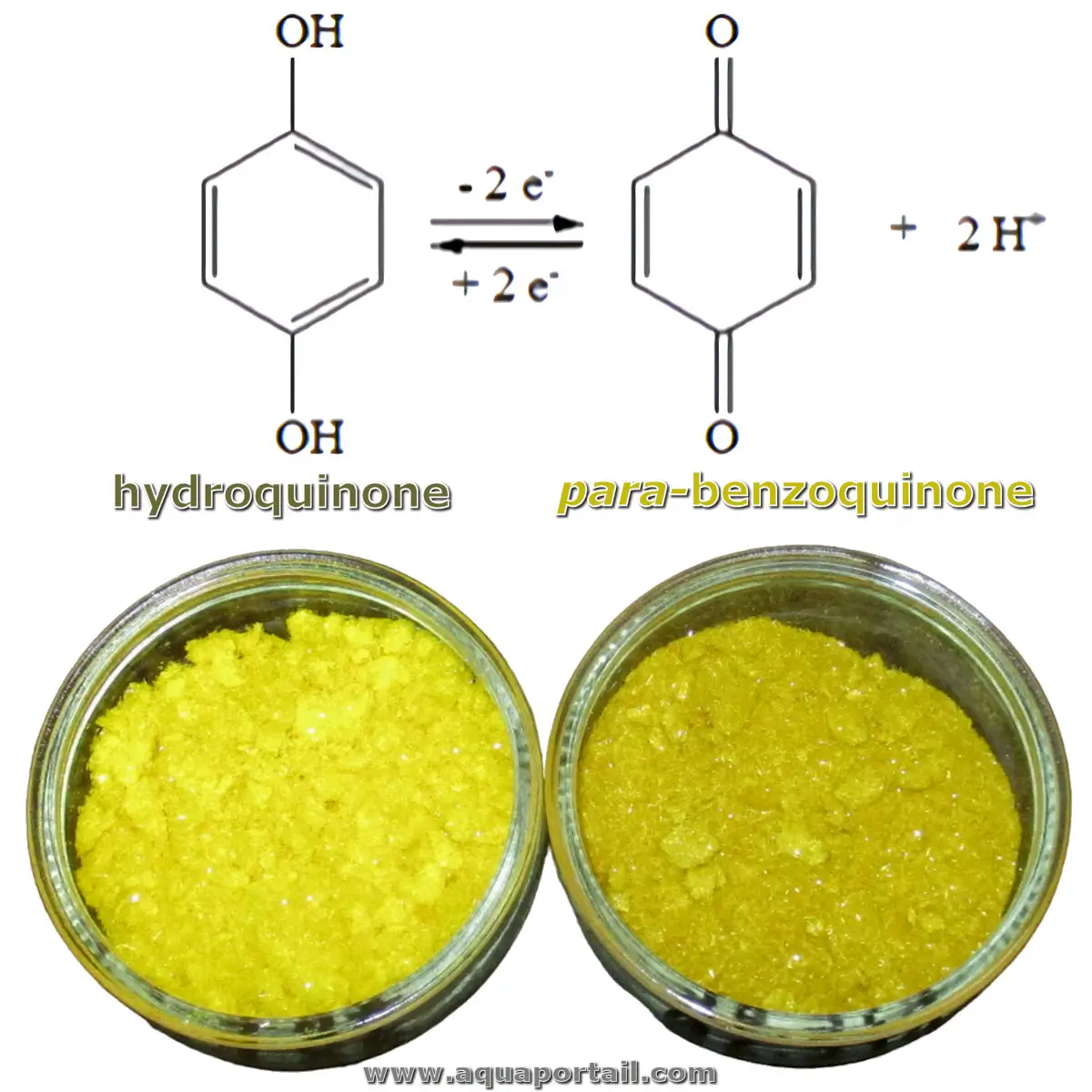
Diagram of the half-reaction converting hydroquinone into p-benzoquinone (p- for para-).
Explanations
1,4-Benzoquinone is used as an intermediate in dye manufacturing and as a photographic chemical. It is also an oxidative metabolite of benzene, acting as a cofactor, a human xenobiotic metabolite, and a mouse metabolite. It is the simplest member of the 1,4-benzoquinone class, obtained by formal oxidation of hydroquinone to the corresponding diketone.
Chemically, 1,4-benzoquinone is also called para-benzoquinone. A related quinoid plant pigment is carthamin (Natural Red 26), found in the florets of safflower (Carthamus tinctorius, a dye plant). C. tinctorius exhibits studied pharmacological activities, including anti-inflammatory, antioxidant, and analgesic effects. Benzoquinone dyes can also be extracted using dilute ammonia from certain fungi and lichens.
✅ Benzoquinone can be characterized by its ultraviolet-visible (λmax around 243, 280, and 440 nm) and infrared absorption spectra. Ubiquinone (coenzyme Q10), a benzoquinone of major biological importance in the respiratory electron transport chain, was initially isolated from animal tissues and baker's yeast.
Both p-benzoquinone (1,4-para) and o-benzoquinone (1,2-ortho) possess cyclic cyclohexadienedione structures. As such, they are not strictly aromatic compounds, yet they are directly related to the corresponding aromatic dihydroxybenzenes (hydroquinone and catechol, respectively), into which they are readily converted upon reduction.
🚩 p-Benzoquinone is toxic and irritating upon inhalation; contact with skin or eyes can cause severe irritation, brownish skin staining, and ulceration upon prolonged exposure.
Other uses
p-Benzoquinone is employed as a dienophile in Diels-Alder cycloadditions to synthesize naphthoquinones and 1,4-phenanthrenediones. It acts as a dehydrogenation reagent and mild oxidant in synthetic organic chemistry. In the Thiele-Winter reaction, it reacts with acetic anhydride and sulfuric acid to yield hydroxyquinol triacetate. It is also used as a precursor to hydroquinone, which finds applications in photography and as an antioxidant in rubber manufacturing.
Synonyms, antonyms
Spanish translation: benzoquinona
3 synonyms (similar meaning) for "benzoquinone":
- 4-dione
- 5-diene-1
- cyclohexa-2
0 antonyms (opposite meaning).
Related words and expressions to BENZOQUINONE are directly connected by general or specific meaning.
The word BENZOQUINONE is listed on page 1 of words starting with B in the dictionary glossary.
Related to "benzoquinone"
bacterial artificial chromosome

A bacterial artificial chromosome (BAC) is a DNA construct, based on a functional fertility plasmid or F-factor, used for transformation and bacterial cloning...
bacteriochlorophyll

A bacteriochlorophyll (BChl) is a pigment of photosynthetic eubacteria other than cyanobacteria, yet containing chlorophyll and able to carry...
bacteriorhodopsin
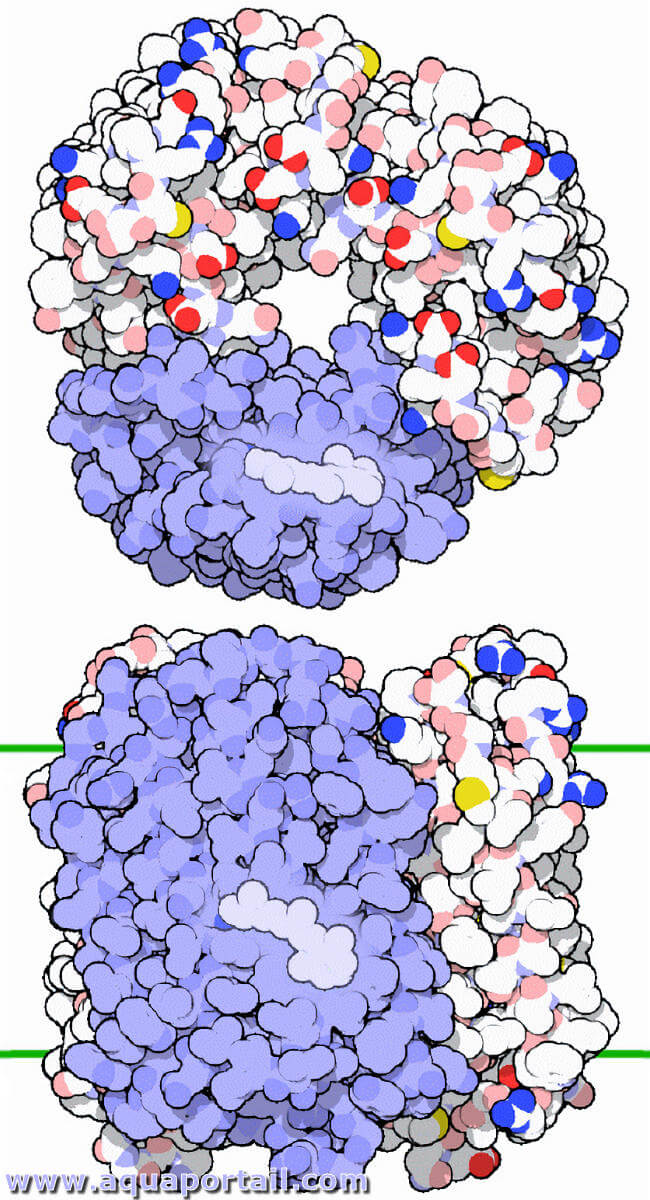
Bacteriorhodopsin (or proteorhodopsin) is a pigment of extreme halophilic photosynthetic archaebacteria.
bacterium

A bacterium is a unicellular prokaryotic microorganism, primarily round, spiral, or rod-shaped, that generally lives in soil, water, organic matter...
