Anastomosis
noun (n.)
Definition
An anastomosis is a fusion of adjacent branches leading to the formation of a network. It is thus a connection between structures of the same kind termed anastomosing (between blood vessels, veins, nerves, channels...). Example of an anastomosis: intercellular junctions known as gap junctions.
Anastomosing branches of a gorgonian:

Certain gorgonians develop anastomosing branches. The giant sea fan, of the family Subergorgiidae, produces anastomosed branches.
Explanations
Anastomosis is a term used in biology, mycology, medicine, and geology designating the union of certain anatomical elements with others of the same plant, animal, or mineral structure. Such structures are termed anastomosed.
Mycology
An anastomosis group refers to a set of strains or individuals of the same fungal species that, exhibiting different virulence or compatibility traits, are able to fuse their hyphae and undergo plasmogamy (fusion of cytoplasmic contents). Consequently, they may display different traits or symptoms from those produced by an individual isolate. The most typical example is Rhizoctonia solani, which has several recognized anastomosis groups.
Clamp connection (anastomosis loop)
In basidiomycete fungi, a clamp connection (anastomosis loop) is a small hook-like or loop-like structure associated with the hypha at each septum of the dikaryotic mycelium.
The loop assists in distributing the two daughter nuclei during conjugate division on either side of the forming septum.
Geology
In geology and geomorphology, anastomosis refers to veins of quartz (or another mineral) exhibiting this networked pattern, often associated with deformation or sections in metamorphic regions.
There is also a stream type called an anastomosing river or channel, consisting of multiple interconnected channels that divide and rejoin around stable islands. Examples of watercourses with anastomosing formations include the Magdalena River in Colombia, the Columbia River in British Columbia, Canada, and the Narew River in Poland.
Medicine
In medicine, an anastomosis is the joining or reconstruction of generally similar anatomical elements during a surgical procedure involving various suturing or stapling techniques after resection of a typically diseased portion. For example, an anastomosis between loops of the small or large intestine following resection of a cancer, tumor, or inflammatory disease. These can take different morphologies or configurations. Connections made between vessels—arteries, veins, etc.—in vascular surgery, urologic surgery (ureters, bladder, intestinal diversions), and even those performed between peripheral nerves for limb replantation are also called anastomoses. In nephrology, anastomoses are also used to create arteriovenous fistulas that facilitate vascular access for hemodialysis (with or without a synthetic graft).
Anastomosis of blood vessels is the union of small-caliber blood vessels with one of larger diameter or thickness, or between two vessels. It generally reperfuses an ischemic region via surrounding collateral blood flow. They are classified into anastomosis by inosculation (most common, as in digital arteries), by anastomotic channel (circle of Willis), and by convergence (basilar artery).
Arterial anastomosis occurs in the coronary circulation when two vessels supply the same myocardial territory.
Synonyms, antonyms
Spanish translation: anastomosis
1 synonym (similar meaning) for "anastomosis":
0 antonyms (opposite meaning).
Related words and expressions to ANASTOMOSIS are directly connected by general or specific meaning.
The word ANASTOMOSIS is listed on page 1 of words starting with A in the dictionary glossary.
Related to "anastomosis"
anastomosed

What is anastomosed has two joined structures that communicate with each other (for example, the medullary filaments of kelps).
osmosis
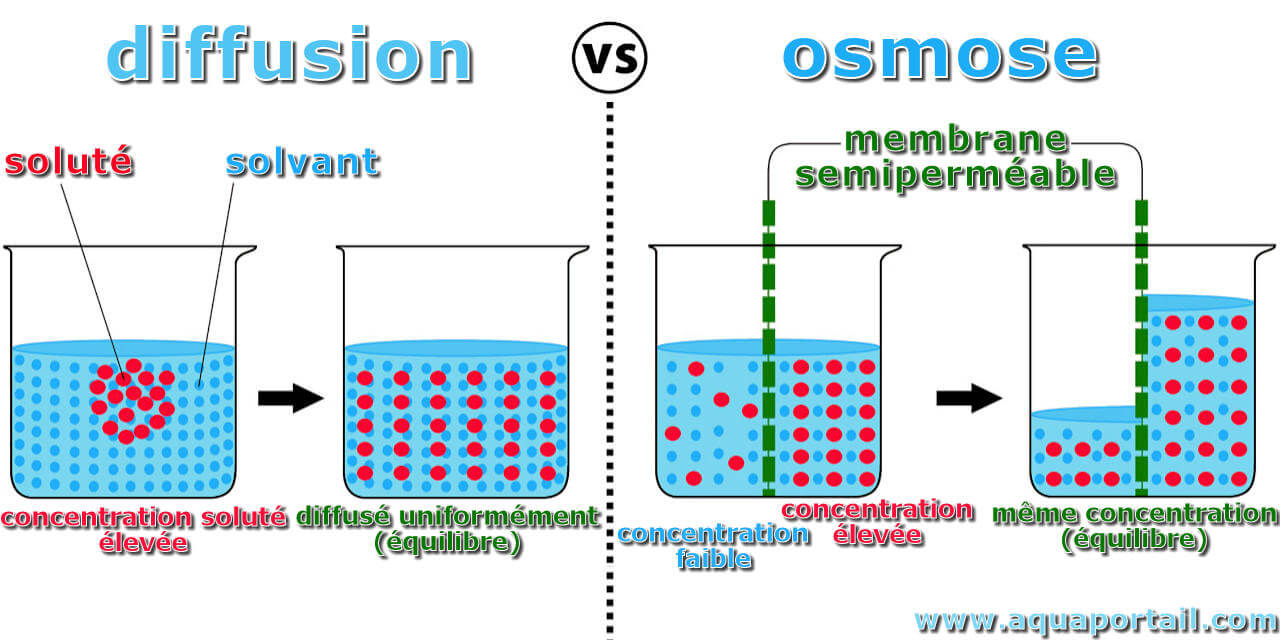
Osmosis is the spontaneous movement of solvent molecules from a region of low solute concentration to a region of high solute concentration across...
abiotic

In biology and ecology, abiotic refers to what is not biotic, that is, not part of living beings.
aboral

Aboral refers to what is situated away from or opposite the mouth in zoology, and especially in marine biology.
