Amyloplast
noun (n.)
Definition
An amyloplast is a colorless plastid that accumulates starch, widespread in the plant kingdom. This type of leucoplast eventually becomes a starch grain after the disappearance of plastidial sucrose. Amylolysis and phosphorolysis, the two pathways of starch catabolism, are carried out by amyloplasts.
Amyloplasts and starch grains:
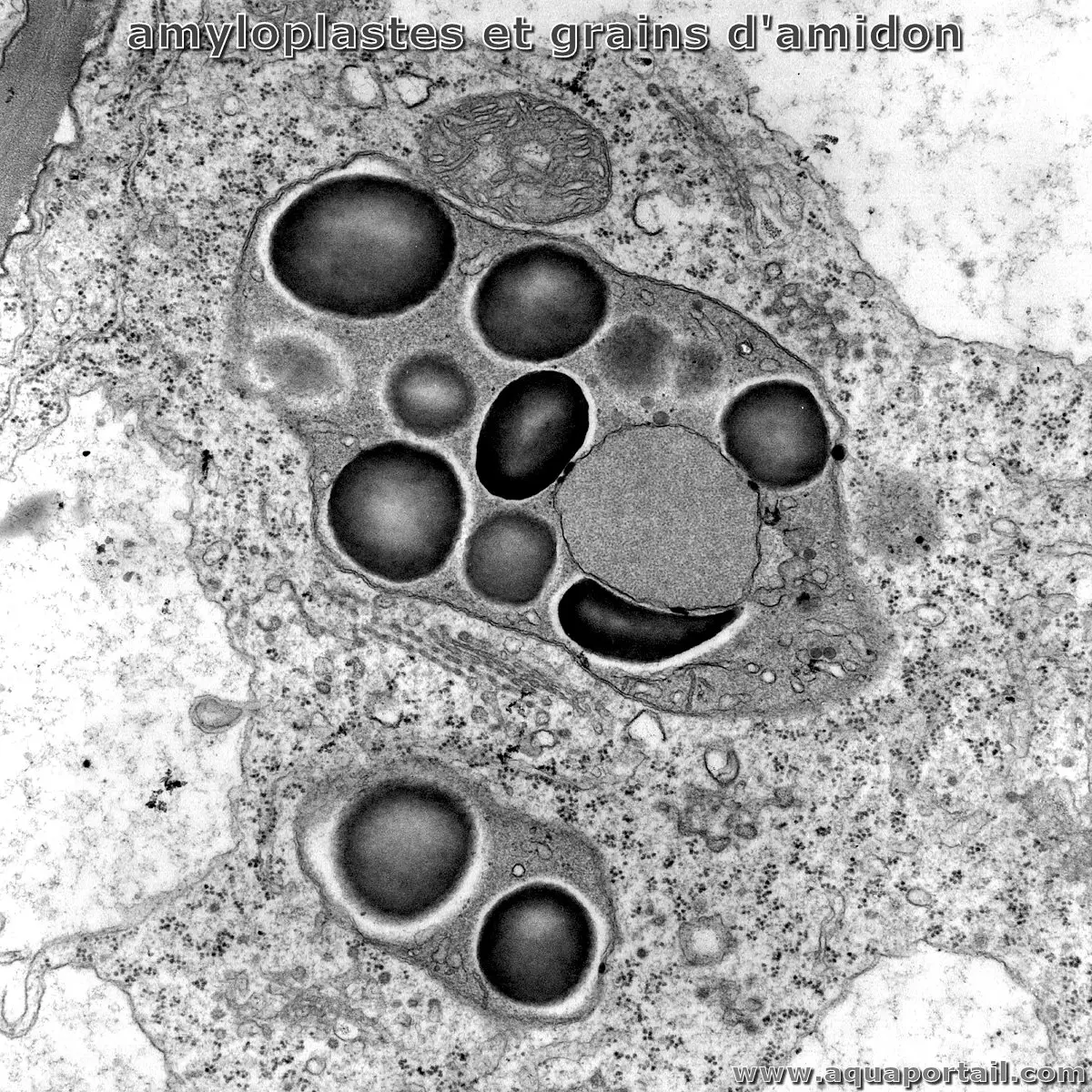
An amyloplast is a plastid used for starch storage in plant cell ultrastructure. Plants and green algae all store starch associated with plastids that possess two unit membranes. Starch is synthesized from sucrose, a carbohydrate and sugar produced by the plant during photosynthesis, and used as an energy source. It is stored as grains in structures called amyloplasts.
Explanations
An amyloplast is a specific organelle (leucoplast) of plant cells, colorless because it lacks pigments. Specialized in starch storage, it becomes a future starch grain. Some, in roots, can develop into chloroplasts under the action of light.
Amyloplasts undergo a differentiation process, and starches are modified for the storage of hydrolysis products. At the early cotyledon stage, embryos use sucrose primarily for starch synthesis.
⭐ If the plastid contains inactive pigments (present but inactive), it is an etioplast or a proplastid. If active pigments (chlorophyll) are present in the cell, it is a chloroplast.
Amyloplasts seen under a microscope:
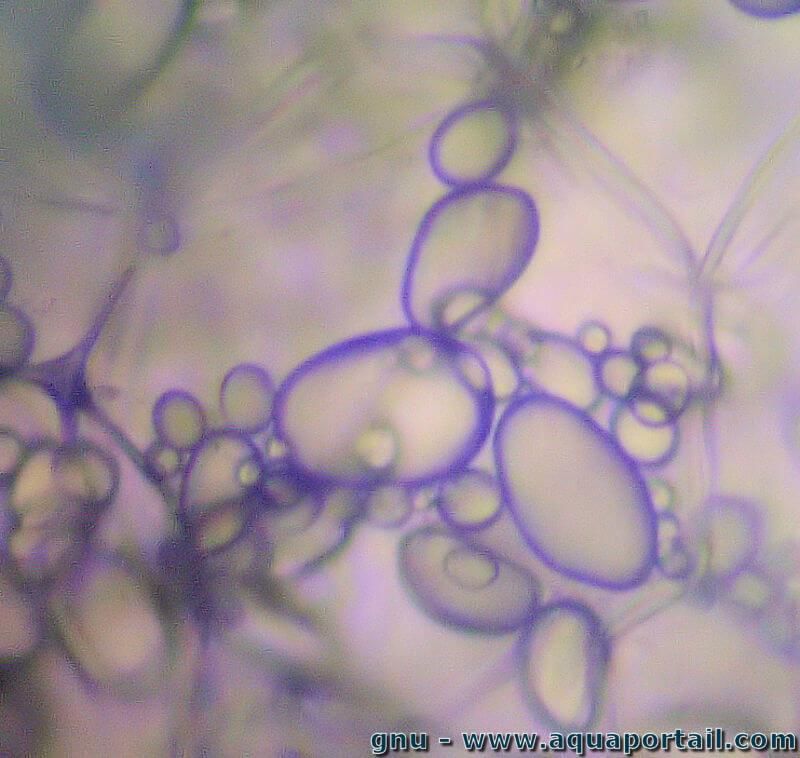
Amyloplasts (or starch-containing leucoplasts) are organelles present in storage parenchyma cells to store starch. Some can become chloroplasts, typically in initially underground roots that become exposed to light.
Amyloplasts can form from proplastids by deposition in the stroma or in vesicles derived from the inner membrane (into thylakoids and grana). They are located in the meristem, in storage tissues such as cotyledons, endosperm, tubers, and cells associated with positive geotropism (gravitropism), though they are most abundant in storage tissues of stems, roots, and seeds.
Amyloplasts are colorless organelles containing starch, a polysaccharide that is a common nutrient in plant cells, protists, and certain bacteria; they usually appear as granules visible under a microscope.
Specialized amyloplasts serve for root gravimetric orientation, acting as "sensors" to direct root growth downward into the soil.
✅ An amyloplast is an organelle found in plant cells. Amyloplasts are plastids that produce and store starch within internal membrane compartments. They are commonly found in vegetative reproductive tissues (vegetative reproduction of plants), such as tubers (potatoes) and bulbs. Amyloplasts are involved in gravity sensing (gravitropism) and help plant roots grow downward.
⭐ Amyloplasts are derived from a group of plastids called leucoplasts. Leucoplasts lack pigmentation and appear colorless. Several other types of plastids are found in plant cells, including chloroplasts (sites of photosynthesis), chromoplasts (produce plant pigments), and gerontoplasts (degraded chloroplasts).
Synonyms, antonyms
Spanish translation: amiloplasto
2 synonyms (similar meaning) for "amyloplast":
1 antonym (opposite meaning):
Related words and expressions to AMYLOPLAST are directly connected by general or specific meaning.
The word AMYLOPLAST is listed on page 1 of words starting with A in the dictionary glossary.
Related to "amyloplast"
archaeoplastid
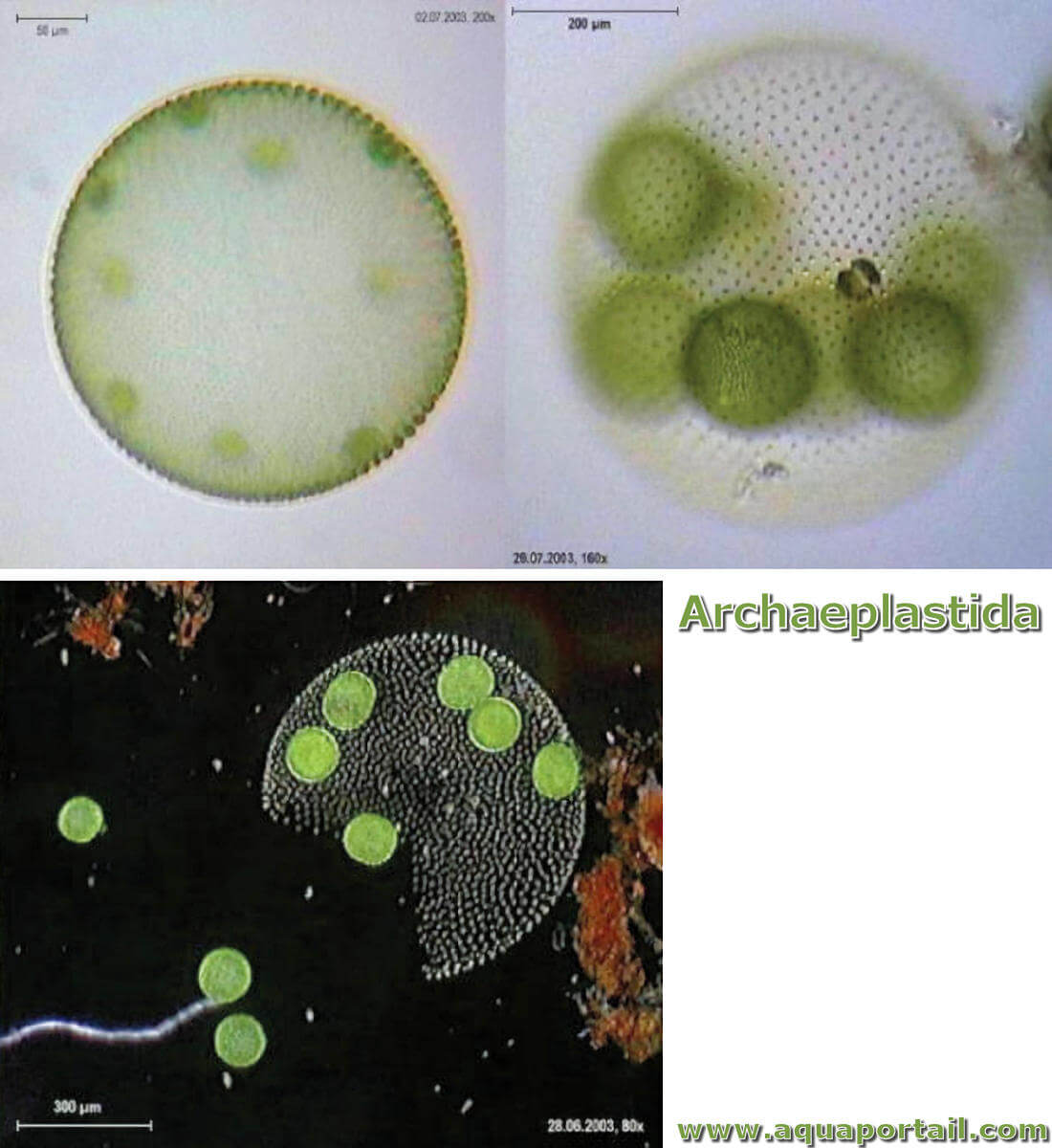
Any plastidome comprising only a single plastid within a cell or syncytium is termed archaeoplastid.
amylopectin

Amylopectin is a fraction of starch composed of molecules (glucans) related to amylose but branched.
amylose
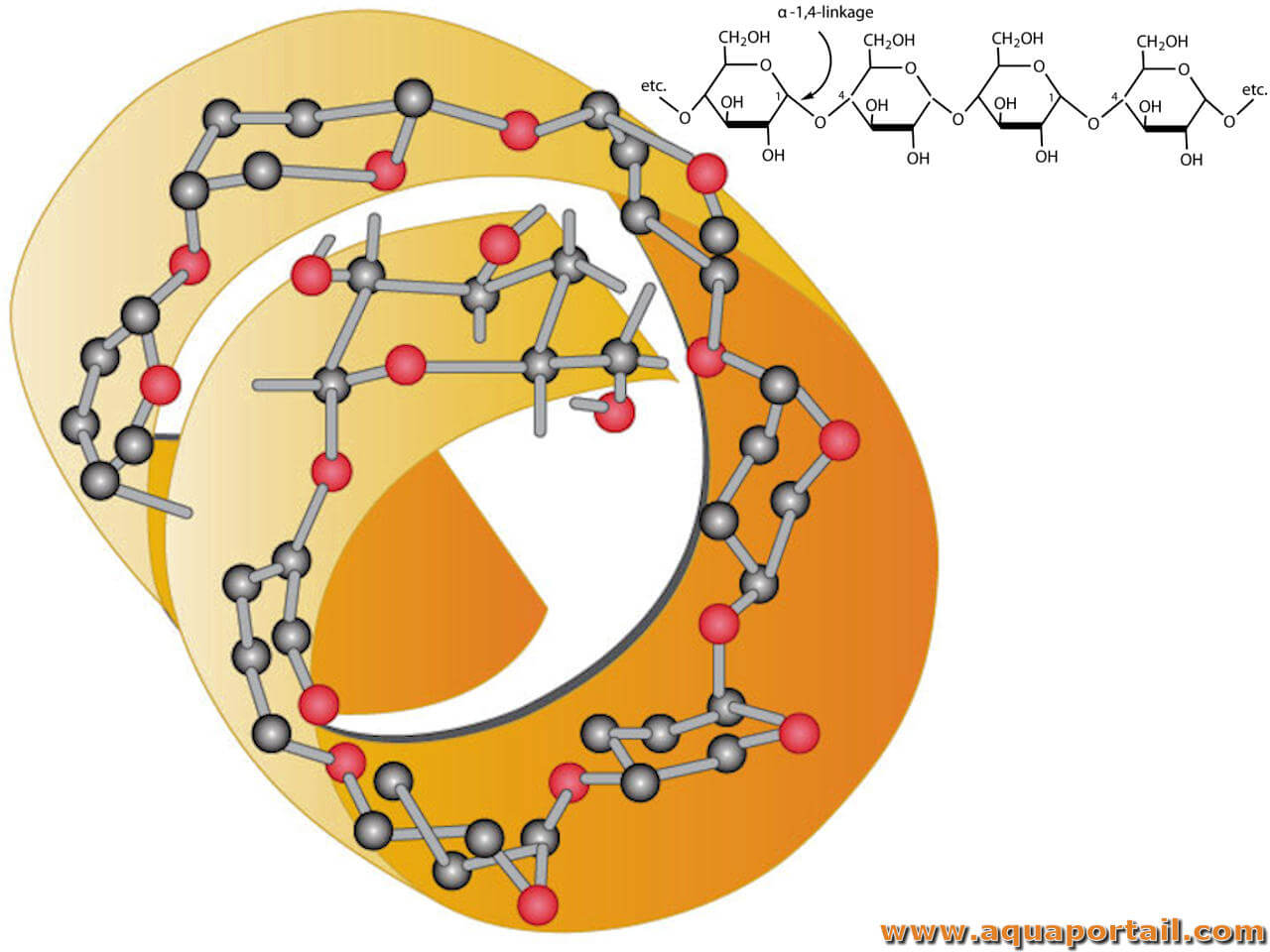
Amylose is a fraction of starch composed of unbranched polysaccharides (glucans) of 300 to 1,000 glucose units joined by α-(1,4) linkages.
abiotic

In biology and ecology, abiotic refers to what is not biotic, that is, not part of living beings.
