Amphipod
noun (n.)
Definition
An amphipod is a small crustacean with a laterally compressed body, included within the Arthropoda. The amphipod group consists mainly of marine crustaceans resembling small shrimp, including gammarids (scuds).
As a staple food for many fish species, amphipods constitute an important link in the food chain.
An amphipod under the microscope:
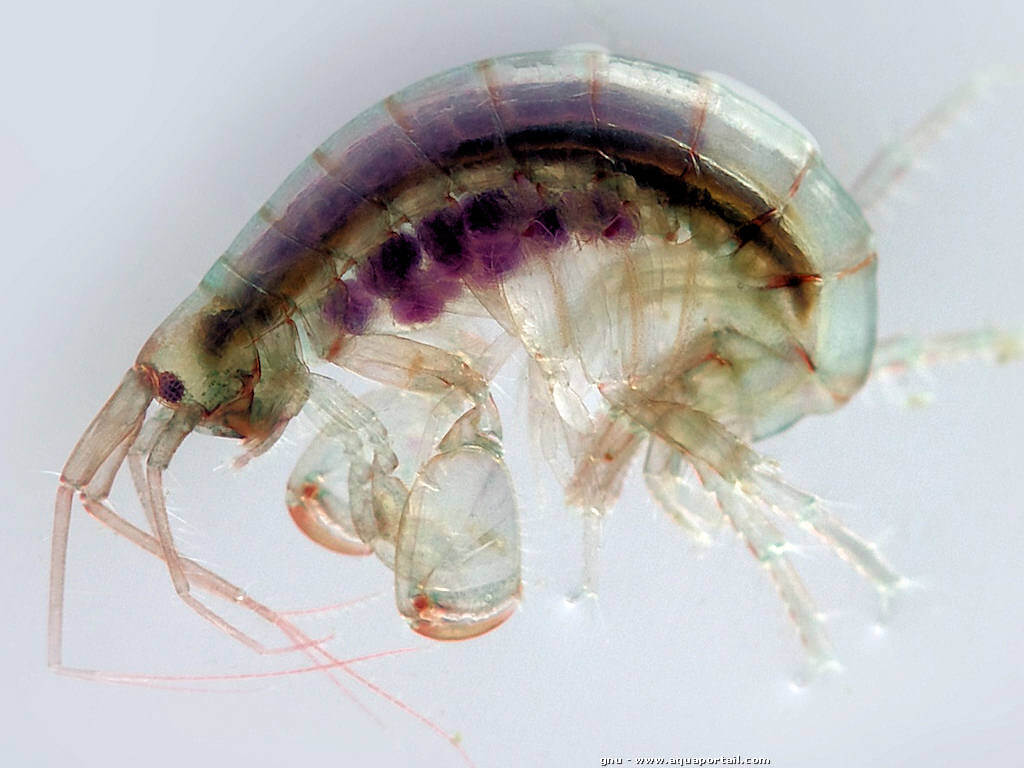
The body of an amphipod is generally very flat, more or less transparent, and hyaline. Most live inside the ocean floor or on its surface (benthos).
Explanations
Amphipods Amphipoda form an order of small malacostracan crustaceans comprising more than 7,000 described species, although the largest, Alicella gigantea, can measure 34 cm (13.4 in). A few species live in freshwater environments, such as hyalella, and a small number of species are limnic or terrestrial.
Marine amphipods can be pelagic (living in the water column) or benthic (living on the sea floor). Pelagic amphipods are eaten by seabirds, fishes, and marine mammals. Terrestrial amphipods such as Talitridae (sandhoppers) live in sand, pebbles, or on beaches.
The amphipod species Epimeria rubrieques:
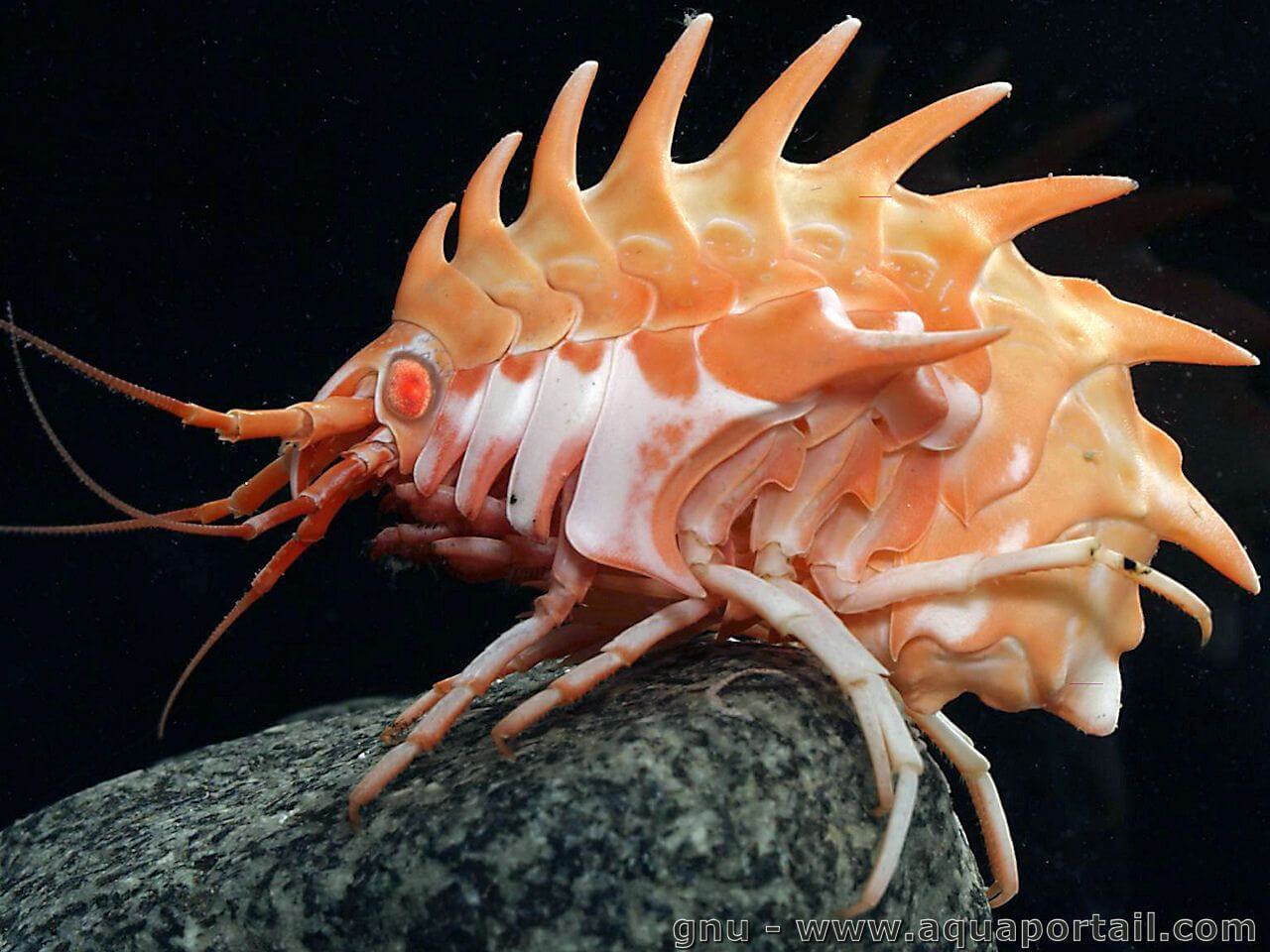
This amphipod is called Epimeria rubrieques. Amphipods are abundant in the deep sea of the Southern Ocean.
Several hundred species have not yet been scientifically identified, but as predators and scavengers, they form an important component of long-term relationships between the open water column and the ocean floor.
Gammarids such as Gammarus locusta are amphipods.
See also isopods and copepods.
Amphipods and isopods are mostly omnivores that feed on benthic organic matter, though they also feed on other animals when possible. Some species feed heavily on plants, including watercress, which is common in spring habitats favored by certain isopods.
Mysids are more predatory and consume zooplankton, migrating amphipods, and newly hatched fish larvae.
Ecological details
Amphipods are "keystone" species in many groundwaters, springs, and spring-fed streams, where they are often the most abundant macroinvertebrates. In these ecosystems, they play a major role in detritus processing and, through this activity, provide large quantities of fecal matter and fine organic particles used as food by other invertebrates. As abundant prey, competitors, and predators, they also have many other major impacts on faunal assemblages in groundwaters and spring streams. However, amphipod species richness in these streams is often very low. Most springs and spring brooks containing amphipods are dominated by a single species, and in these habitats, amphipods rarely coexist in large numbers with other peracarid species (e.g., isopods). Nevertheless, some surface stream and cave communities may consist of several peracarid species exhibiting niche partitioning and longitudinal zonation.
Amphipods are often important components of other aquatic systems where they contribute to nutrient recycling and provide high-quality food to a variety of animals, including crayfish, fishes, amphibians, waterbirds, and semi-aquatic mammals. In fishless alpine lakes of the Canadian Rockies, Gammarus lacustris feeds on zooplankton and can thus significantly affect their community structure.
Amphipods are one of the most important taxonomic groups involved in freshwater biological invasions. Several invasive species originate from the Ponto-Caspian basin (Black Sea, Sea of Azov, and Caspian Sea) and have spread into various European freshwaters, and one (Echinogammarus ischnus) is also present in the Great Lakes of North America. They impact not only native amphipod species, but also the broader animal assemblages they have invaded.
Dikerogammarus villosus, in particular, feeds heavily on a wide variety of macroinvertebrates, including amphipods, isopods, and several types of insects. This species is also resistant to infection by acanthocephalan parasites, unlike other freshwater gammarids. Invasive species often have broader environmental tolerances and/or higher reproductive rates than native species. Some amphipod invasions are the result of deliberate introductions, as occurred with the North American Gammarus tigrinus, which has become established in several European inland waters. Gammarus pulex introduced from Great Britain replaces the native Gammarus duebeni celticus of Ireland, leading to significant changes in macroinvertebrate community structure and in the diet and population dynamics of brown trout Salmo trutta. The Meuse River, which runs 943 km (586 mi) through France, Belgium, and the Netherlands, has experienced waves of amphipod invasions and now harbors seven exotic aquatic species and two native ones.
Synonyms, antonyms
Spanish translation: anfípodo
4 synonyms (similar meaning) for "amphipod":
- copepod
- crustacean
- isopod
- microcrustacean
0 antonyms (opposite meaning).
Related words and expressions to AMPHIPOD are directly connected by general or specific meaning.
The word AMPHIPOD is listed on page 1 of words starting with A in the dictionary glossary.
Related to "amphipod"
isopod
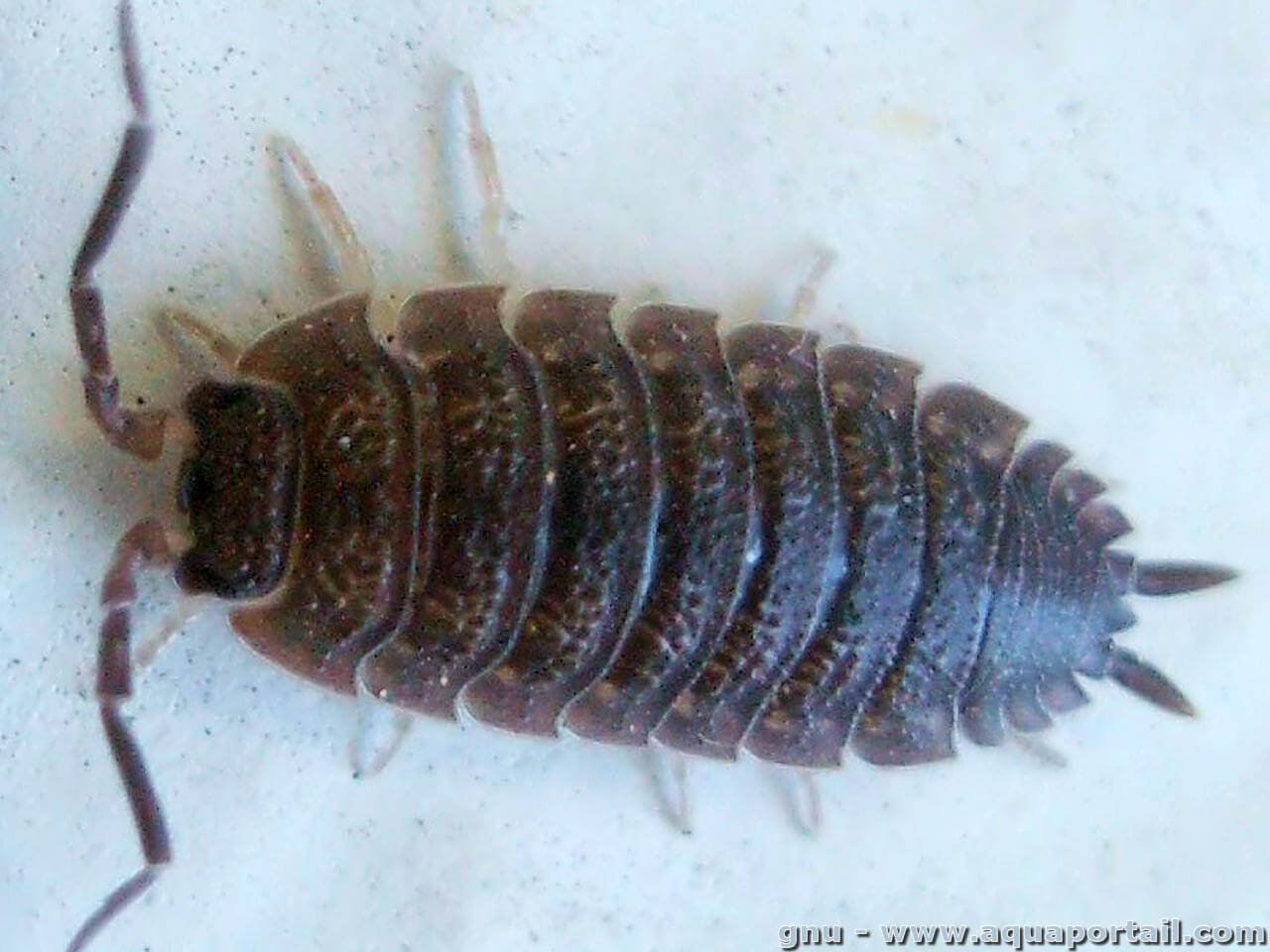
An isopod belongs to one of the most diverse groups of crustaceans, the order Isopoda, which includes numerous marine species as well as terrestrial woodlice.
amphibious
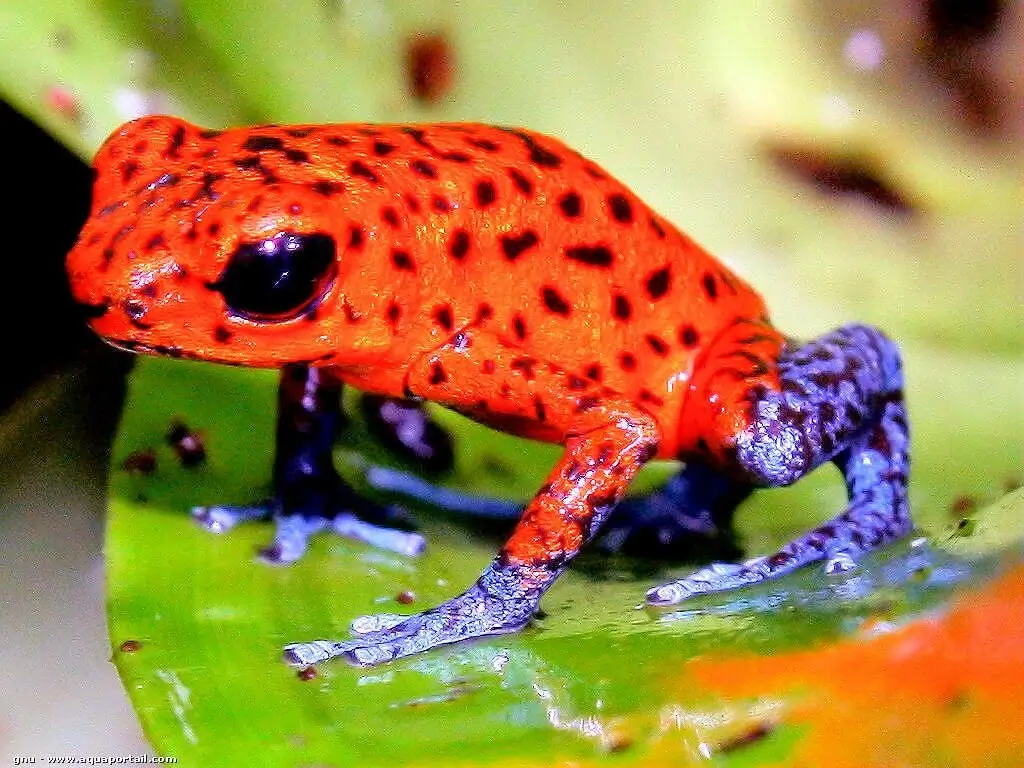
An amphibious animal lives in dependence on water, for reasons other than thirst, while spending part of its life in a terrestrial environment.
amphiesma

The amphiesma is the superficial layer of flattened alveoli, either empty or containing amorphous substances or cellulosic plates.
abiotic

In biology and ecology, abiotic refers to what is not biotic, that is, not part of living beings.
Simple summary
Amphipods constitute an order of small crustaceans with laterally compressed bodies, found in various aquatic environments, notably marine, freshwater, and more rarely terrestrial. Characterized by the absence of a carapace, their body is generally divided into three parts: the head, thorax, and abdomen. Amphipods display a wide diversity of morphological adaptations enabling them to occupy ecological niches ranging from benthic sediments to pelagic zones.
