Amylose
noun (n.)
Definition
Amylose is a fraction of starch composed of unbranched polysaccharides (glucans) of 300 to 1,000 glucose units joined by α-(1,4) linkages. This biopolymer is the component of starch that stains with iodine water.A macromolecule of amylose:
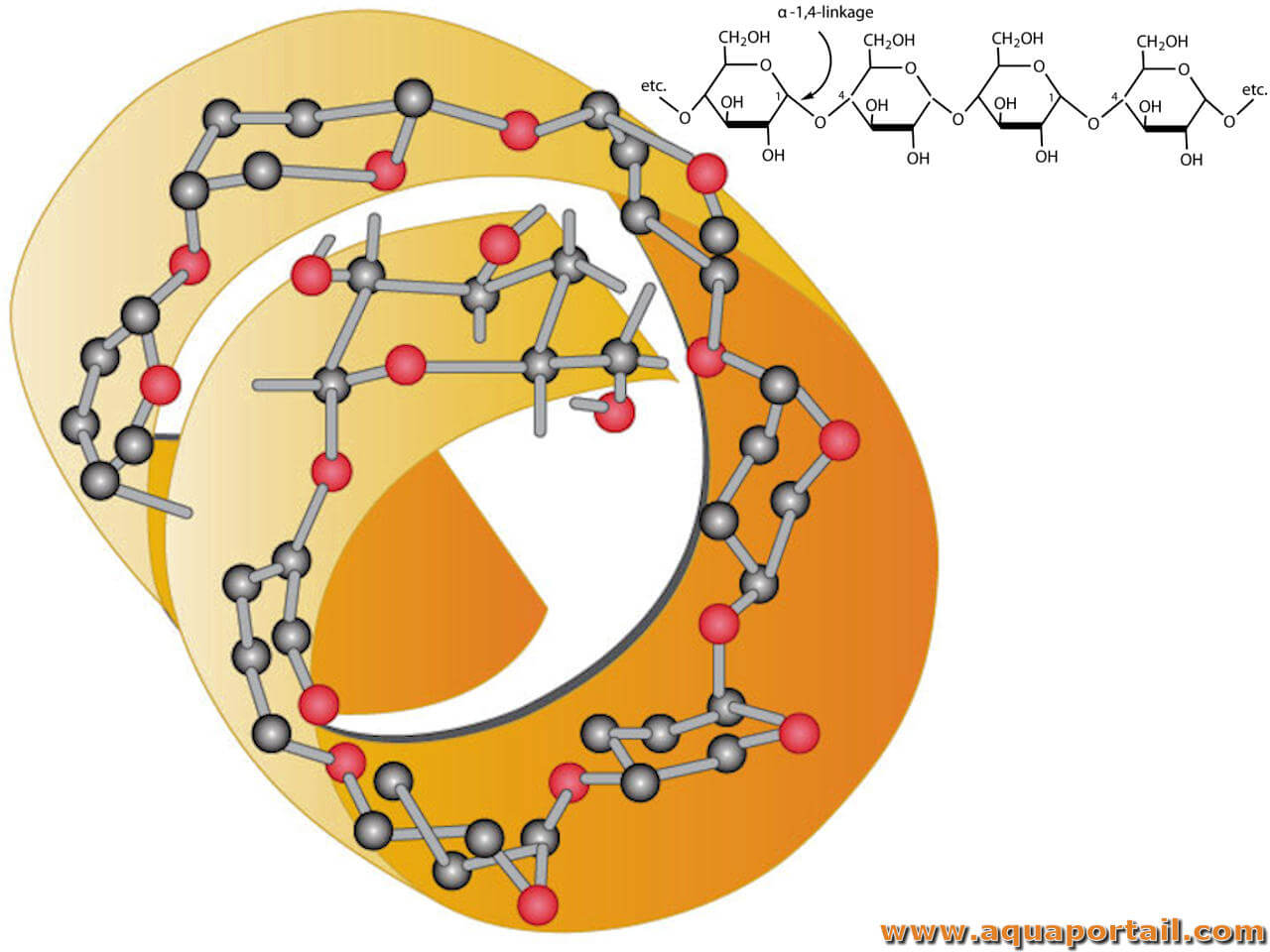
Through hydrogen bonding, amylose acquires a helical structure containing six glucose units per turn.
Explanations
Starch is a mixture of two polymers, amylose and amylopectin. Natural starches consist of about 10 to 30% amylose and 70 to 90% amylopectin. Amylose is a linear polysaccharide composed entirely of D-glucose units joined by the α-1,4-glycosidic bonds seen in maltose.
Amylose is not a straight chain of glucose units, but is rather coiled like a spring, with six glucose monomers per turn. When coiled in this way, amylose has just enough room in its core to accommodate an iodine molecule. The characteristic blue-violet color that appears when starch is treated with iodine is due to the formation of the amylose-iodine complex. This color test is sensitive enough to detect even trace amounts of starch in solution.
✅ The helical structure of amylopectin is disrupted by chain branching, so instead of the deep blue-violet color that amylose produces with iodine, amylopectin yields a less intense reddish-brown.
See amylases and digestion.
⭐ Like amylose, cellulose is a linear polymer of glucose. It differs, however, in that the glucose units are joined by β-1,4-glycosidic bonds, producing a more extended structure than amylose. This extreme linearity allows a large number of hydrogen bonds between OH groups on adjacent chains, causing them to pack tightly into fibers. As a result, cellulose exhibits little interaction with water or any other solvent. Cotton and wood, for example, are completely insoluble in water and have considerable mechanical strength. Since cellulose lacks a helical structure, it does not bind to iodine to form a colored product.
⭐ Both amylose and cellulose are linear biopolymers of glucose units, but the glycosidic linkages between the glucose units differ. The linkages in amylose are α-1,4-glycosidic bonds, whereas the linkages in cellulose are β-1,4-glycosidic bonds.
Disease (amyloidosis)
In biology, amyloidosis (amylose in French) is a rare disease that occurs when a protein called amyloid accumulates in organs. This amyloid buildup can prevent organs from functioning properly. Organs that may be affected include the heart, kidneys, liver, spleen, nervous system, and digestive tract.
Synonyms, antonyms
Spanish translation: amilosa
1 synonym (similar meaning) for "amylose":
0 antonyms (opposite meaning).
Related words and expressions to AMYLOSE are directly connected by general or specific meaning.
The word AMYLOSE is listed on page 1 of words starting with A in the dictionary glossary.
Related to "amylose"
amylopectin

Amylopectin is a fraction of starch composed of molecules (glucans) related to amylose but branched.
starch

Starch, with the chemical formula (C₆H₁₀O₅)n, is a reserve carbohydrate substance in various organisms, composed of more or less branched glucan molecules.
amyloplast
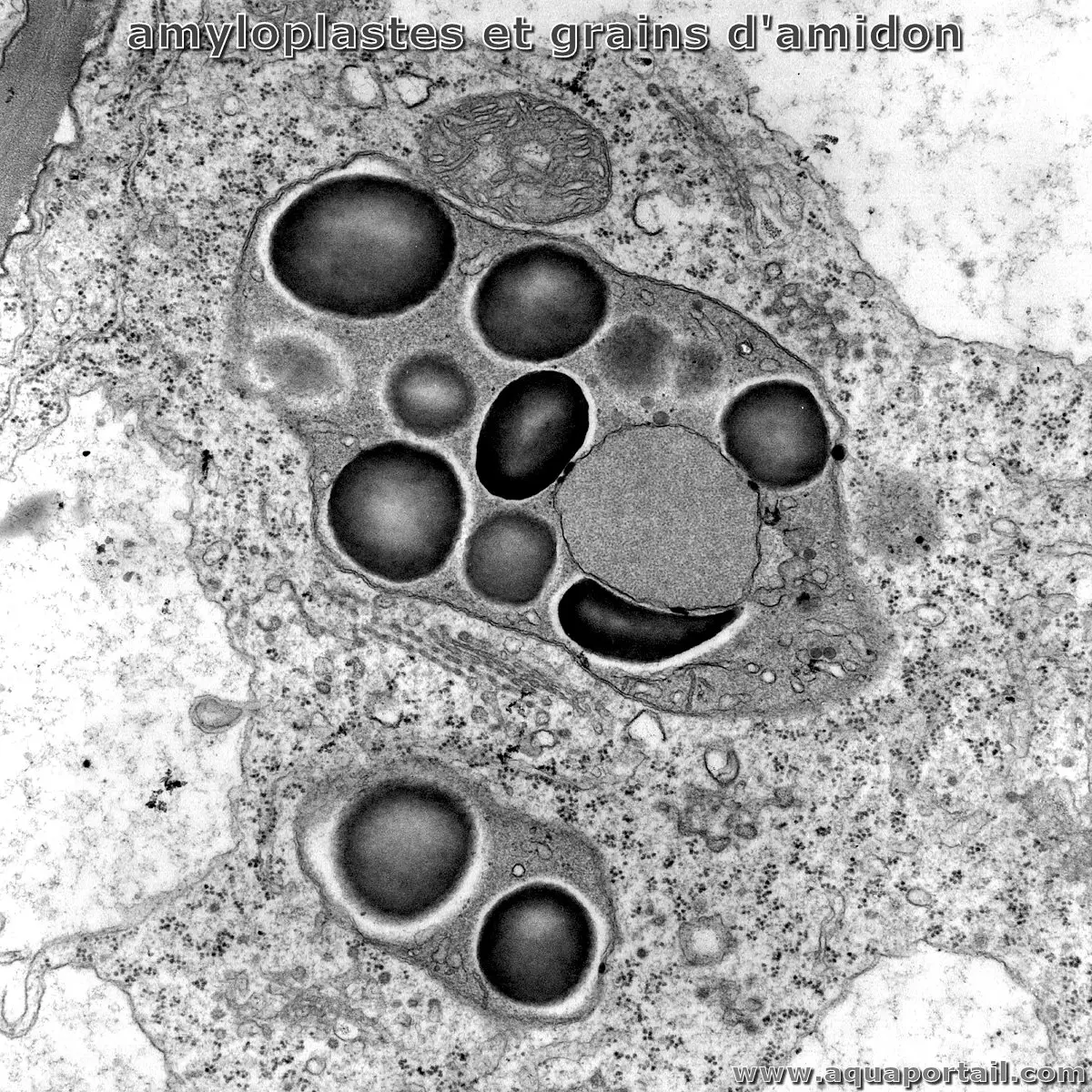
An amyloplast is a colorless plastid that accumulates starch, widespread in the plant kingdom.
xylose

Xylose is an aldehydic sugar (pentose) with the formula CH₂OH-(CHOH)₃-CHO. It is an aldopentose of the plant cell wall (hemicellulose). See xylene.
