Prometaphase
noun (n.)
Definition
Prometaphase is the phase of mitosis following prophase and preceding metaphase during cell division in eukaryotes, involving an equational division. It distributes chromosomes very precisely between daughter cells during cell division. Prometaphase is sometimes simply included as part of late prophase and early metaphase.Prometaphase stage in mitosis:
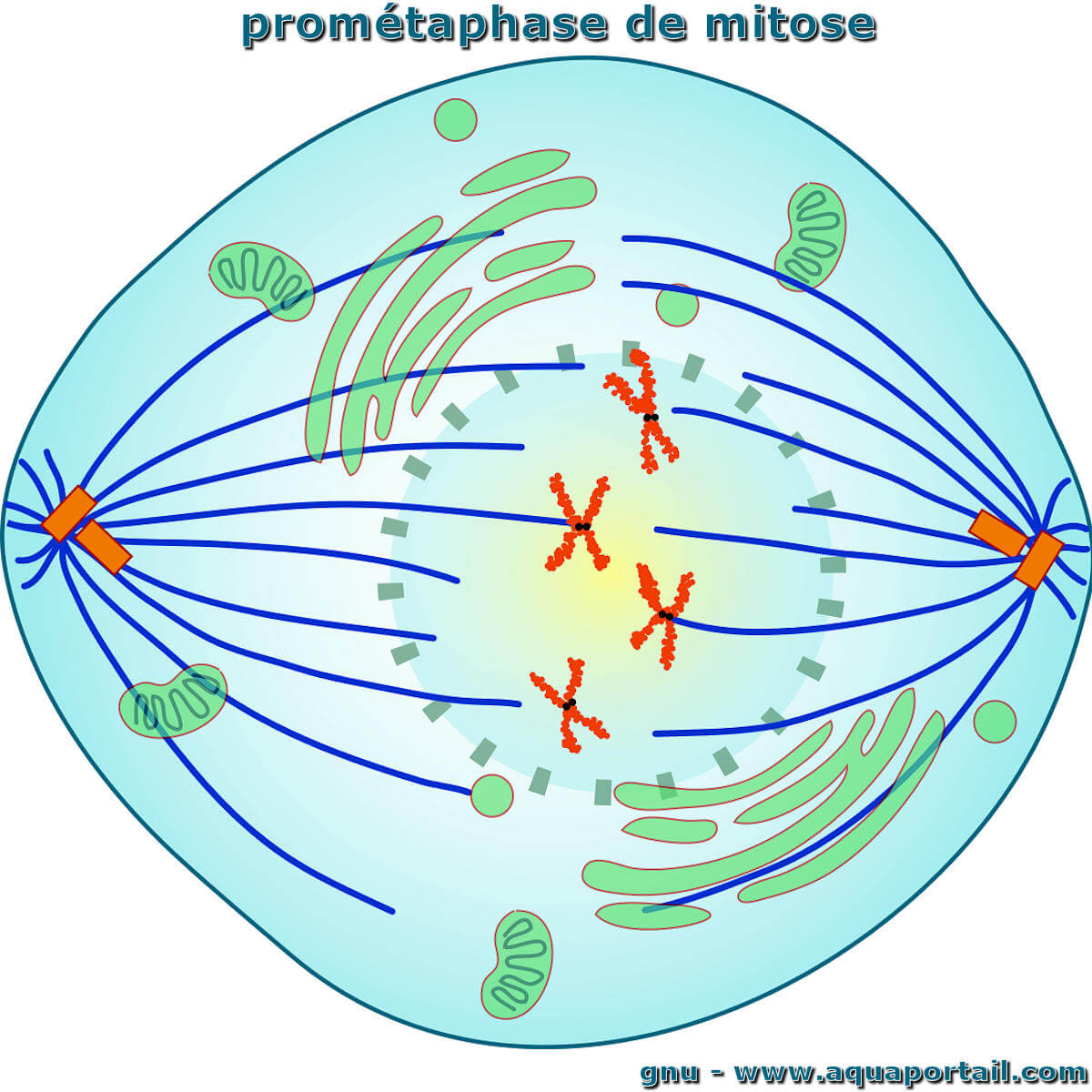
The outcome of prometaphase is a properly bi-oriented chromosome at the metaphase plate with stable kinetochore-microtubule attachment.
Explanations
Prometaphase is the second phase of mitosis, the process that separates the duplicated genetic material carried in the nucleus of a parent cell into two identical daughter cells. During prometaphase, the physical barrier surrounding the nucleus, called the nuclear envelope, breaks down.
Process
When the nuclear envelope breaks down, it allows the kinetochore microtubules of the spindle to attach to the chromosomes. Note the lack of staining and irregular border around the chromosomes, an indication that the nuclear envelope is absent. During metaphase, the chromosomes are aligned at the equator of the cell halfway between the centrosomes. The kinetochore microtubules from both centrosomes have attached to the chromosomes, linking sister chromatids to opposite poles of the spindle.
🚩 Because prokaryotes lack a nucleus, prometaphase cannot occur in them.
Comparison between metaphase and prometaphase:
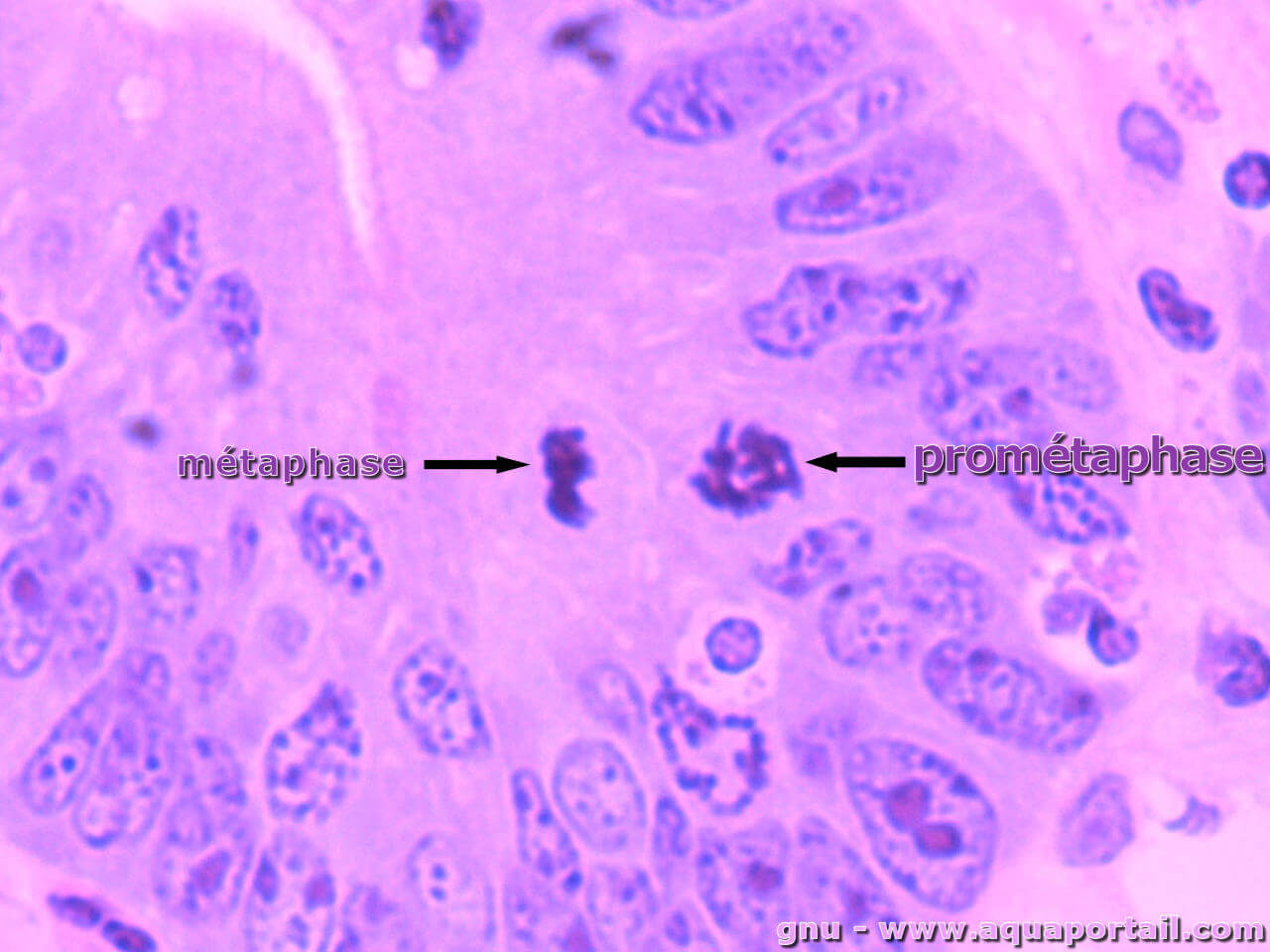
Two cells are undergoing mitosis: on the left, the cell is in metaphase; on the right, another cell is in prometaphase. Prometaphase begins when the nuclear envelope disassembles, exposing nuclear structures and their contents to the cytoplasm.
At prometaphase (late prophase), chromosomes condense inside the nuclear envelope and fiber asters appear outside the chromosomes. Once the nuclear envelope has disappeared, a spindle forms during prometaphase. Spindle fibers comprise bundles of microtubules radiating from opposite ends called cell poles. The chromosomes then migrate toward the equatorial plane where they attach to one of the spindle fibers.
In animal cells, spindle formation occurs via the centrosomes, which are composed of twin centrioles at right angles surrounded by amorphous material.
The centrosome is the main microtubule-organizing center during interphase. The centrosome replicates at the end of the G1 and S phases, and the pair can be observed just outside the nuclear envelope.
⭐ Following interphase and the nearly complete replication of DNA resulting in chromatin condensation, chromosomes become visible. The central centromere is recognizable. At this stage, condensation is not yet complete.
Promitosis is one of the three mitotic modes, characterized by the persistence of the central karyosome, which divides into two polar bodies between which the spindle is established.
Prometaphase in higher plants
Higher plants lack distinct centrosomes, although the nucleation and dynamics of their microtubules suggest that plants possess cell-cycle-dependent microtubule-organizing center (MTOC) activities. The initiation of microtubule polymerization in a cell generally begins from specific nucleation sites called MTOCs.
In most higher plants, the initiation of mitosis is characterized by two successive events involving different microtubule populations: the production of the preprophase band and the development of the bipolar spindle. cytoplasmic microtubules of higher plants radiate from the nuclear surface toward the cell cortex. This is one of the distinctive features of the plant cytoskeleton compared to other cell types.
The nuclear surface of the plant may possess MTOC activity, which may represent one of the key factors controlling the initiation of mitosis. Experimental evidence supports the role of the plant nuclear surface as a microtubule nucleation site. When mitosis begins and chromosomes undergo condensation, tubulin incorporation has been shown to increase on the nuclear surface of endosperm cells of Haemanthus (South African plants) in prophase, potentially representing cell-cycle-dependent control of nucleation.
The formation of the bipolar spindle around the nucleus is achieved through a transient convergence of microtubules forming aster-like centers, which subsequently produce spindle poles. This enhanced microtubule interaction is thought to be mediated by specific microtubule-associated proteins (MAPs). Calmodulin is found at higher concentrations in the centriolar polar regions of animal cells. It is also found in these prophase microtubule centers, suggesting that a calmodulin-regulated mechanism exists in higher plants.
The major chromosomal event of prometaphase is the attachment of chromosomes to the spindle and their movement toward the center of the spindle. Chromosome attachment to the spindle occurs at the kinetochore, which contains proteins for chromatid binding. Breakdown of the nuclear envelope allows kinetochores to attach to spindle microtubules.
Synonyms, antonyms
Spanish translation: prometafase
2 synonyms (similar meaning) for "prometaphase":
0 antonyms (opposite meaning).
Related words and expressions to PROMETAPHASE are directly connected by general or specific meaning.
The word PROMETAPHASE is listed on page 1 of words starting with P in the dictionary glossary.
Related to "prometaphase"
interphase
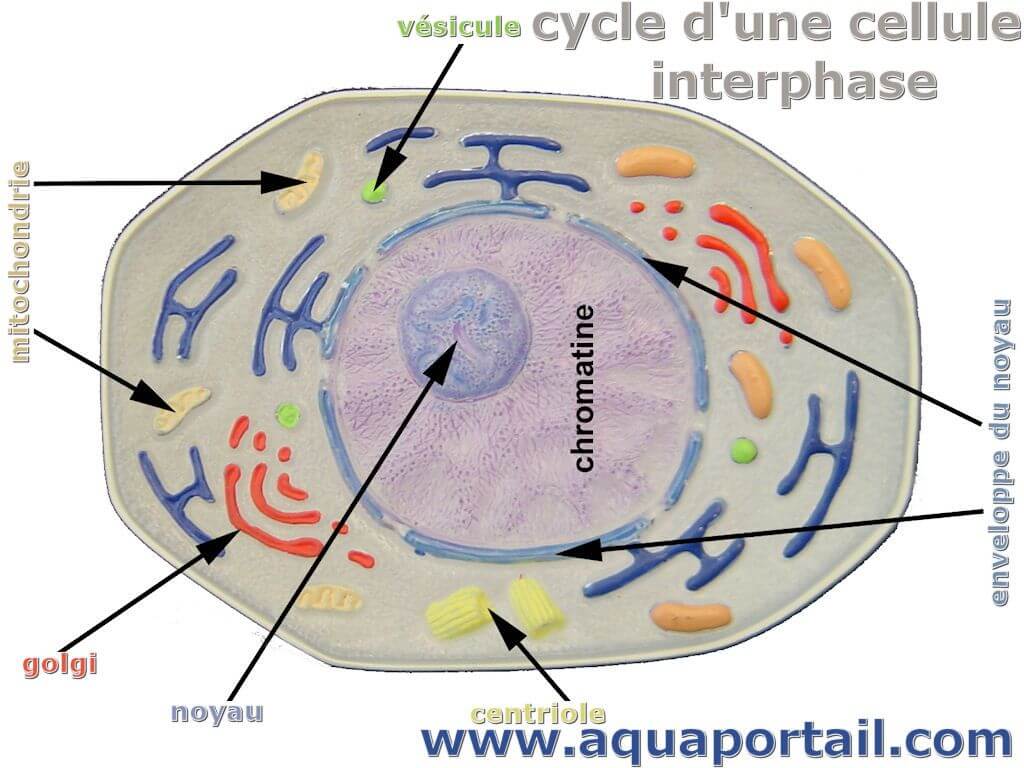
In cell biology, interphase or the resting stage is the first stage of the cell's life cycle and the time when the cell carries out its cellular maintenance...
paedomorphosis

Paedomorphosis (juvenilization) is a phylogenetic change involving the retention of juvenile or even larval traits into a later (adult) stage.
pandemic

A pandemic is the widespread outbreak of an epidemic infectious disease across a vast geographic area at a given time.
parchment

Historically, true parchment is animal skin prepared (limed, dried, thinned, dressed) to write or print upon.
Simple summary
Prometaphase is a phase of mitosis that follows prophase and precedes metaphase. During this phase, key cellular events facilitate the alignment of chromosomes in preparation for their segregation. The nuclear envelope disintegrates, allowing microtubules of the mitotic spindle to access the chromosomes. Simultaneously, kinetochores form at the centromeres of each chromosome, serving as attachment points for microtubules. Chromosomes thus initiate active movement and align near the equatorial plane of the cell, preparing for metaphase.
